LOCKDOWN MAKING YOU HATE YOUR HOME? TRY THESE EIGHT TRENDS FROM LONDON DESIGN WEEK

Read on City A.M. here

Most of us are spending a lot more time at home thanks to the Coronavirus pandemic, throwing our bad decor decisions of the past into sharp relief.

If you’re thinking of giving your home an overhaul, here are eight of the key trends from London Design Week 2020, held earlier this month at Design Centre Chelsea Harbour.

Exotic prints

Florals are no longer safe and sedate – when it comes to motifs from the great outdoors, this season’s mantra is go hard, or go home. From Pierre Frey’s flamingo-print fabric to Andrew Martin’s bold bulb prints and giant graffiti-ed apples, the vibe is less English country garden and more tropical island paradise.

“This season, there is a preference for the exotic and the idea of gardens as paradise on earth, with botanical motifs such as fragrant jasmine and orange trees making an appearance,” says Design Centre Chelsea Harbour’s Becky Metcalfe. If far-flung holidays are off the table this summer, maybe this is the next best thing.

Turning Japanese

Before everything got cancelled, Japan was having a bit of a cultural moment. Excitement was building ahead of the Tokyo olympics, and there was an entire exhibition dedicated to kimonos at the V&A. Keep the spirit alive with delicate, neutral pieces, natural materials and clever, functional design.
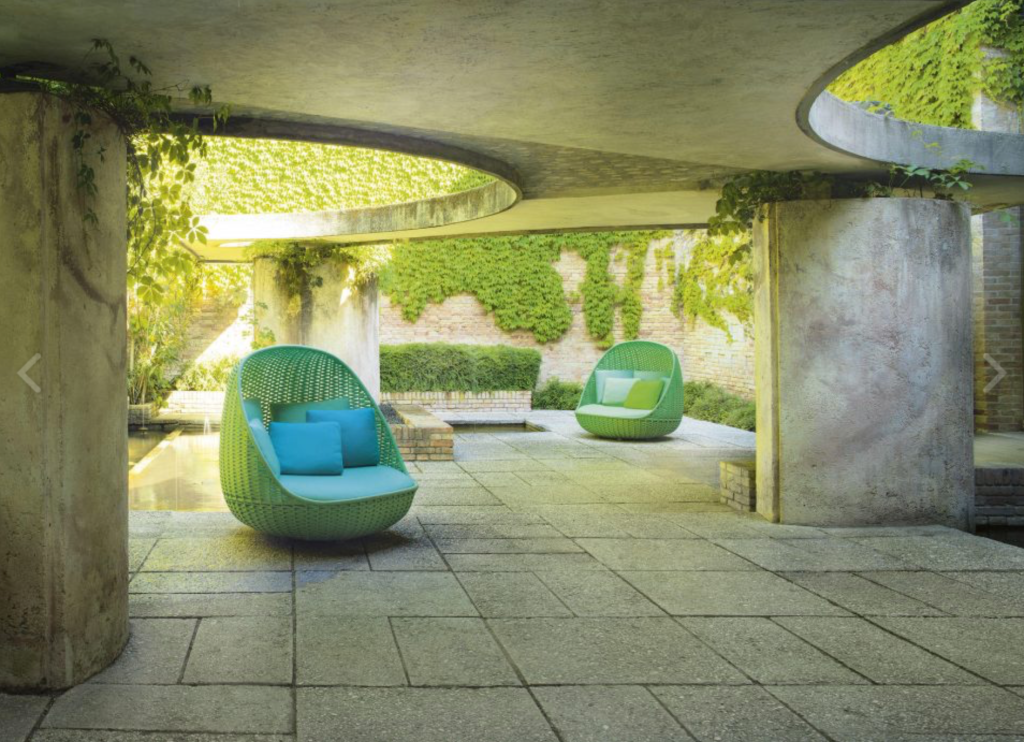
Paola Lenti Orbitry chairs

Get touchy-feely

Our homes are now our castles whether we like it or not, so up the luxury ante by filling yours with tactile materials in a range of different textures. At Design Week we saw brocades, jacquards, textured wallcoverings and thick, bouclé carpets.

Pierre Frey’s lustrous, paisley-patterned fabric in shades of deep pink and green would bring a touch of retro-inspired decadence to any lockdown lounge, while Italian designer Paola Lenti’s outdoor chairs use a combination of natural and industral materials to create bold, woven textures, and are also recyclable.

Ahead of the curve

With our sofas now basically the centre of the universe, it’s more important than ever to have a good one. Voluptuous, curvy shapes are where it’s at, elevating the humble settee into a work of sculpture.

“Furniture is simpler, with the padded silhouette an outward expression of reassuring comfort,” says Metcalfe. – and as well as being everywhere during Design Week, shapely sofas have been used in the new release of apartments at Clarges in Mayfair, which have just been completed by design studio Elicyon.

Paint the town red

Like the weather outside that none of us can enjoy, the colour palette is warming up. Last year’s fun and carefree millennial pinks have given way to deeper, darker shades of rose, etruscan red and watermelon, while neutrals are also stepping up a gear.

Elicyon’s Charu Gandhi says the ubiquitous dove grey is being replaced by “new, warm neutrals such as umber, burnt sienna and ochre.”

Back to nature

Another big trend at Design Week was natural materials. Everything from banana fibre to marble turned up at the show, tying in with the vogue for products that display expert craftsmanship.

“Humble finishes like terracotta, sisal and cork are being employed by designers as if they are haute materials,” says Metcalfe. “Whether it is a wallcovering made of shells or a handstitched leather lamp, these surfaces take immense skill and craftsmanship to perfect.” If you were looking for a lockdown craft project, this might be the time to start.
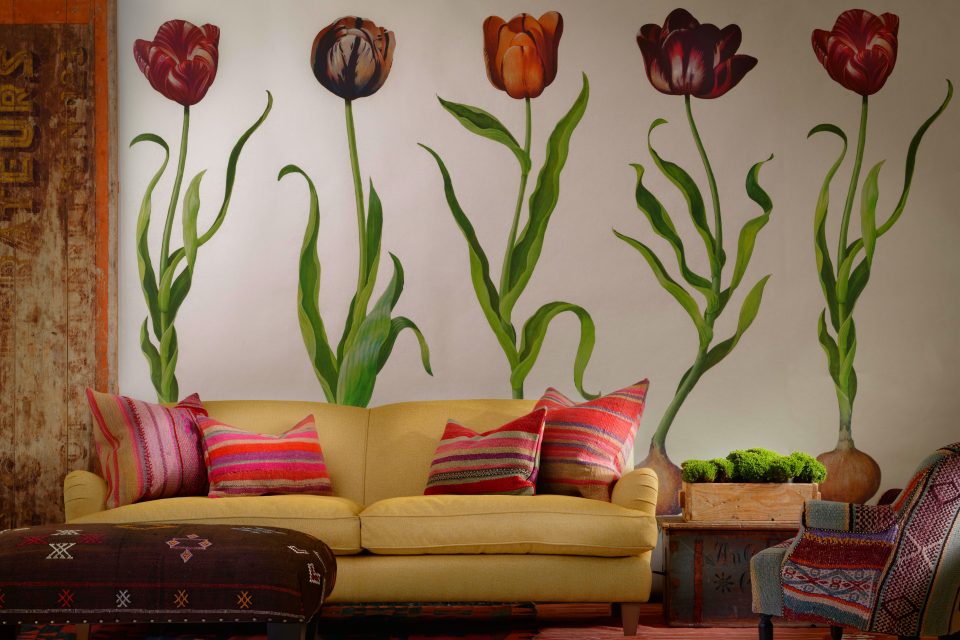
Andrew Martin’s tulip wallpaper

Bold walls

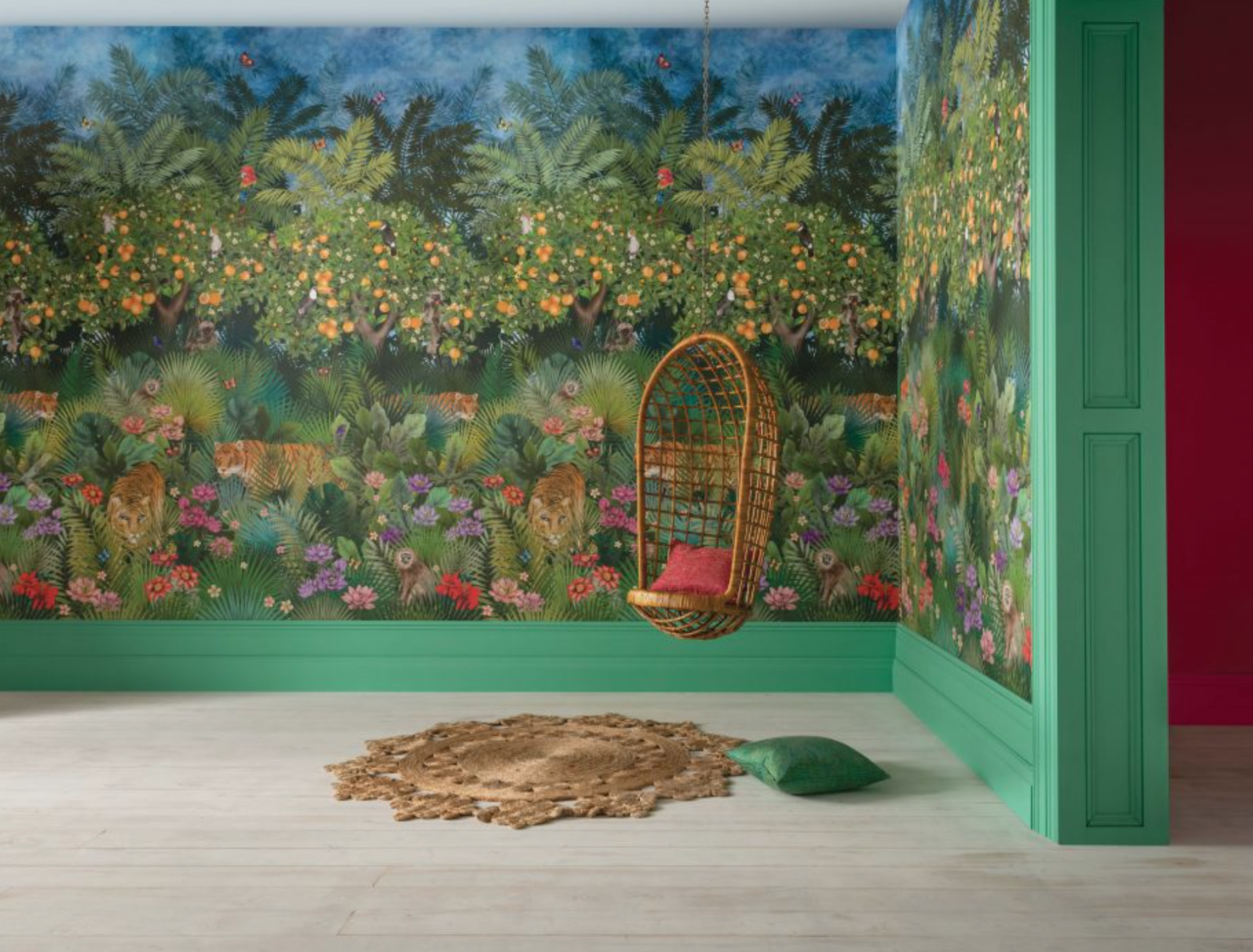
Fashion designer Matthew Williamson launched a new collection of digitally-printed wallpapers at Design Week, in partnership with Osborne & Little – yes, that’s the family firm of former chancellor George.

Inspired by childhood daydreams, patterns on offer include a jungle filled with roaming tigers; an inky night sky full of stars; and wildflower meadow dotted with butterflies. A glorious antithesis to everything minimal and understated.

Graphic content

For those who like to keep lines a bit cleaner, there were also plenty of architectural prints and angular objects. “An effective way to elevate any scheme can be through adding bold graphic print to the design,” says Gandhi. “Complementing a neutral material palette with an unexpected dark abstract pattern makes it more dynamic and compelling.”

The showrooms at Design Centre Chelsea Harbour are closed due to the lockdown, but you can find updates and information about the designers based there on its website: dcch.co.uk.

WE TRIED OUT THE HÄSTENS BED BEYONCÉ IS SAID TO SLEEP ON

Read on City A.M. here

Imagine if you could have the best sleep of your life, every night.

To climb into a bed that is tailored to your every need; so comfortable it feels as if you are floating in mid-air the moment you sink in. No lumpy mattress; no squeaking springs. If your sleeping partner is tossing and turning, you won’t even feel it.

How much would that be worth to you?

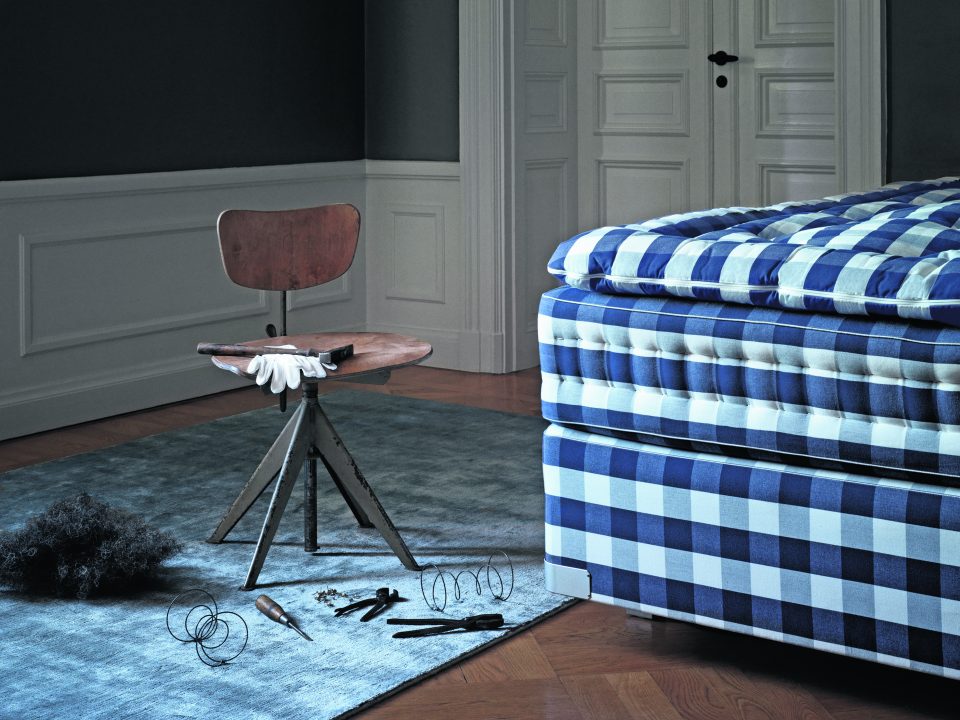
Some would say it is priceless – and it’s for those people that Hästens exists. Its signature navy-and-white gingham beds are the stuff of legend, having been painstakingly hand-crafted in a workshop in Köping, Sweden since 1852. Rumour has it that 49 of the top 50 Hollywood actors sleep on one.

Its chief executive Jan Ryde believes that sleep can change the world – and won’t rest until everyone has the mattress of their dreams (metaphorically, that is: we’re sure he sleeps very well indeed).

“We believe that our planet could be a kinder place – if more people had the energy to be kind every day,” its latest brochure reads. “Oh, how much we would like to invite all presidents, prime ministers and dictators to sleep for one night on a Hästens bed.”

Sleep – Londoners are doing it wrong

Just in time for National Sleep Awareness Week (March 8 – 14) I headed to the Hästens showroom in Chelsea to learn what Londoners are doing wrong when it comes to sleep, and hopefully experience a night of blissful slumber.

Store manager Caroline Webster was there to give me an induction into the Hästens way of life. First things first, she says, I need to get away from the idea that a very firm bed is a good thing. “Lots of our customers think they need a firm mattress, because they’ve been told that lying on a hard surface cures back problems – it’s a very British thing,” she says, explaining that Hästens produces mattresses in soft, medium and firm. “But a soft or medium mattress could be better for your body.”

The most important thing, she explains, is for your spine to remain straight – if the surface is too firm, all of your weight will be held in your hips and shoulders.

I get to work trying out the different beds that are dotted around the store. A bed and mattress will range in price from around £4,000 to £200,000 – but Hästens says these are not super-luxe products: they just work really, really well.

100 per cent natural

What you are paying for is time, and skill. Its flagship bed, the Vividus, weighs 300kg and takes a team of nine master craftsmen 350 hours to build.

“All the little details have been considered. The feet of the beds are set inwards so you don’t stub your toe on them, and the bases don’t have any screws in them so they don’t creak,” Caroline explains.

They are also made from completely natural materials: the bases from sustainably-sourced pine grown in the north of Sweden, and the mattresses from up to 34 layers of horse hair, wool, flax and cotton, as well as three different sizes of steel springs. Mind-blowingly, a team of four people are employed at the factory solely to ruffle horse hair.

Hästens doesn’t do this just to tap into the eco-friendly zeitgeist – the absence of solvents or synthetic memory foam means the beds wick away moisture so your body can regulate its temperature.

Having tried out all the beds the showroom has to offer, I plump for the Vividus, apparently also the choice of Beyoncé – although Caroline is keen to point out that the most expensive bed is not the best choice for everyone. Some of its most high-profile customers have opted for the 2000T (coming in at £20,000 – £40,000).

Changing our night-time habits

Before I settle in for the night, Caroline says she thinks I’ll wake up on my back – this is the most natural way to sleep for most people, she explains, but they end up sleeping on their side most of the time because their mattress isn’t comfortable enough. I don’t think I’ve ever slept on my back in my life, so we agree to disagree.

My bed has a soft mattress on one side, and medium on the other (a service they provide for couples), but I prefer the medium – you don’t fully sink into it, but it’s still cosy. Reclining atop the umpteen bouncy layers, you do feel weightless.

There’s a heavy quilt on the bed, but I’m neither hot nor cold, and I realise how unusual a sensation this is. I’m not twisting or turning or kicking the duvet off. I’m just instantly comfortable, and predictably I’m asleep within minutes.

I’d been worried about my ability to get up in the morning after a night in the world’s best bed, but it’s actually surprisingly easy when you’ve had such a decent night’s kip. I wake up feeling light, rested, and ready to face the day. And despite my scepticism, Caroline is right – I’m also on my back.

If a Hästens bed can change the sleep habit of a lifetime, I’m sold.

Hästens’ Chelsea store is at 115 Fulham Road, SW3 6RL. Call 020 7225 0974

Interest in Milan is going beyond fashion week, as second home market booms in this ‘pocket metropolis’

Published in City A.M., Feb ’20

This week, the world’s fashionable people descend on Milan as the city hosts the third of the four international fashion weeks.

But the global crowd – and UK nationals in particular – are starting to show an interest in Italy’s second city that extends beyond the runway shows.

Once known for being dull and industrial outside of fashion week, Milan is fast becoming a favourite location for wealthy second home buyers.

According to property agent Knight Frank, Milan has overtaken Rome as the number one location for high-net-worth individuals applying for Italian visas – and the UK is one of the most common home nationalities.

So why is Milan proving so popular?

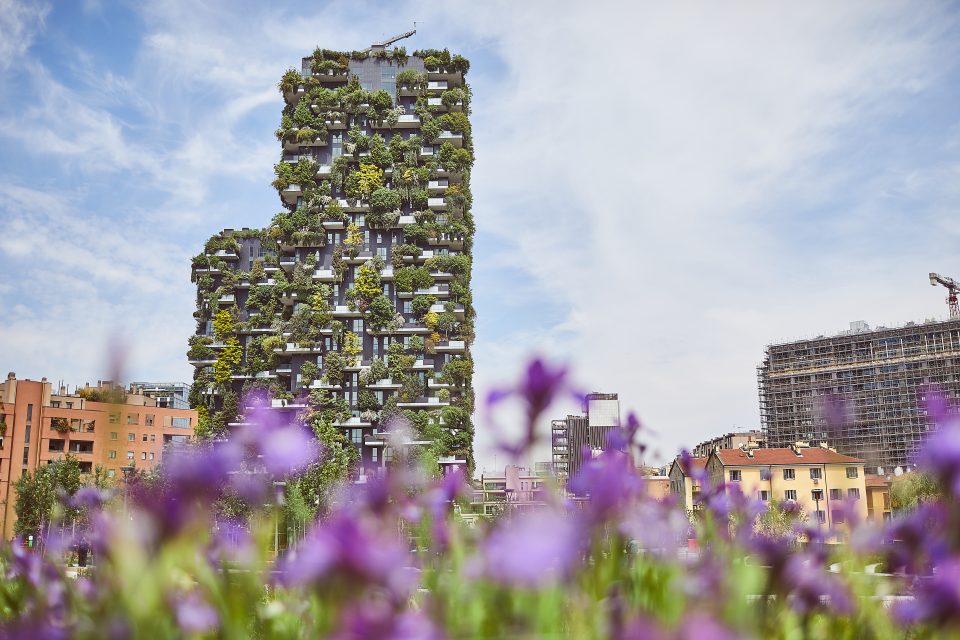
The Bosco Verticale towers at COMIA’s Porta Nuova in Milan

“It’s cosmopolitan, really it is the only international city in Italy and it has the best leisure offering,” says Lodovico Pignatti Morano, managing director at the Italian arm of Sotheby’s International Realty.

This extends beyond the luxury boutiques: Soho House and New York’s Core Club will open in Milan this year, the latter being Core’s first outside Manhattan.

Antonio Fuoco of JLL Milan describes the city as a “pocket metropolis: compact, secure and inexpensive” – and a move to Milan can be a savvy one financially.

Since 2017, non-doms in Italy have not been taxed on foreign income provided they pay an annual flat tax of €100,000, making Milan more attractive to high net worths than cities like London and Paris.

Cheap and cheerful

Property values in the city have also fallen since Italy joined the Euro in 2002. “Fifteen years ago it would have been cheaper to buy in Munich or Berlin, but now that’s not the case,” says Pignatti Morano.

This makes Milan a good bet for buyers who are in it for the lifestyle, rather than an instantly high-yielding investment.

“What drives the market is the gap between the low price of property and the high average income,” says Fuoco. “On the best streets in Monaco you might pay €20,000 per square metre, but in Milan, it’s €12,000.”

Cultural differences mean Milan will never build reams of shiny tower blocks like London, but there are several major developments under way.

Apartments within SeiMilano

These include COIMA’s Porta Nuova, home to the HQs of Google, Amazon, and Alexander McQueen as well as 400 homes, which played host to the Versace fashion week show.

Its most recognisable feature is the Bosco Verticale, two ‘vertical forest’ apartment blocks designed by Stefano Boeri Architetti which feature more than 15,000 plants on their terraces.

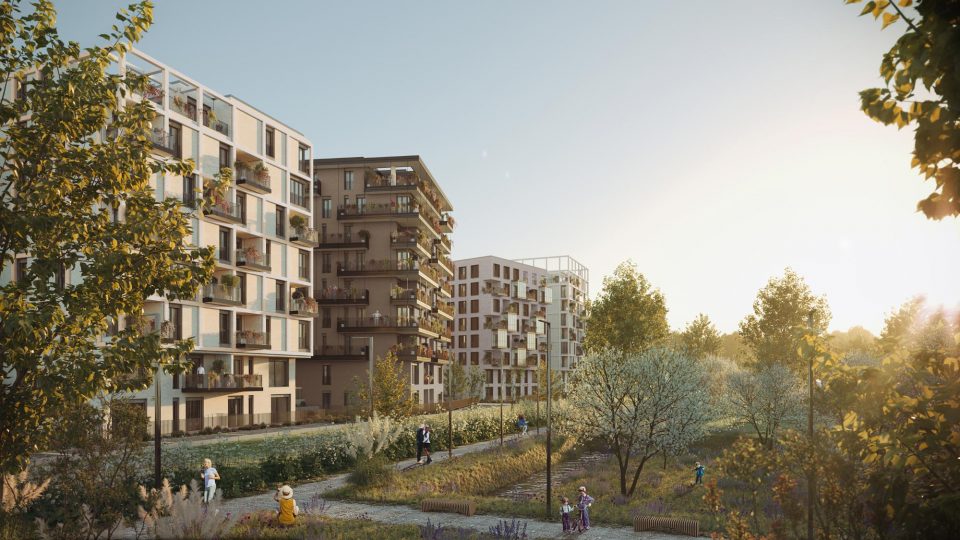
Greenery is also a big feature of Varde Partners and Borio Mangiarotti’s SeiMilano, an ‘inhabited park’ with shops, offices, 500 apartments and 160,000 sq m of green space.

These verdant spaces don’t fit with Milan’s industrial image, but that’s fast being shed. Now, it’s a chic, cheap and cheerful pocket metropolis.

2020s interiors trends: Goodbye millennial pink and hygge, hello art deco and classic blue

Some decades manifest their very selves in the form of interiors. It’s hard to conjure up an image of the 1970s that doesn’t involve shag pile carpets and brown swirly wallpaper, for example. What of the teenies, then? We round up what might one day be considered the classic styles of the decade, and predict what they might be swapped out for in the 2020s.

Millennial pink for blue

That shade of pepto-bismol pink was everywhere in the latter part of the 2010s, but it’s now all about the much more grown-up classic blue, which was just named Pantone colour of the year for 2020.

Bare bulbs for rooflights

The hanging, shade-less bulbs known as Edison bulbs once gave your home a rustic, warehouse feel, but now they’re all over your co-working office too it’s time to move on. The natural illumination offered by rooflights and lightwells is “extremely popular at the moment,” says Nick Stuttard, co founder of designer London Projects.

Metro tiles for huge tiles

Massive tiles up to three metres wide were a hit at this year’s design festivals, says Alice Simmons of Make architects. Designers will be “creating tiles that look like real marble or stone but are actually made from more durable porcelain and to much larger proportions than ever before,” she says. It’s a nice change from the ubiquitous white, rectangular tiles that now adorn the bathroom of every gastro pub within the M25.

Hygge for art deco

The 2010s have been emotional, and sometimes all we wanted was to forget our troubles with a chunky knit blanket and some vanilla candles. Now, we’ll be hiding from the world in glam art deco surroundings instead. “It’s all about great angles and velvet – keep the furniture dark and the walls light,” says Dawn Kitchener, managing director at Blocc Interiors. This vintage look will be complemented by the resurgence of curves, in everything from sofas to staircases.

Macramé for fancy details

Macrame was the way to add a bit of boho charm to a room in the 2010s. Now we’ll be jazzing up our soft furnishings instead, according to Charu Gandhi, founder of interiors studio Elicyon. “Layering trims and fringing to curtains and commissioning elaborate embroidery and beadwork to our cushions and throws adds heaps of personality,” she says.

Washed out for bold

For walls, say goodbye to wishy-washy neutrals. Julian Prieto, head designer at MyEdge2.com, says dyed and painted concrete will be used to create bold, vivid feature walls. “Expect warm earth tones or punchy, absinthe green and strengthened pastels,” he says. “Washed out, is most definitely out in 2020.”

Photo by Toa Heftiba on Unsplash

Mini bar, pepper spray pump, sound system: What the super-rich want in a panic room

Most of us will never have the need for a panic room. The sum of our valuables and the size of our homes means dropping in a huge, heavy steel structure at a cost of (at least) hundreds of thousands of pounds doesn’t even cross our minds.

Those who do find themselves in need of this highly exclusive service, tend to head to the panic room department in Harrods, run by Florentine safe manufacturer Agresti.

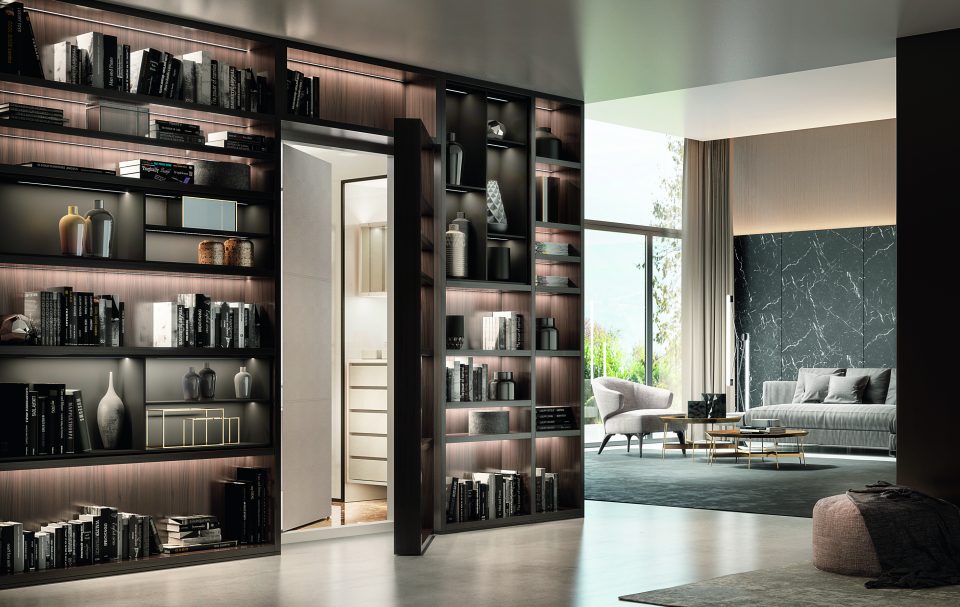
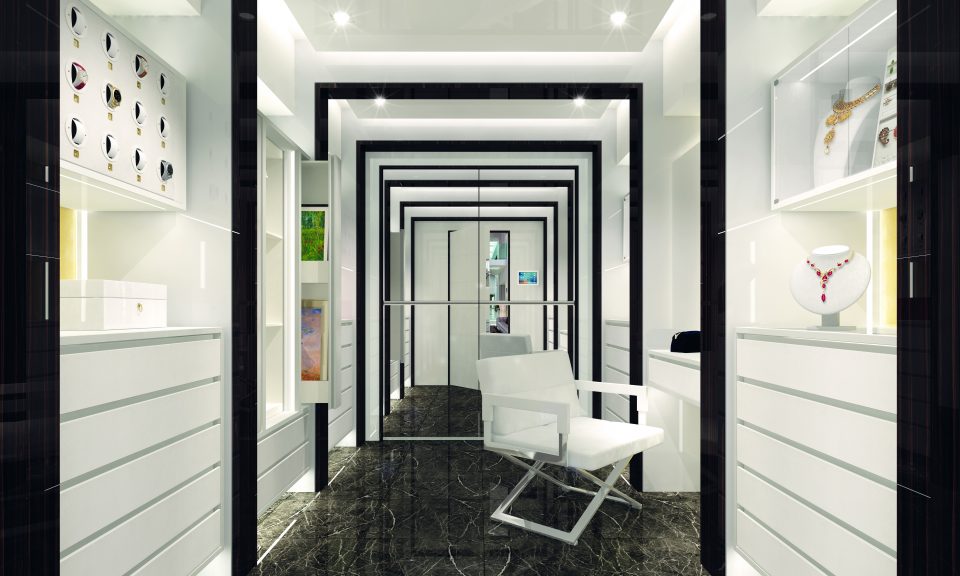
Here, they can step into the store’s example panic room – a glossy, marble-lined affair that most closely resembles the bathroom of a five-star hotel, except it’s filled with cutting-edge gadgets – to get a taste for what’s possible, before designing a bespoke vault all their own.

The man that runs it is Massimo Vignola, director of Italian Design Living at Agresti and an expert on how best to store your insanely valuable, well, valuables.

The first thing you need to know about panic rooms, he says, is they can be as small and basic or as large and ostentatious and you desire (on the inside, obviously – on the outside they have to blend in seamlessly with their surroundings). The cost of installing one starts at around £500,000, and Vignola tells me there really is no upper limit.

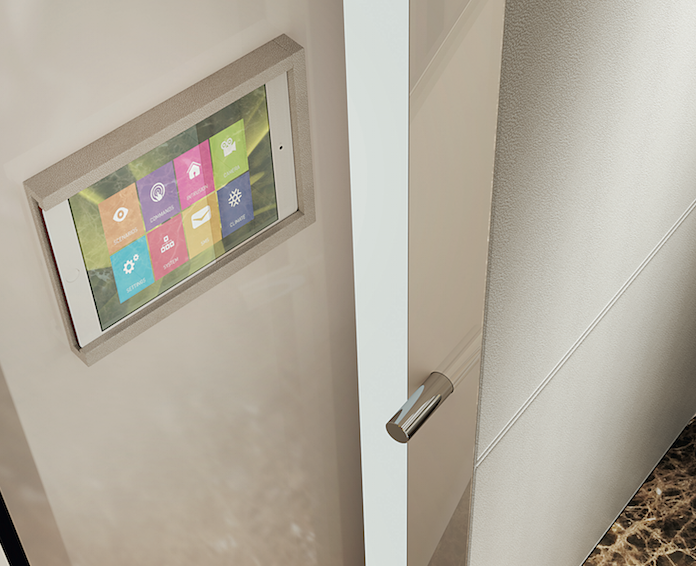
The door and control centre of a typical panic room

He’s had a hand in designing panic rooms ranging from barely the size of a cupboard in Belgravia, to a 30sqm behemoth in Nigeria. They are then made in Italy by “artisans who have been doing this for generations.”

“The aesthetic depends on the client,” he says. “It can be simple and basic, or it can be made to look like a spaceship landed in their property. For a very powerful Russian client we created a classic, almost baroque design with a lot of gold.”

The anatomy of a panic room

So how does a panic room work? First of all, you enter it using fingerprint access. This includes a ‘coercion code’ which means that, if an intruder is forcing the owner to open their panic room, they can use a certain finger and the emergency services will immediately be alerted.

The rooms are completely cut off from the rest of the home – the supply of air is from outside, and they are fitted with a separate phone line so that the police can be called even if the line is cut.

Panic rooms are given a numeric grade based on the thickness of the door and walls, which are made from steel and can go up to around 20 inches. The scale starts at one, and anything above a grade seven would only be found in a bank.

The door and control centre of a typical panic room

In terms of location, most people want it next to their bedroom – but sometimes it has to be in the basement because it’s so heavy it could bring down the floor. Clients’ security requirements are mostly dictated by insurers, who will base their coverage of their valuables on the specifications of the room where they are stored.

Back in the Harrods room, Vignola shows me what he calls the ‘control centre,’ hidden behind a mirror. In an actual home this would be linked up to security cameras, and can be modified so that the homeowner can pepper spray intruders remotely from a pump close to the camera, or activate a ‘fogging’ system which makes it difficult for intruders to see inside the house.

Some clients use it like a little apartment within their apartment

Massimo Vignola, Agresti

“It’s not harmful – it just creates a bit of a panic,” he explains.
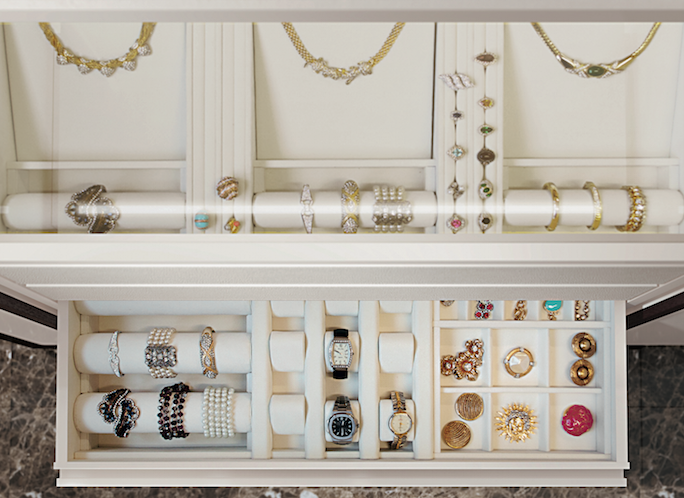
I’m surprised by how plush the panic room is. It has marbled walls and floor, and the walls are lined with built-in shelves. There’s a compartment for cash, pull-out drawers that can be used for pieces of art and a watch storage shelf with automatic winders. There is a cigar box, and a jewellery cabinet with compartments for cufflinks, rings and bracelets.

It also has a comfy-looking white leather chair in front of the mirror, giving it the air of a ladies’ dressing table – and lots of people do actually use it for this purpose.

A jewellery storage area

“Some clients use it like a little apartment within their apartment,” Vignola says. The model in the store is even fitted with a Bose sound system. “It is a place you can go if you want to concentrate, to meditate quietly… or just spy on your family using the cameras,” he adds.

He says he’s been asked to create bespoke rooms to store all manner of things – some more innocuous than others.

‘An emotional purchase’

“Even though it’s about safety, a panic room is actually quite an emotional purchase. It is for people who have hobbies and passions and want to keep those things in a safe place: watches, paintings, rifles, your secret stash of substances – whatever you are passionate about. Russian families quite often want one for their knives and kalashnikovs.”

One Omani client, he adds, requested a bespoke storage unit to store all of her Hermes Birkin bags, which she then colour-coded so it looked like a painter’s palette.

There are still challenges he’d like to take on, though. “There is one guy who always talks with me about creating a panic room for his whisky collection, but he hasn’t bought one yet,” he says.

Some of his clients are referred by Harrods Estates, the department store’s luxury estate agency arm, which says an increasing number of high net worth clients want a panic room.

“There’s a real demand for these at the moment – London can be pretty scary at times,” says Monica Rowe, its marketing manager. “It is for a very particular market, and it has taken a while for them to catch on – but I think the next wave of prime central London developments will have them built in.”

Back in the showroom, I notice that alongside the chemical toilet and first aid kit, there is also a mini bar, presumably so you can kick back with a chilled glass of something while your home is ransacked.

It just goes to show that, with the right budget, anything is possible – whether you want a storage vault for your priceless jewels, or just an extremely secure man cave.

PROPERTY OF THE WEEK: AN ITALIAN VILLA FOR THE PRICE OF A TERRACE IN STREATHAM

Published in City A.M., Dec ’19

There are some types of home that people own, in part, because they sound impressive when dropped into conversation. Villas in the Italian countryside definitely fall into this category.

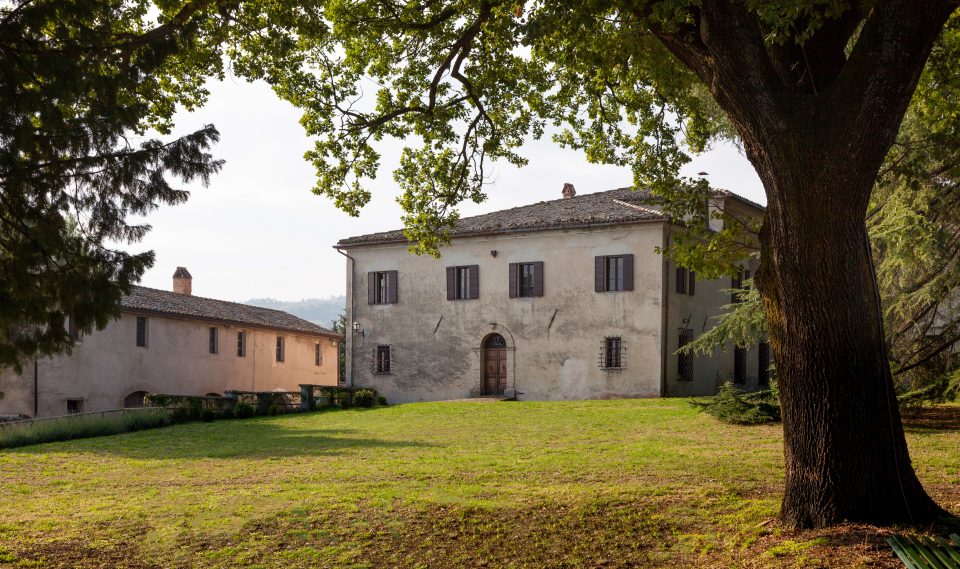
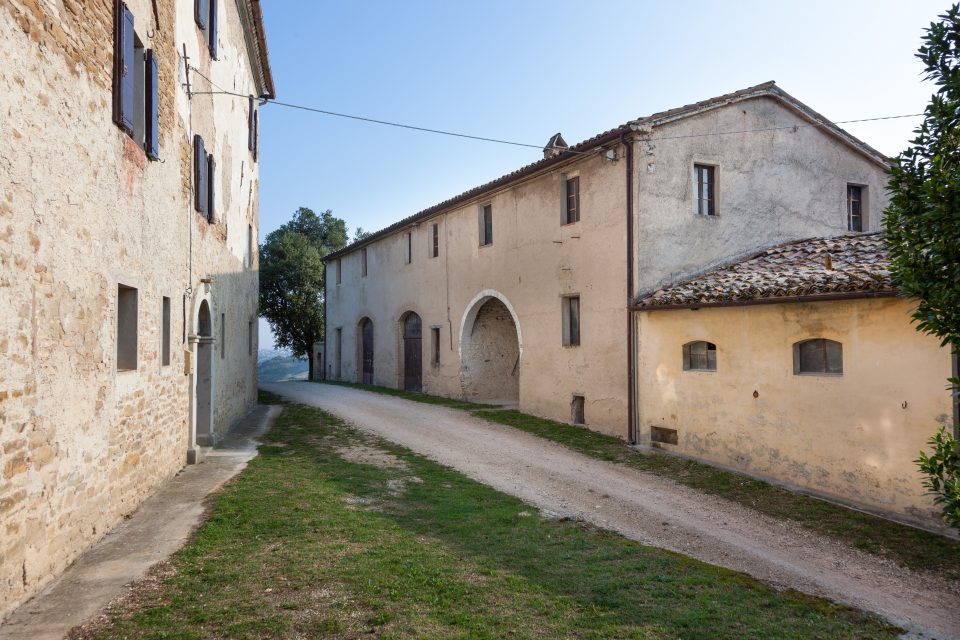
If you too want to show off to your friends, this home which has just come on the market with Casaitalia International can be snapped up for just €626,000 – roughly the same price as a terraced house in Streatham. And did we mention that it was once the home of a 19th century pope? 

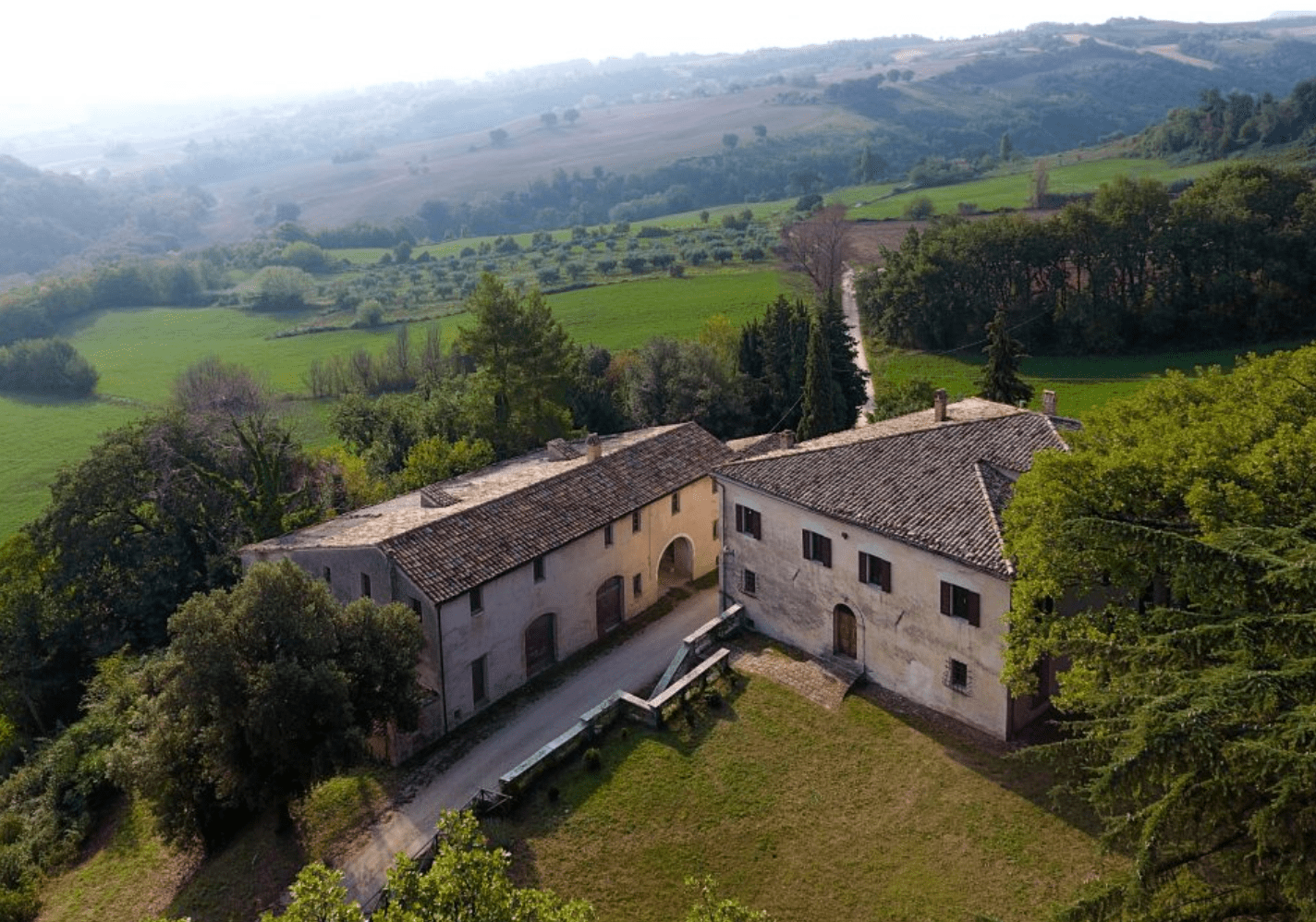
The historic villa near Ancona in the Le Marche region of North East Italy was previously owned by the family of Pope Leone XII, who was head of the Catholic Church from 1823 until 1829.

With 15 bedrooms across two buildings, it could serve as a particularly grand holiday home, or alternatively be run as a bed and breakfast. 

“The property originally belonged to the Counts of Fiumi-Sermattei and was also owned by Pope Leone the 12th’s family, which are thought to have used it as a hunting estate as he mentions in one of his poems,” says Luca Giovannelli of Casaitalia International, which is an affiliate of the UK’s Hamptons International.

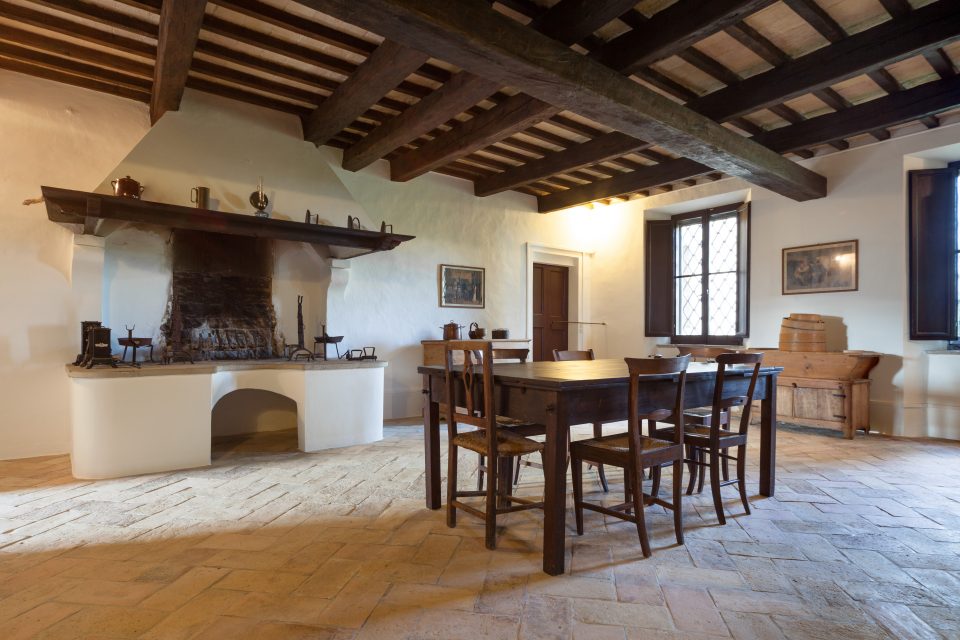
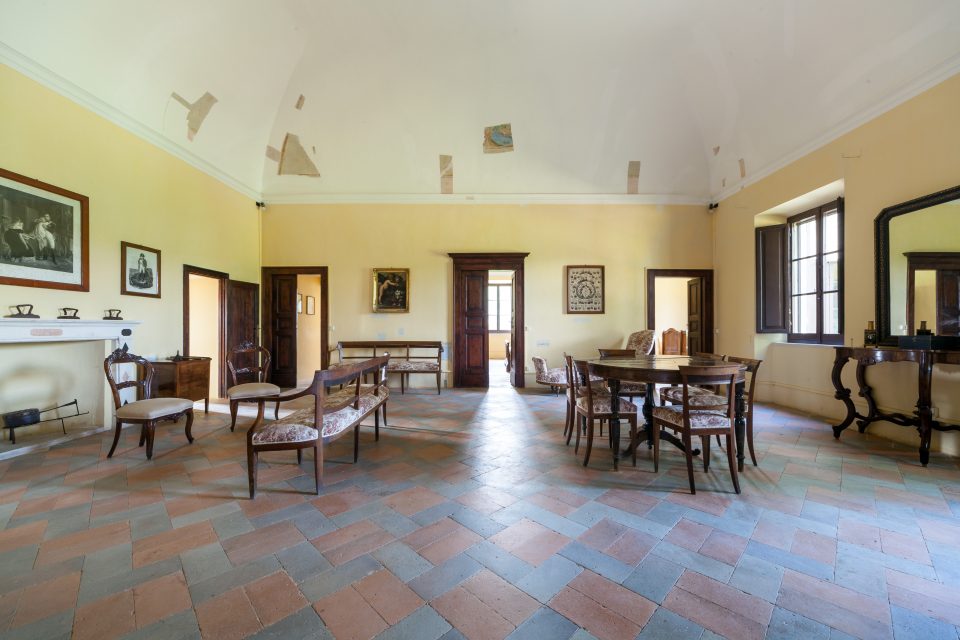
The main villa measures 6,100 sq ft over three floors and comprises a grand entrance hall, living room, sitting room, dining room, studio, library, kitchen, eight bedrooms, three bathrooms, a storeroom, two cellars, a woodshed and something that is tantalisingly referred to as an “interesting cavern”.“

The main house has been sympathetically refurbished to meet the requirements of modern living without compromising the heritage, and retaining much of the original character,” Giovanelli adds.

The buildings sit on three hectares of land, but an additional 33 hectares are available to purchase next door if the buyer wishes.The 8,300 sq ft farmhouse, which is in need of restoration, still has its original layout from the 18th century and is a typical country house from that period.

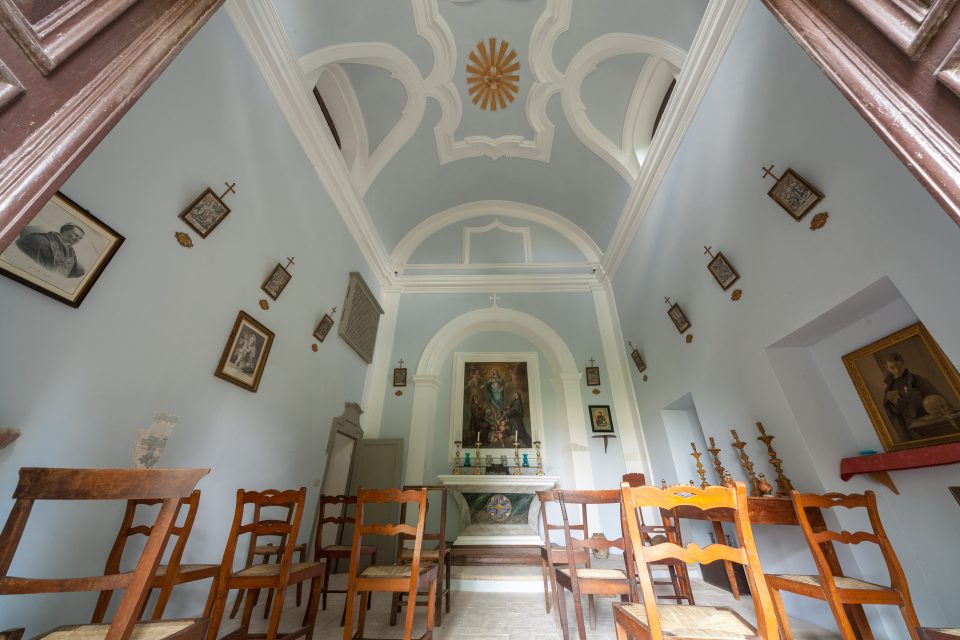
The basement houses a large vaulted cellar, where wine was once made, while the ground floor was used for the stables.The first floor is where the farmer lived, and is divided into a large central kitchen, the pantry, a hall and seven bedrooms.Finally, the property boasts a 330 sq ft consecrated private chapel. 

The property is 75 miles from San Marino and 30 miles from the Adriatic Sea. The wider region sits between the Apennines and the Adriatic sea and is known for its quaint historic villages, nature parks and coastline.

It has a mixture of sandy and stone beaches, some of which have steep rock faces creating interesting coves and creeks.It also has a more temperate climate than much of Italy, with relatively mild winters and summers that are cooled by sea breezes.

“Villa Leone is a historically rich, charming Italian property in the rolling hills of the Ancona countryside, just half an hour from the sea, surrounded by fields and woodlands,” Giovannelli adds. “It’s being offered at a competitive price, and has potential to be a successful business or luxurious family home.”

How a Notting Hill garage was transformed into an LA-style luxury home

Published in City A.M., Nov ’19

When you think of Los Angeles, you probably imagine broad, sun-drenched streets, palm trees and the kind of airy, modern villas that we see on TV and in the movies.

It doesn’t have much in common with rainy London – but that didn’t deter the designers of a new home in Notting Hill, who set out to replicate the LA vibe on the site of a former car garage.

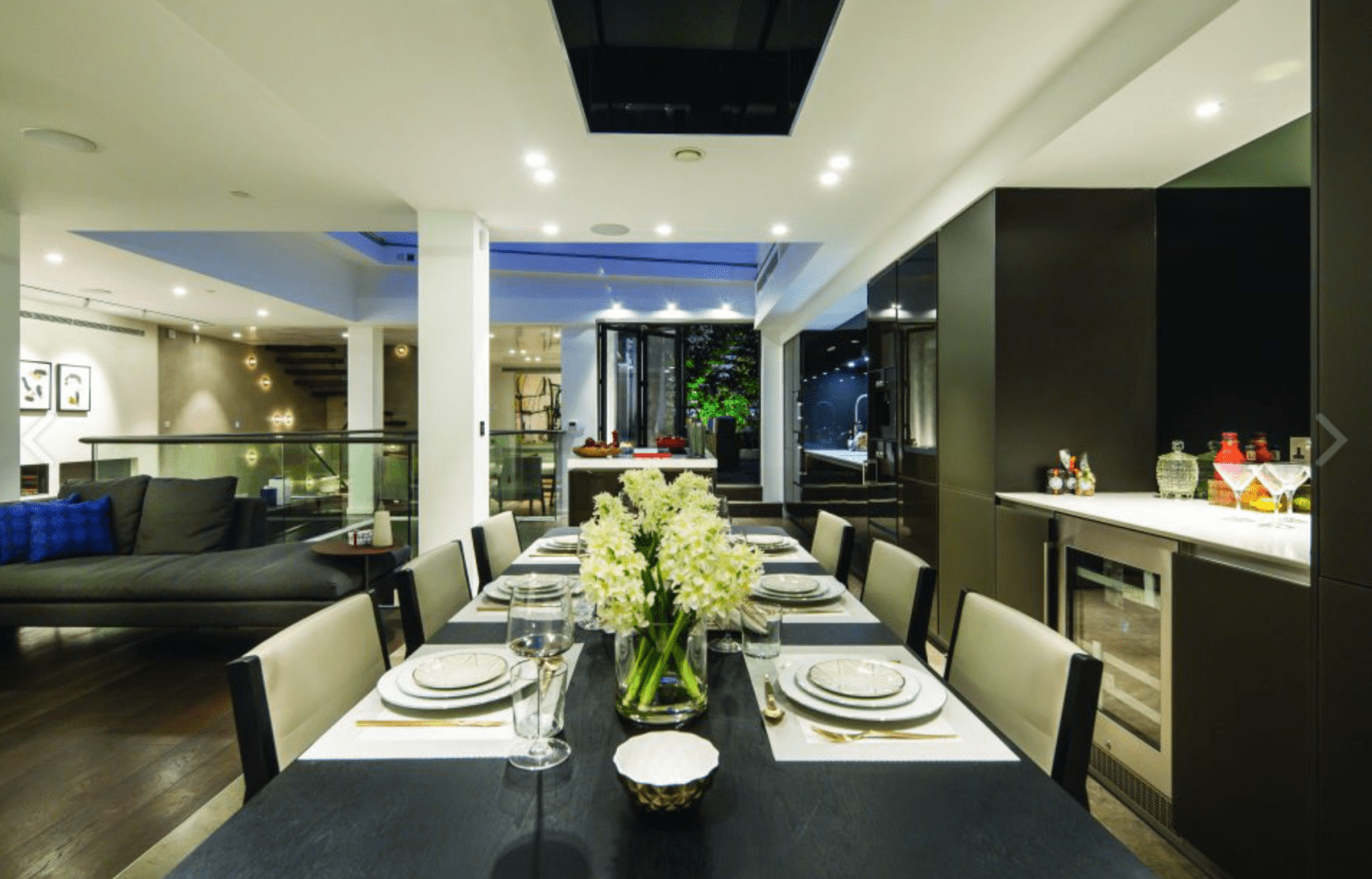
Project manager LXA and architect Gebler Tooth utilised space between existing buildings to create The California – a spacious five bedroom, five bathroom home off Hereford Road, which also has two large reception rooms, a patio and a roof terrace. The property’s size is masked by its discreet street entrance, a feature which the designers have likened to Marrakech’s famous riads.

“It is a Narnia site – it has a tiny little entrance gate at the front, and then you walk through a narrow corridor and the whole building opens out in front of you,” says David Rees, managing director at LXA. “It feels secure because you’re 50 yards away from the street, and there are three levels of security before you get in – which makes it a great family home.”

Inside, a 20ft atrium links the three storeys, bringing light into the home which was largely built underground due to planning constraints. The roof can be opened in the event of LA-style weather, and is thought to be the largest retractable glass ceiling in a London home.

“You feel as if you are outside all the time,” Rees says. “A lot of other properties in the Notting Hill area are classic Victorian semis, but this is a completely unique proposition. It is a contemporary, modernist building.”

The interiors are elegant and minimalistic, with dark wood flooring, white linen soft furnishings, olive accents and modern art pieces on the walls. The home has also been fitted with under-floor heating and computerised smart lighting.

LXA and Gebler Tooth developed the home speculatively, but it has now been bought by a London family who were attracted by its unique features. “They felt there was nothing else like this around,” says Rees. “They didn’t want to change anything, and they even kept the art that we put on the walls.”

FIRST LOOK: ZAHA HADID ARCHITECTS’ FLOWER-INSPIRED LOBBY FOR SOUTHBANK TOWER

Published in City A.M., Nov ’19

The critically-acclaimed firm of architects founded by the late Zaha Hadid is responsible for London cultural landmarks like the London Aquatics Centre built for the 2012 Olympic Games and the Serpentine Sackler Gallery in Hyde Park.

Until now it had not worked on any residential projects in the UK, but it has just started a new commission to redesign the lobby of Southbank Tower – the 1972 Richard Seifert-designed office building which was converted into 191 apartments in 2015.

City A.M got an exclusive first look at its plans for the project, the centrepiece of which is a bold feature lighting scheme inspired by the intricate, organic forms of flower petals.

The sculptural petals, made from glass fibre reinforced gypsum, reflect the fluid shapes seen in lots of Hadid’s work, which led to her being dubbed ‘the Queen of the curve’. Her other major works included Guangzhou Opera House in China and Sheikh Zayed Bridge in Abu Dhabi.

“The design has evolved from our work reinventing the spaces of art museums and galleries around the world,” says Helmut Kinzler, project director at Zaha Hadid Architects (ZHA). “We took a sculptural approach to the space, and decided not to include any works of art because we see it as a canvas in itself. We also wanted to incorporate lots of light, because sculpture can only work in conjunction with light.

The petal forms will be made in an off-site studio using 3D digital files, which ZHA says will allow it to create a level of detail usually associated with “intricate, hand-crafted design works.” The fluid curves of the structure will house the concierge on the ground floor, before peeling back at the top to reveal a new mezzanine level.“Residents will have a place to meet whoever comes in, and they can have small parties and gatherings there,” says Kinzler.

The lobby’s material and colour palette draws inspiration from the existing building design, marrying marble and concrete with walnut, leather and silks.

The work has been commissioned by a private investment firm which acquired 37 apartments in the 41-storey tower in early 2018. It will re-launch the apartments to the market following the completion of the lobby, and has appointed Knight Frank and JLL as sales agents.

first look inside the first finished apartment at Battersea Power Station

Published in City A.M., November 2019

Plenty of property developers try to brand their latest apartment block as ‘iconic,’ which, nice as many of them are, is usually a bit of a stretch.

The redevelopment of Battersea Power Station into 253 luxury flats and a new headquarters for Apple doesn’t have that problem, however.

Other than a three-year hiatus from 2015 while the damaged columns were replaced, its towers have been a stalwart of London’s skyline since the 1930s and have featured in everything from Hitchcock films to The Beatles’ Help! to a Pink Floyd album cover. 

But when you redevelop such an iconic building, there is pressure to create something worthy of the structure it inhabits.

So what do the new flats look like?

City A.M took a tour of the first apartment to be completed within the original grade II*-listed power station with designer Tim Boyd of Michaelis Boyd – which also designed the interiors for Soho House and the Groucho Club – and Battersea Power Station’s UK sales director Georgia Siri.

‘Not cookie cutter apartments’

The apartment is situated on the second floor of the old Turbine Hall A, on the Western side of the power station. Boyd says there were 174 different floor plans for the 253 apartments, because there were so many parts of the building’s structure that could not be altered due to it being listed.

“The floor plans had to be tailored to the building – these are not a cookie cutter apartments,” he says. Most of the flats have long been sold, but when they came on the market in 2013 one-beds like this one started from £1m, while four-bed family homes started from £4m.
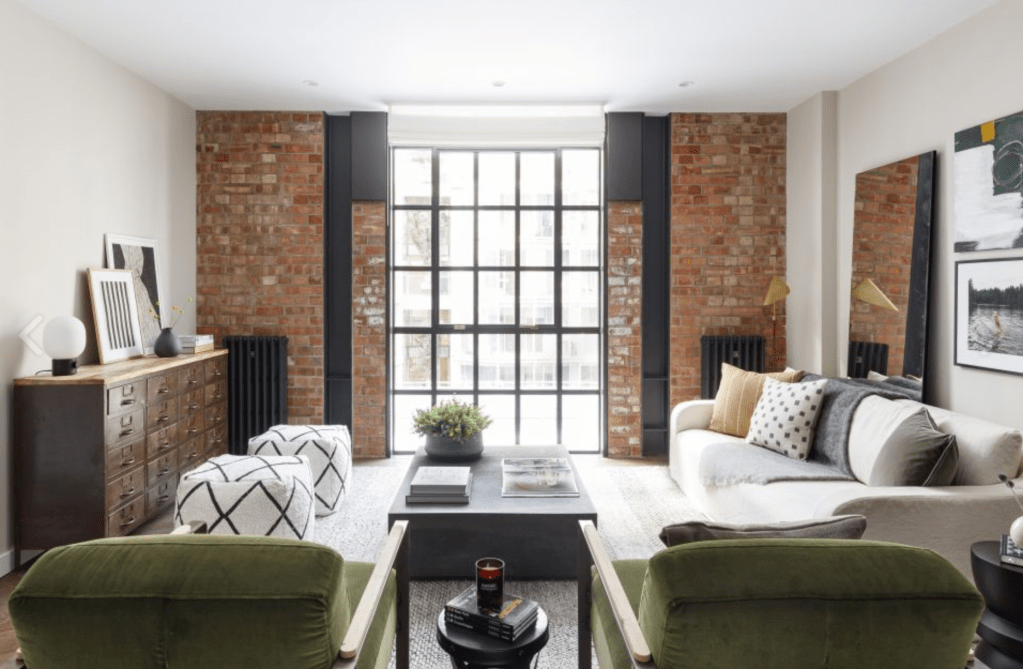
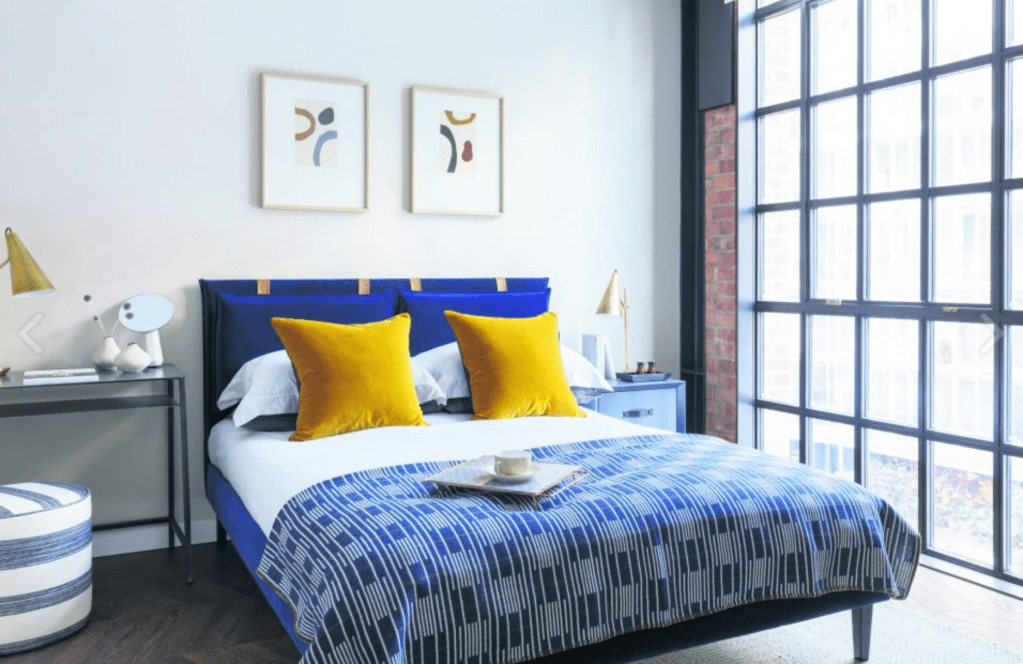
The apartments span eight floors and are accessed via wide corridors, some of them on mezzanines, with original brickwork and steel rivets along the walls. These walls will separate the apartments from the offices, shops and leisure space in the central part of the building, which they run around the outside of.

Features like the runner leading up to each apartment, the heavy wooden door and the long internal hallway within the flats signal a higher specification than many new builds and the apartment feels spacious for a one-bed.

The developers have always insisted that people have bought these flats to live in, not just as investments, and the care they have taken in fitting them out would seem to back that up.

“It’s a place for people to live in rather than just exist in,” says Siri. “It is about owning a piece of heritage and history – the apartments have been bought by people who want to pass them down through their families.”

Inspired by the art deco ‘glory years’

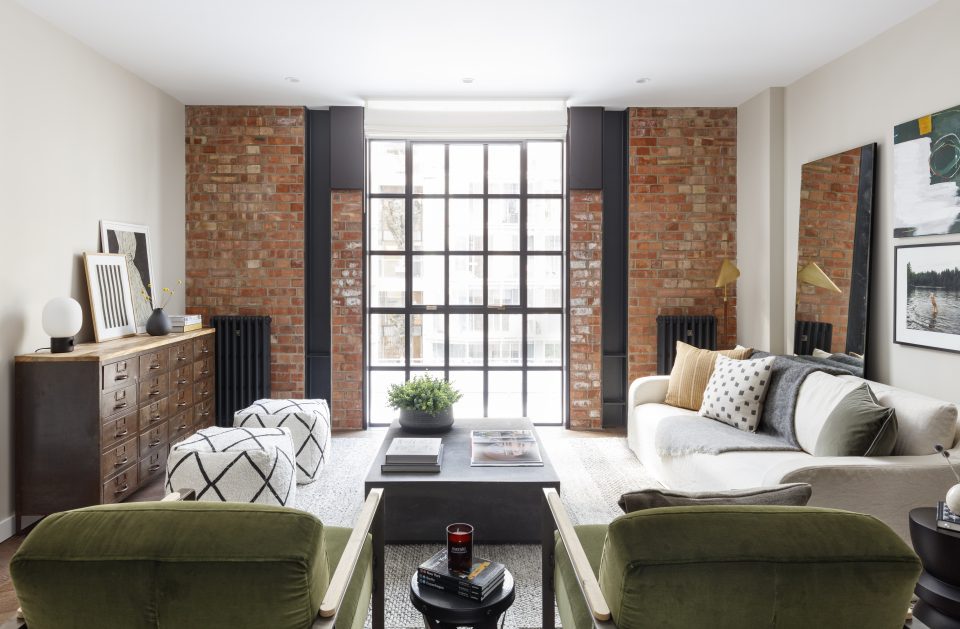
The original 1930s brickwork and steelwork are exposed, and the industrial theme is continued in the floor-to-ceiling crittal windows and cast-iron column radiators, which are painted black. The apartment was dressed by th2designs.

There are two colour palettes for buyers to choose from: Heritage 33 and Heritage 47. The power station was designed in two parts, and the palettes reflect those two eras. Heritage 33, on display in this apartment, uses bold materials and textures inspired by the power station’s art deco glory years when it produced more than a fifth of London’s electricity.

Boyd says this is referenced in everything from the toggle light switches to the bathroom which is fully tiled in teal and dark green with gold finishes. “Those colours were based on the colours of the original turbine hall,” he explains. “I like its relation to the rest of the building – it’s not like any other new development.”

The finishes are designed to last, too. “The lacquered brass in the kitchen will improve with age, as will the chevron flooring,” says Boyd.

The power station may have an impressive history, but this apartment shows there’s plenty of life left in it yet.