Mini bar, pepper spray pump, sound system: What the super-rich want in a panic room

Most of us will never have the need for a panic room. The sum of our valuables and the size of our homes means dropping in a huge, heavy steel structure at a cost of (at least) hundreds of thousands of pounds doesn’t even cross our minds.

Those who do find themselves in need of this highly exclusive service, tend to head to the panic room department in Harrods, run by Florentine safe manufacturer Agresti.

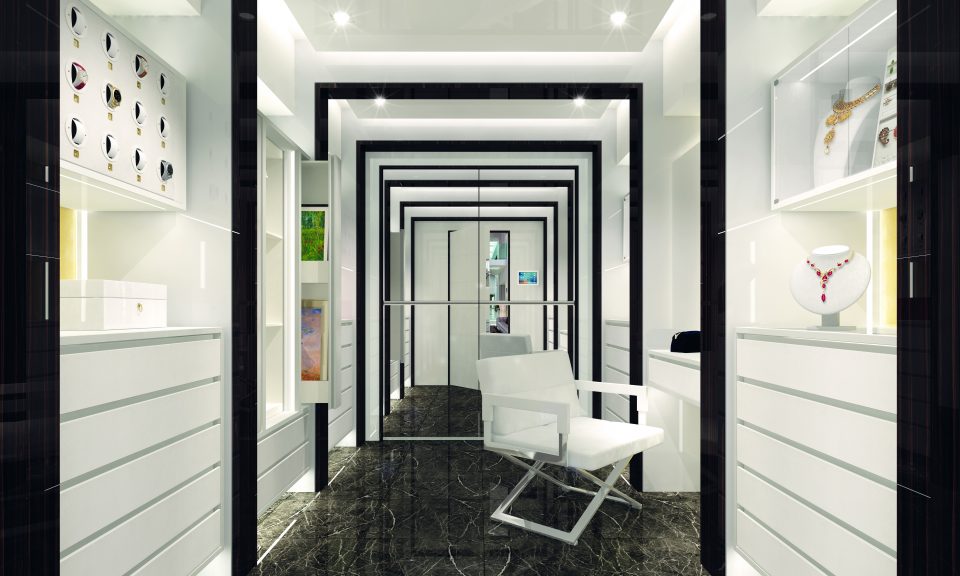
Here, they can step into the store’s example panic room – a glossy, marble-lined affair that most closely resembles the bathroom of a five-star hotel, except it’s filled with cutting-edge gadgets – to get a taste for what’s possible, before designing a bespoke vault all their own.

The man that runs it is Massimo Vignola, director of Italian Design Living at Agresti and an expert on how best to store your insanely valuable, well, valuables.

The first thing you need to know about panic rooms, he says, is they can be as small and basic or as large and ostentatious and you desire (on the inside, obviously – on the outside they have to blend in seamlessly with their surroundings). The cost of installing one starts at around £500,000, and Vignola tells me there really is no upper limit.
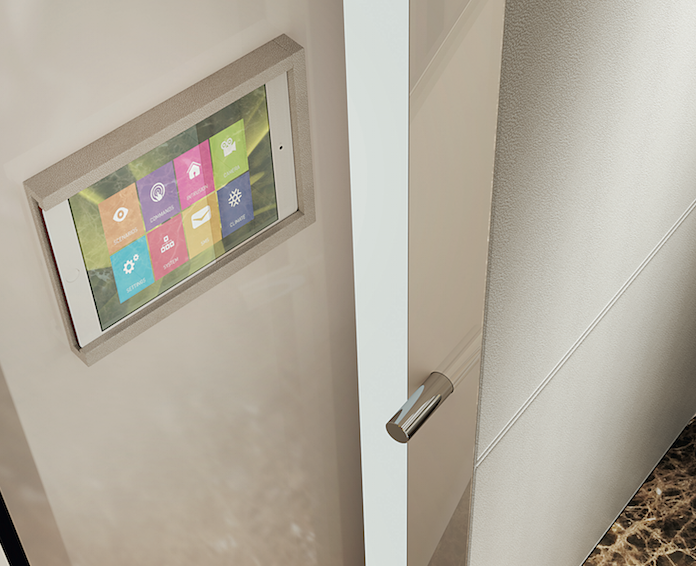
The door and control centre of a typical panic room

He’s had a hand in designing panic rooms ranging from barely the size of a cupboard in Belgravia, to a 30sqm behemoth in Nigeria. They are then made in Italy by “artisans who have been doing this for generations.”

“The aesthetic depends on the client,” he says. “It can be simple and basic, or it can be made to look like a spaceship landed in their property. For a very powerful Russian client we created a classic, almost baroque design with a lot of gold.”

The anatomy of a panic room

So how does a panic room work? First of all, you enter it using fingerprint access. This includes a ‘coercion code’ which means that, if an intruder is forcing the owner to open their panic room, they can use a certain finger and the emergency services will immediately be alerted.

The rooms are completely cut off from the rest of the home – the supply of air is from outside, and they are fitted with a separate phone line so that the police can be called even if the line is cut.

Panic rooms are given a numeric grade based on the thickness of the door and walls, which are made from steel and can go up to around 20 inches. The scale starts at one, and anything above a grade seven would only be found in a bank.

The door and control centre of a typical panic room

In terms of location, most people want it next to their bedroom – but sometimes it has to be in the basement because it’s so heavy it could bring down the floor. Clients’ security requirements are mostly dictated by insurers, who will base their coverage of their valuables on the specifications of the room where they are stored.

Back in the Harrods room, Vignola shows me what he calls the ‘control centre,’ hidden behind a mirror. In an actual home this would be linked up to security cameras, and can be modified so that the homeowner can pepper spray intruders remotely from a pump close to the camera, or activate a ‘fogging’ system which makes it difficult for intruders to see inside the house.

Some clients use it like a little apartment within their apartment

Massimo Vignola, Agresti

“It’s not harmful – it just creates a bit of a panic,” he explains.
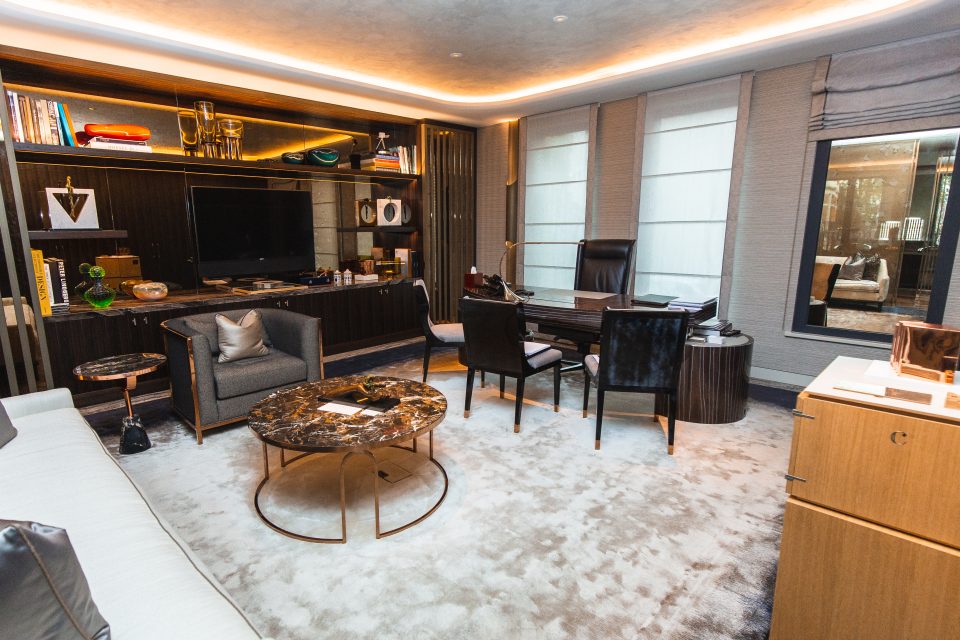
I’m surprised by how plush the panic room is. It has marbled walls and floor, and the walls are lined with built-in shelves. There’s a compartment for cash, pull-out drawers that can be used for pieces of art and a watch storage shelf with automatic winders. There is a cigar box, and a jewellery cabinet with compartments for cufflinks, rings and bracelets.

It also has a comfy-looking white leather chair in front of the mirror, giving it the air of a ladies’ dressing table – and lots of people do actually use it for this purpose.

A jewellery storage area

“Some clients use it like a little apartment within their apartment,” Vignola says. The model in the store is even fitted with a Bose sound system. “It is a place you can go if you want to concentrate, to meditate quietly… or just spy on your family using the cameras,” he adds.

He says he’s been asked to create bespoke rooms to store all manner of things – some more innocuous than others.

‘An emotional purchase’

“Even though it’s about safety, a panic room is actually quite an emotional purchase. It is for people who have hobbies and passions and want to keep those things in a safe place: watches, paintings, rifles, your secret stash of substances – whatever you are passionate about. Russian families quite often want one for their knives and kalashnikovs.”

One Omani client, he adds, requested a bespoke storage unit to store all of her Hermes Birkin bags, which she then colour-coded so it looked like a painter’s palette.

There are still challenges he’d like to take on, though. “There is one guy who always talks with me about creating a panic room for his whisky collection, but he hasn’t bought one yet,” he says.
Some of his clients are referred by Harrods Estates, the department store’s luxury estate agency arm, which says an increasing number of high net worth clients want a panic room.

“There’s a real demand for these at the moment – London can be pretty scary at times,” says Monica Rowe, its marketing manager. “It is for a very particular market, and it has taken a while for them to catch on – but I think the next wave of prime central London developments will have them built in.”

Back in the showroom, I notice that alongside the chemical toilet and first aid kit, there is also a mini bar, presumably so you can kick back with a chilled glass of something while your home is ransacked.

It just goes to show that, with the right budget, anything is possible – whether you want a storage vault for your priceless jewels, or just an extremely secure man cave.
Inside ‘co-living’: the flats where millennials trade living space for free craft workshops and yoga

My alarm goes off at 6.30am, which means it’s time for yoga.

As I wipe the sleep from my eyes, I glance around the unfamiliar apartment I’ve just spent the night in, which doesn’t take long because it’s barely bigger than a walk-in wardrobe. I get dressed and stumble out the door, traipsing down the stairs behind a row of others dressed in identical kit. We’re directed to the ‘Wellness Pavilion,’ where we start the day with an hour of downward-facing dogs and warrior poses.

Welcome to co-living – the new trend trying to persuade millennials that living in a small, expensive rented room isn’t not, in fact, a total bummer, but a lifestyle choice. It’s not a commune, exactly, but a building where you rent a poky studio apartment and have access to shared social spaces and a roster of ‘fun’ activities to take part in. You also don’t have to bother yourself with such arduous tasks as cleaning up or paying the bills.

A handful of these buildings have sprung up in the capital over the past couple of years, claiming to offer an alternative to dingy house shares and dodgy landlords. As a single 30-something living in London, I’m the target market – so I spent the night in two of them to see what it’s really like to exist in the co-living bubble.

‘A more joyful way of living’

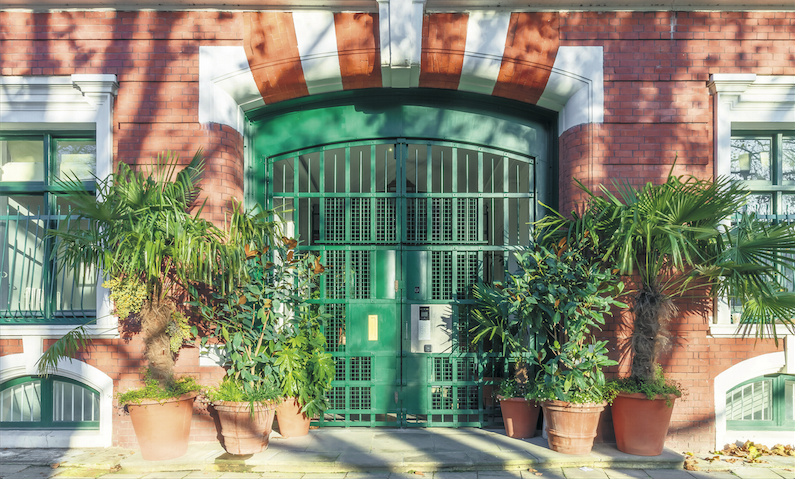
First up is The Italian Building in Bermondsey, a brand-new 28-studio development run by a company called Mason & Fifth. It’s so new the first residents haven’t yet moved in, but I’m promised a taster of the experience they can expect, so I turn up with my overnight bag on a rainy Tuesday, armed with a schedule for the evening’s activities.

Mason & Fifth is focused on ‘wellness’ – take a drink – and promises “a transformational home that connects you to a more joyful way of living”. The building is nice, its interiors all polished concrete and snaking monsteras. But the studios are what you would charitably call bijou at just 170 sq ft, less than half the minimum space standard of 398 sq ft outlined by the Greater London Authority. This is allowed under planning rules because the building was converted from an office.

The entrance to Mason & Fifth’s The Italian Building in Bermondsey. Image: Nicholas Worley

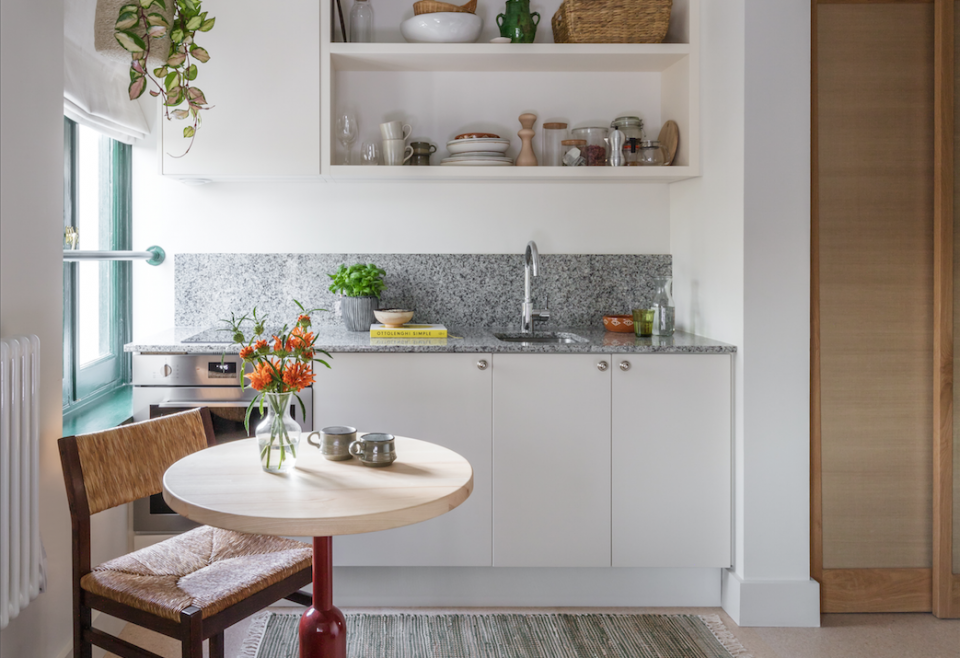
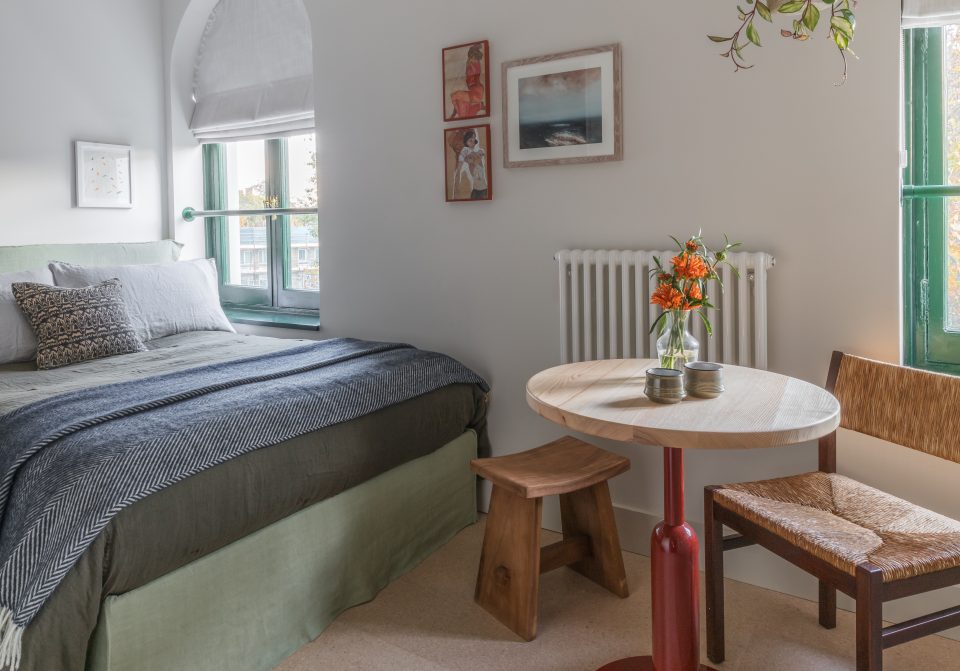
It’s nicely decked out with hanging plants, ‘quirky’ wall art, Ottolenghi cookbooks and an inexplicable bowl of lemons, but basically just consists of a bed, kitchenette, shower room, wardrobe and a table and chairs. It feels more like a hotel room than an apartment.

Some say it’s just a formalisation of the house shares that city-dwellers in their 20s and 30s begrudgingly find themselves in. An even rosier view is that it harks back to the kind of close-knit communities that people lived in in the past.

“The idea of living collectively is almost ingrained in our DNA and we’ve done it for hundreds of years,” says Richard Lustigman, director of co-living at property consultancy JLL. That might be true, but it hasn’t always been so expensive. It costs £1,650 per month to live here – far more than the average room in a shared house, and slightly more than the average £1,633 rent for a one-bed property in Bermondsey, according to Zoopla.

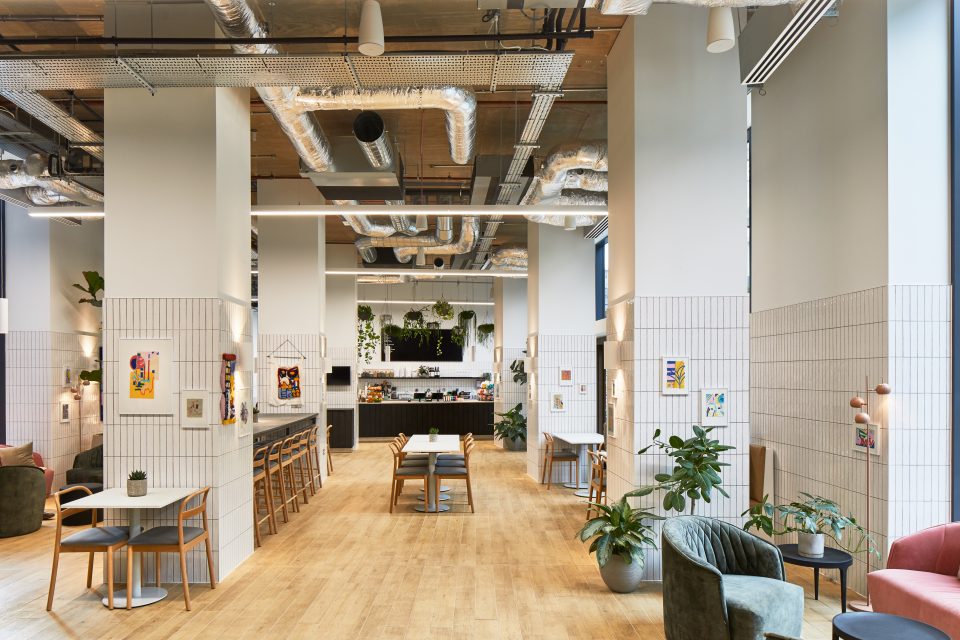
The communal living area at The Italian Building. Image: Nicholas Worley

The reason Mason & Fifth thinks people will pay it is because of the less tangible things the building offers, based around five ‘pillars of well-living’ it has come up with: healthy spaces, daily nourishment, modern fitness, mental clarity and something called ‘conscious hedonism’.

Along with your tiny room you get a big communal living room, kitchen and dining area downstairs, bills included and access to free activities including running clubs, meditation, yoga, gardening workshops, bike rides, a ‘rant and reflect talking circle’ and a ‘mental resilience workshop’. You can also have a chef cook you dinner and packed lunches and have someone do your laundry for an extra fee. The owners predict people will stay for three months to a year.

Free activities include running clubs, meditation, yoga, gardening workshops, bike rides, a ‘rant and reflect talking circle’ and a ‘mental resilience workshop’.

Ben Prevezer, the 30-year-old creative director of the project says the rooms “balance our generation’s growing need for both community and privacy” and enable “meaningful exchanges and generous individual space within the metropolis.”

My evening sampling the co-living lifestyle starts with a paper marbling workshop, then a dinner in the communal area consisting of shared plates of burrata, quinoa, root veg and plaice. We are served ‘social spirits’ from Third Way; strange non-alcoholic herbal elixirs which claim to have ‘active feel-good compounds’.

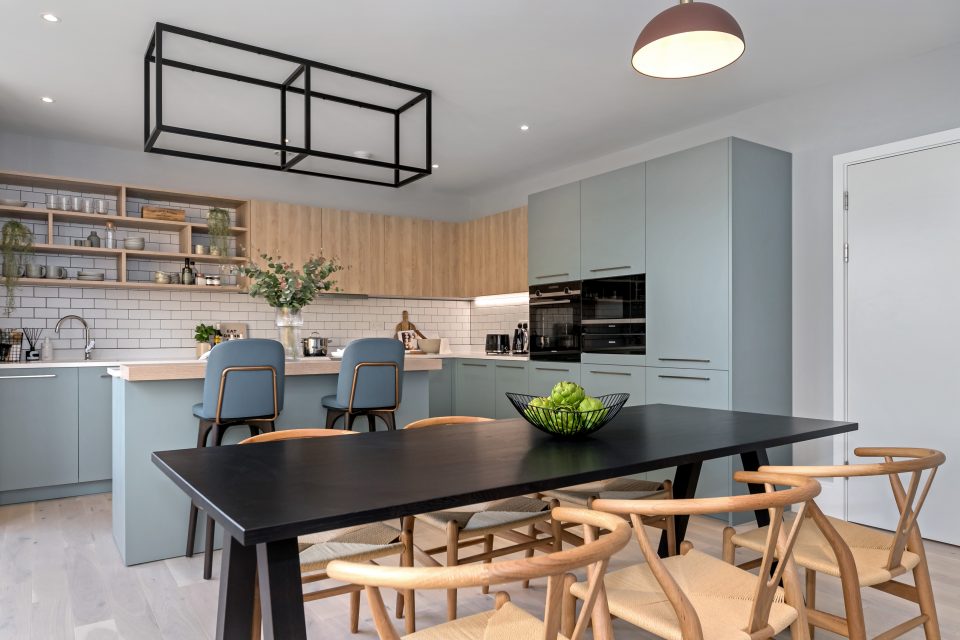
The kitchenette in one of the Italian Building co-living apartments. Image: Nicholas Worley

We have our auras read. When we go to bed, herbal sleeping tablets have been left on our pillows. I take one and it seems to work, which is good because I’m booked in for a yoga class at 7.30am in the “wellness pavilion”, which we all turn up to in our Mason & Fifth branded hoodies. It feels like a new age version of a school residential.

‘Sleepovers are sexy, squatting is not’

Continuing the school theme, there are also lots of rules. When the building opens in January, residents will be given a book full of them. “Sleepovers are sexy, squatting is not,” it proclaims, pointing out that if a partner stays over for more than ten nights in four weeks you may be asked to “upgrade” to a couples room fee. They can also be asked to leave after three warnings if they don’t respect the “calm, relaxed and welcoming environment” of the building.

There are only 28 apartments, and Mason & Fifth will hand pick the residents to try and create a harmonious atmosphere. So far, 800 people have registered interest in The Italian Building, so they’ve got their work cut out.

Over dinner, one of the staff confesses that they’ve been a bit worried about how potential relationships – and inevitable breakups – might ruin the carefully curated dynamic. And that’s the problem with co-living, really: there’s no accounting for the fact that people might want to have an ill-advised hook up with someone in their building, or own more than a couple of suitcases worth of possessions, or just watch TV alone in their apartment on a hungover Sunday, rather than in a communal room with 27 other people.

Here, you have no choice but to be the best version of yourself.

The entrance lobby of The Collective in Canary Wharf. Image: Ed Reeve

When I walk into The Collective at Canary Wharf, a new 21-storey co-living block which opened three months ago, the first thing I notice is a huge chalkboard with the programme of events for the week. You can add managing our own social lives to the list of things that millennials clearly can’t be trusted with, along with mortgages and cutting up an avocado.

There’s circuit training, a running club, yoga, three film club sessions, a ‘pimp my G&T’ masterclass, a cooking class and a session on how to make a kokedama (a type of Japanese hanging planter). Deep down, I know that the session I would be most likely to attend if I lived here would be the Friday happy hour in the top-floor bar and restaurant, Mthr.

The community manager, Jackson Torchia, shows me around the place. The walls in the communal areas are aptly painted millennial pink, and there are neon art installations everywhere.

The sun lounge at The Collective. Image: Ed Reeve

There’s a co-working space, a giant living room filled with sofas, a meditation room, a gym, a screening room and a huge kitchen for cooking classes.

We get a lot of young professionals here who are just out of home,” says Torchia, who says recent recipes have included vegetable curries and pumpkin bread. In the next room, an electronic putt returner for practicing golf is being installed. “Not to curse it, but I think our members will use it once and never again,” he adds.

There are fake cobwebs left over from the Halloween party a few days earlier, and just to infantilise things even further, a giant hopscotch grid on the floor

Long-term residents will pay £1,300 per month for a year-long stay in the smallest room here, or up to £2,080 for the space with the highest specification.

All in, the communal spaces take up three whole floors of the building. In the basement is a student-style bar with graffiti on the walls, a DJ booth, ping pong table. There are fake cobwebs left over from the Halloween party a few days earlier, and just to infantilise things even further, a giant hopscotch grid on the floor. “It’s just to get people talking,” says Torchia.

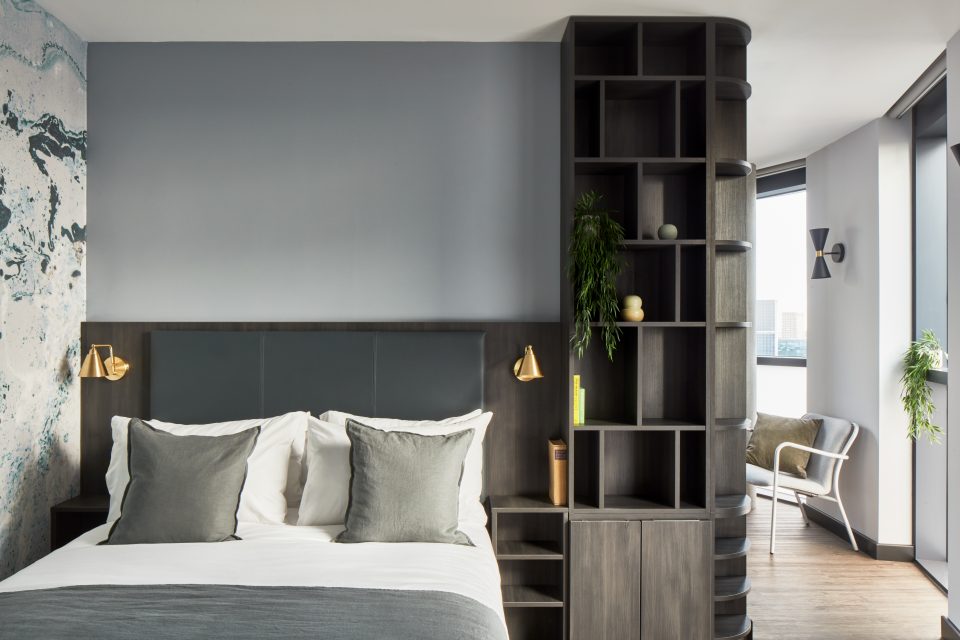
One of the apartments at The Collective. Image: Ed Reeve

Finally, on the top floor is the incongruous combination of the bar and restaurant, Mthr, which is open to the public, and a pool – the highest in East London – complete with inflatable flamingo.

“One of our members put it in and I didn’t have the heart to take it away,” says Torchia. Conveniently, it’s also the kind of thing that people love to post on Instagram. The only way this could be more perfect is if it was a unicorn.

Social, ‘student’ lifestyle

The people trying to sell the co-living lifestyle say it addresses two of millennials’ biggest reported problems: bad housing and feeling lonely. There’s definitely a community here – and it’s strikingly similar to the one you might find in a student halls of residence. Strangers say hi to me when I get in the lift, friends bump into each other in the hallways and there are clusters of people hanging out in most of the rooms I pop my head into.

The similarity to being at university isn’t lost on the people that live there, either. “It appealed to me to be able to live a more social lifestyle, more akin to my uni days – that’s something that I missed since I graduated,” says 28-year-old software programmer Jonas Hou, who has just moved here after living in The Collective’s sister building in West London for a year and a half. “I came to London five years ago from Germany, and because I didn’t grow up here it’s not like I have a clique of old friends.”

The library at The Collective. Image: Ed Reeve

He says it’s better than the flatshares he used to live in, but anyone who’s navigated the minefield of aggressive WhatsApp groups and broken boilers that is the standard London flatshare will know that’s not particularly hard. 

My apartment here is a bit bigger than at Mason & Fifth, but I still wonder where I’d put all my stuff, as the storage amounts to a small-ish wardrobe, kitchen cupboards and a few shelves. Whoever designed this room has clearly taken to heart the oft-spouted marketing edict that millennials value experiences over possessions.

Co-living isn’t for me. Admittedly, that’s partly because I’m too miserable – I don’t like waking up early to do yoga, and I can barely be bothered to socialise with my existing friends on a Tuesday night, let alone make new ones. But you can’t hide the fact that these buildings are expensive and don’t offer enough private space.

Unless co-living can overcome one or both of these problems, it’s not going to be an option for the average twenty-something renter – no matter how many yoga classes and hanging plants you throw at them.

PROPERTY OF THE WEEK: AN ITALIAN VILLA FOR THE PRICE OF A TERRACE IN STREATHAM

Published in City A.M., Dec ’19

There are some types of home that people own, in part, because they sound impressive when dropped into conversation. Villas in the Italian countryside definitely fall into this category.

If you too want to show off to your friends, this home which has just come on the market with Casaitalia International can be snapped up for just €626,000 – roughly the same price as a terraced house in Streatham. And did we mention that it was once the home of a 19th century pope? 

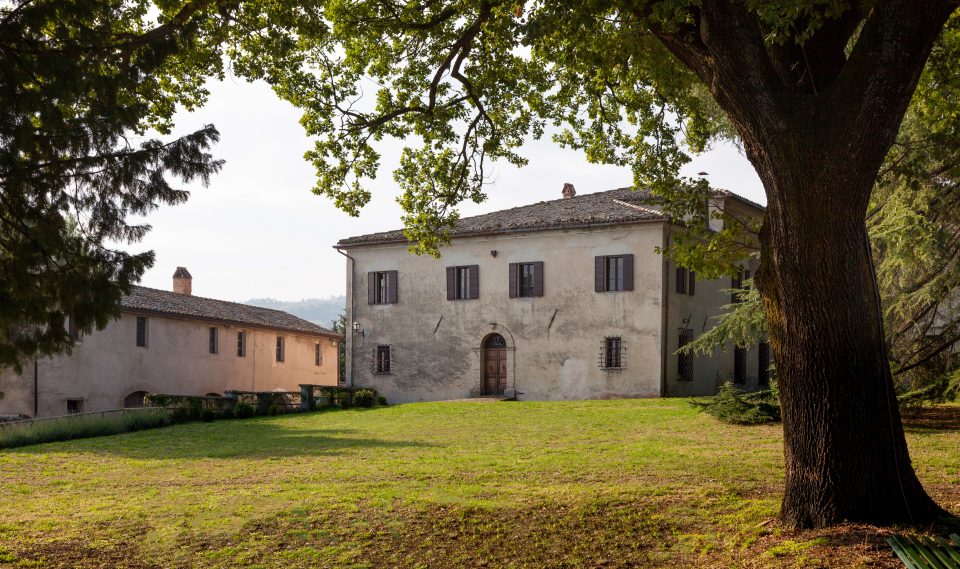
The historic villa near Ancona in the Le Marche region of North East Italy was previously owned by the family of Pope Leone XII, who was head of the Catholic Church from 1823 until 1829.

With 15 bedrooms across two buildings, it could serve as a particularly grand holiday home, or alternatively be run as a bed and breakfast. 

“The property originally belonged to the Counts of Fiumi-Sermattei and was also owned by Pope Leone the 12th’s family, which are thought to have used it as a hunting estate as he mentions in one of his poems,” says Luca Giovannelli of Casaitalia International, which is an affiliate of the UK’s Hamptons International.

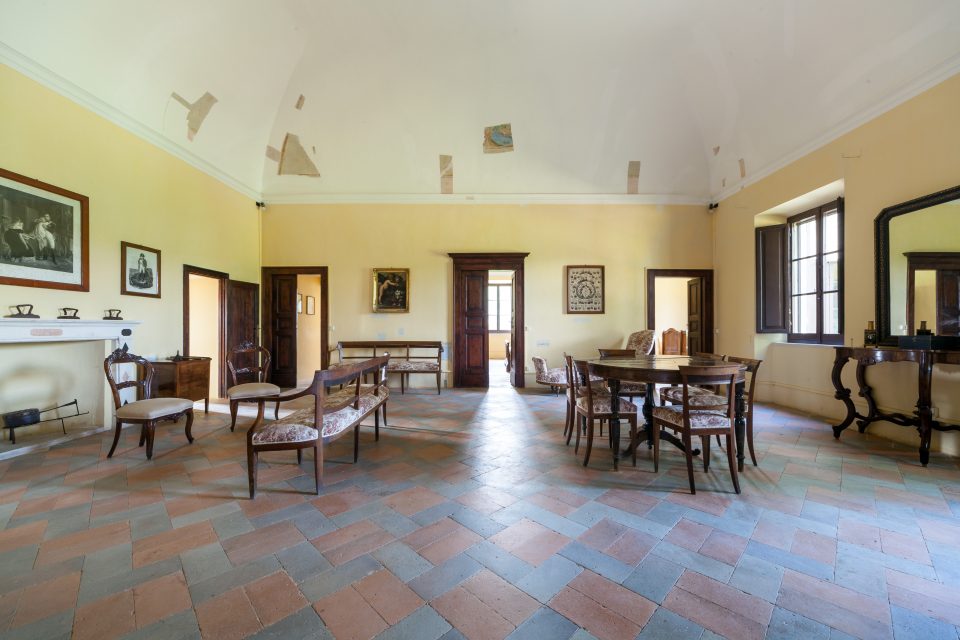
The main villa measures 6,100 sq ft over three floors and comprises a grand entrance hall, living room, sitting room, dining room, studio, library, kitchen, eight bedrooms, three bathrooms, a storeroom, two cellars, a woodshed and something that is tantalisingly referred to as an “interesting cavern”.“

The main house has been sympathetically refurbished to meet the requirements of modern living without compromising the heritage, and retaining much of the original character,” Giovanelli adds.

The buildings sit on three hectares of land, but an additional 33 hectares are available to purchase next door if the buyer wishes.The 8,300 sq ft farmhouse, which is in need of restoration, still has its original layout from the 18th century and is a typical country house from that period.

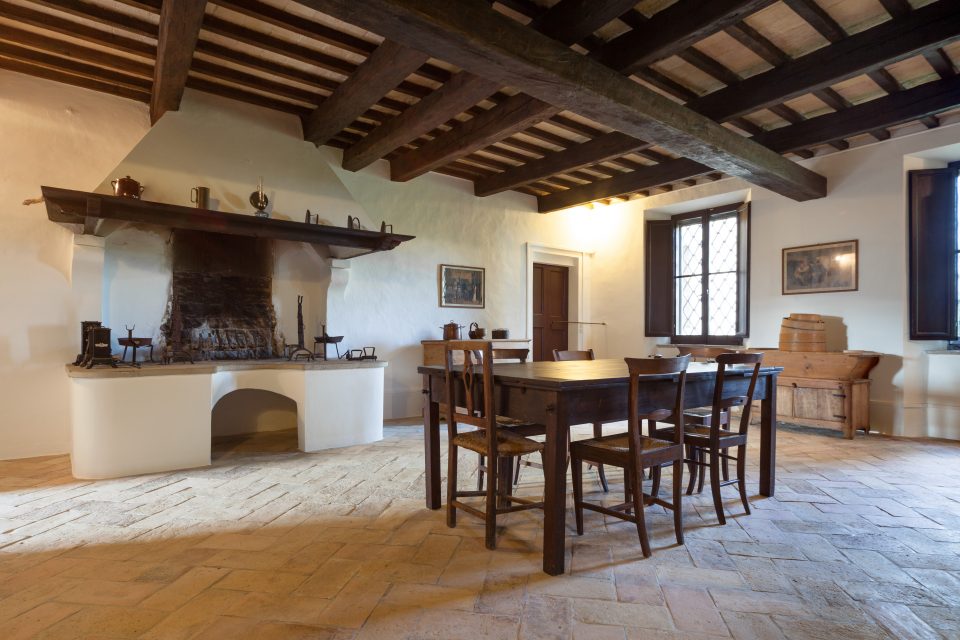
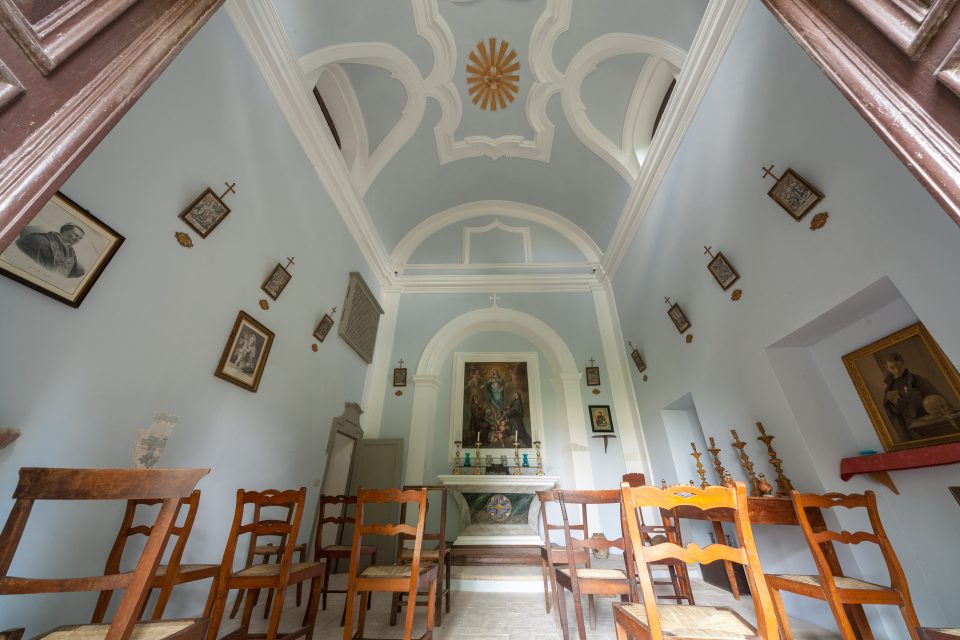
The basement houses a large vaulted cellar, where wine was once made, while the ground floor was used for the stables.The first floor is where the farmer lived, and is divided into a large central kitchen, the pantry, a hall and seven bedrooms.Finally, the property boasts a 330 sq ft consecrated private chapel. 

The property is 75 miles from San Marino and 30 miles from the Adriatic Sea. The wider region sits between the Apennines and the Adriatic sea and is known for its quaint historic villages, nature parks and coastline.

It has a mixture of sandy and stone beaches, some of which have steep rock faces creating interesting coves and creeks.It also has a more temperate climate than much of Italy, with relatively mild winters and summers that are cooled by sea breezes.

“Villa Leone is a historically rich, charming Italian property in the rolling hills of the Ancona countryside, just half an hour from the sea, surrounded by fields and woodlands,” Giovannelli adds. “It’s being offered at a competitive price, and has potential to be a successful business or luxurious family home.”

How a Notting Hill garage was transformed into an LA-style luxury home

Published in City A.M., Nov ’19

When you think of Los Angeles, you probably imagine broad, sun-drenched streets, palm trees and the kind of airy, modern villas that we see on TV and in the movies.

It doesn’t have much in common with rainy London – but that didn’t deter the designers of a new home in Notting Hill, who set out to replicate the LA vibe on the site of a former car garage.

Project manager LXA and architect Gebler Tooth utilised space between existing buildings to create The California – a spacious five bedroom, five bathroom home off Hereford Road, which also has two large reception rooms, a patio and a roof terrace. The property’s size is masked by its discreet street entrance, a feature which the designers have likened to Marrakech’s famous riads.

“It is a Narnia site – it has a tiny little entrance gate at the front, and then you walk through a narrow corridor and the whole building opens out in front of you,” says David Rees, managing director at LXA. “It feels secure because you’re 50 yards away from the street, and there are three levels of security before you get in – which makes it a great family home.”

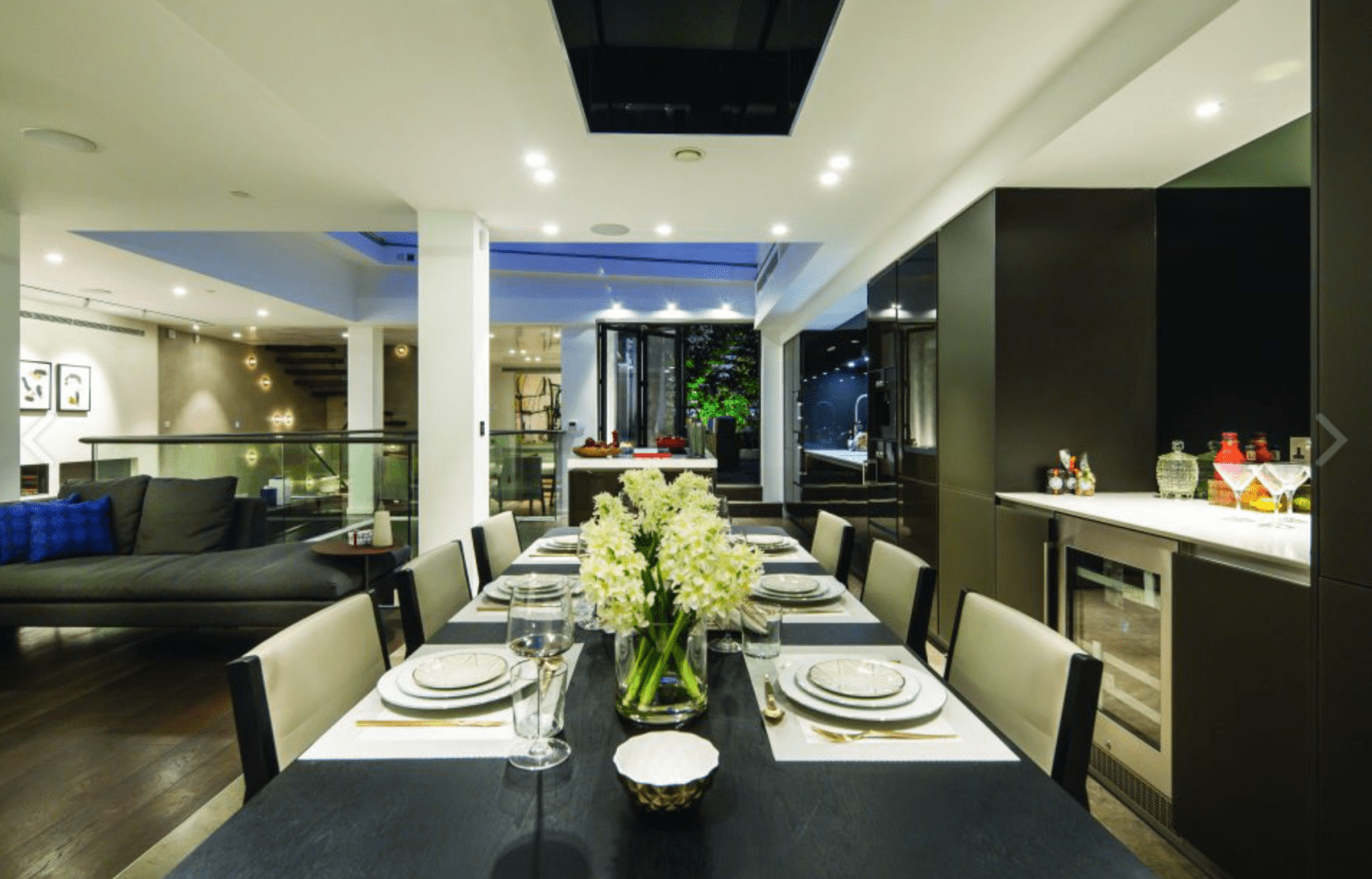
Inside, a 20ft atrium links the three storeys, bringing light into the home which was largely built underground due to planning constraints. The roof can be opened in the event of LA-style weather, and is thought to be the largest retractable glass ceiling in a London home.

“You feel as if you are outside all the time,” Rees says. “A lot of other properties in the Notting Hill area are classic Victorian semis, but this is a completely unique proposition. It is a contemporary, modernist building.”

The interiors are elegant and minimalistic, with dark wood flooring, white linen soft furnishings, olive accents and modern art pieces on the walls. The home has also been fitted with under-floor heating and computerised smart lighting.

LXA and Gebler Tooth developed the home speculatively, but it has now been bought by a London family who were attracted by its unique features. “They felt there was nothing else like this around,” says Rees. “They didn’t want to change anything, and they even kept the art that we put on the walls.”

FOCUS ON LEWISHAM: NEW SOCIAL SCENE SPARKS INTEREST FROM FIRST-TIME BUYERS

Published in City A.M., Nov ’19

One might assume there is something in the water in Lewisham. Although it is a relatively unassuming corner of South East London, it has been the birthplace of a wealth of musical talent: Cream drummer Ginger Baker, Rolling Stones bassist Bill Wyman and Sex Pistols frontman Sid Vicious were all born there.

The town’s own profile has historically been much lower than that of its famous children – but now that is starting to change.

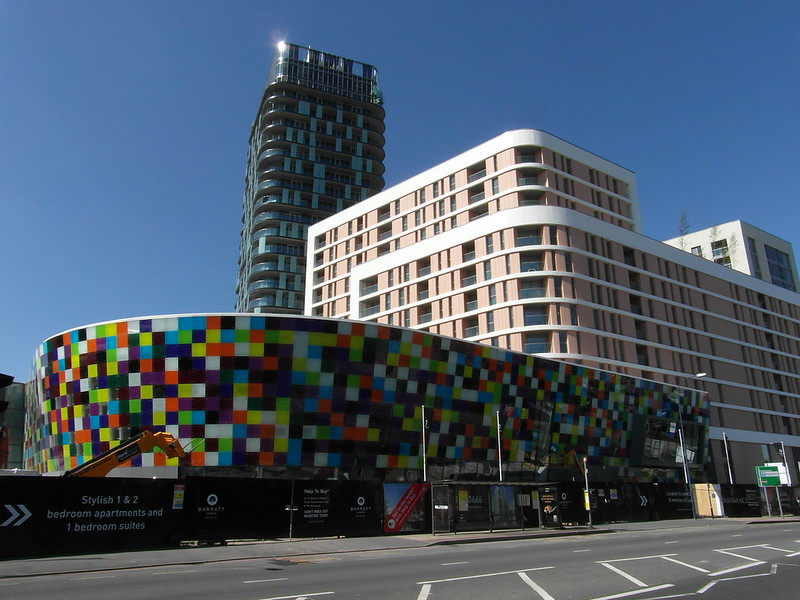
“Over the last few years, Lewisham has experienced significant redevelopment with an improved restaurant and bar scene, better facilities and new homes,”says Frances Clacy, research analyst at Savills.

This includes the opening of Model Market, a late night street food venue in a former 1950s market run by Street Feast, who also operate Dinerama in Shoreditch; and Suttons’ Radio, a trendy pub in a former radio shop run by Antic who also operate Dogstar in Brixton and the Tooting Tram & Social.

Yasmin Forester of JLL in Greenwich says Lewisham has had a surge of popularity among young renters for this reason – as well as the fact rents are much cheaper than other, similarly well-connected young professional hotspots like Clapham.

“We are seeing our highest number of registrations for applicants wanting to move into the area”, Forester says. “It offers diversity and culture and is popular with younger tenants.” These renters are starting to translate into first-time buyers, too. According to Hamptons International, 44 per cent of homes in Lewisham were bought by a first-time buyer during the last 12 months.

House prices still cheaper than London average

“Over the last few years, many young professionals have set up home in Lewisham,” adds JLL’s Graham Lawes. Typical buyers have rented in South East London before they purchase, meaning Lewisham is known to them.” 
It’s an area that seems to fit the lending criteria of the bank of Mum and Dad, too.

“It has become quite normal to have a gifted 25 per cent deposit from a Blackheath resident who is helping their son or daughter to purchase in nearby Lewisham,” Lawes adds. In addition, Lewisham buyers have been helped further by the fact that house prices are still cheaper than the London average.

According to Savills, the average terraced property costs around £585,000: up to 15 per cent cheaper than comparable homes in other London boroughs. Typical stock is varied, ranging from new-build blocks of flats like Peabody’s recently-launched Lucent Point to smart red-brick houses on desirable streets like Duncrevie Road.

“For those looking to buy their first property and for others trading up the ladder, Lewisham is a pretty attractive prospect thanks to its zone 2-3 rail and DLR links as well as its well-performing schools,” says Clacy. “Higher house price values in neighbouring places like Greenwich and Blackheath have drawn people to the neighbourhood, who by moving just a few miles south are likely to get more space for their budgets.”

House prices are rising rapidly, though. In the last year they have increased by 5.4 per cent compared to 0.2 per cent across the capital, and for the last five years that figure rises to 47.4 per cent compared to 19 per cent. 
The continued investment into Lewisham means prices will continue to rise, according to Lawes.

“You can see the investment into the infrastructure and the careful planning in progress. This should translate into strong capital values down the line when there is more political stability and economic certainty,” he says.

Photo: Reading Tom on Flickr

FIRST LOOK: ZAHA HADID ARCHITECTS’ FLOWER-INSPIRED LOBBY FOR SOUTHBANK TOWER

Published in City A.M., Nov ’19

The critically-acclaimed firm of architects founded by the late Zaha Hadid is responsible for London cultural landmarks like the London Aquatics Centre built for the 2012 Olympic Games and the Serpentine Sackler Gallery in Hyde Park.

Until now it had not worked on any residential projects in the UK, but it has just started a new commission to redesign the lobby of Southbank Tower – the 1972 Richard Seifert-designed office building which was converted into 191 apartments in 2015.

City A.M got an exclusive first look at its plans for the project, the centrepiece of which is a bold feature lighting scheme inspired by the intricate, organic forms of flower petals.

The sculptural petals, made from glass fibre reinforced gypsum, reflect the fluid shapes seen in lots of Hadid’s work, which led to her being dubbed ‘the Queen of the curve’. Her other major works included Guangzhou Opera House in China and Sheikh Zayed Bridge in Abu Dhabi.

“The design has evolved from our work reinventing the spaces of art museums and galleries around the world,” says Helmut Kinzler, project director at Zaha Hadid Architects (ZHA). “We took a sculptural approach to the space, and decided not to include any works of art because we see it as a canvas in itself. We also wanted to incorporate lots of light, because sculpture can only work in conjunction with light.

The petal forms will be made in an off-site studio using 3D digital files, which ZHA says will allow it to create a level of detail usually associated with “intricate, hand-crafted design works.” The fluid curves of the structure will house the concierge on the ground floor, before peeling back at the top to reveal a new mezzanine level.“Residents will have a place to meet whoever comes in, and they can have small parties and gatherings there,” says Kinzler.

The lobby’s material and colour palette draws inspiration from the existing building design, marrying marble and concrete with walnut, leather and silks.

The work has been commissioned by a private investment firm which acquired 37 apartments in the 41-storey tower in early 2018. It will re-launch the apartments to the market following the completion of the lobby, and has appointed Knight Frank and JLL as sales agents.

Property focus on Sloane Square: This 1980s hotspot is experiencing a revival

Published in City A.M., Nov ’19

]It may be famed for being the social epicentre for the young and blue-blooded in the 1980s, having lent its name to the Sloane Ranger set which included Princess Diana and Sarah Ferguson. But the area around Sloane Square is now getting a modern makeover – and vying with other parts of Chelsea and Mayfair to be one of the capital’s best postcodes.

“Move over Eaton Square and Belgrave Square – there is an old kid with a smart new look on the block,” says Charlie Smith, managing director of London Real Estate Advisors. The rejuvenation of the area around Sloane Square has been led by The Cadogan Estate, the family trust which owns much of the land in the area.

“The Cadogan Estate has worked hard on a masterplan to deliver a radical smartening up of the top of Sloane Street and the Square,” says Smith. “The apartment blocks overlooking the square are now some of the best residential real estate [in the area], with the potential to be on a par with Eaton Square, Belgrave Square or Grosvenor Square in the future.

Cadogan is also improving the retail offer on the King’s Road, which runs west from Sloane Square and has become a bit bland since its 1960s heyday. The Ivy Chelsea Garden and Gail’s Bakery have already established themselves on the street, and new names set to open soon include cult US fitness studio SoulCycle and Vardo, a new restaurant from the team behind Caravan in King’s Cross.

Surge in activity

Sloane Square has always been popular with buyers from overseas, but there is a particular spike at the moment.

“We have a lot of overseas families looking in Sloane Square taking advantage of the weak pound, especially Americans, Chinese, whose children are going to be educated here, and Arabs, who know the area well and will always invest here,” says Laura Wilcox-Chandley, director of South Kensington & Chelsea at Marsh & Parsons. “But there has also been an increase in UK buyers.” This surge in activity is being fuelled by an assumption that prices in the area have hit bottom.

“Brexit fatigue, realistic pricing and recognition that we have likely reached the bottom of the market has encouraged many astute buyers to come down from sitting on the fence,” says Rowland Smith of Chestertons, adding that there have been many more sales in 2019 so far than in the same period in 2018. “Savvy buyers are still willing to invest in prime real estate in one London’s most exclusive and attractive neighbourhoods,” he adds.

Recently, his office sold a three-bed lateral apartment in a stucco-fronted development on Chesham Street for a “unprecedented” sum of more than £4,000/sq ft to an international buyer.

‘Truly fabulous flats’

According to Savills, prices in Sloane Street and Knightsbridge have fallen by 12 per cent since the referendum, compared to a 13.6 per cent fall in prime London overall. Average home prices still slightly undercut the prime London average at £1,700/sqft.

The best properties in Sloane Square are generally considered to be the tall, narrow red brick terraces in Cadogan Square.

“There are some truly fabulous flats here that take full advantage of exceptionally high ceilings, particularly on the first floor, and views onto the lovely square and its tennis court,” says Nina Harrison, executive at Haringtons Buying Agency.

New developments under way include Qatari Diar’s £3.5bn Chelsea Barracks, which comprises 375 homes and Citygrove’s The Clearings, 76 apartments located on the site of a former depot for John Lewis-owned department store Peter Jones.

It’s been a while since Sloane Square was the place to be in the 1980s – but if its lifestyle offer keeps on improving, maybe its time will come again.

Image: King Huang on Flickr

first look inside the first finished apartment at Battersea Power Station

Published in City A.M., November 2019

Plenty of property developers try to brand their latest apartment block as ‘iconic,’ which, nice as many of them are, is usually a bit of a stretch.

The redevelopment of Battersea Power Station into 253 luxury flats and a new headquarters for Apple doesn’t have that problem, however.

Other than a three-year hiatus from 2015 while the damaged columns were replaced, its towers have been a stalwart of London’s skyline since the 1930s and have featured in everything from Hitchcock films to The Beatles’ Help! to a Pink Floyd album cover. 

But when you redevelop such an iconic building, there is pressure to create something worthy of the structure it inhabits.

So what do the new flats look like?

City A.M took a tour of the first apartment to be completed within the original grade II*-listed power station with designer Tim Boyd of Michaelis Boyd – which also designed the interiors for Soho House and the Groucho Club – and Battersea Power Station’s UK sales director Georgia Siri.

‘Not cookie cutter apartments’

The apartment is situated on the second floor of the old Turbine Hall A, on the Western side of the power station. Boyd says there were 174 different floor plans for the 253 apartments, because there were so many parts of the building’s structure that could not be altered due to it being listed.

“The floor plans had to be tailored to the building – these are not a cookie cutter apartments,” he says. Most of the flats have long been sold, but when they came on the market in 2013 one-beds like this one started from £1m, while four-bed family homes started from £4m.
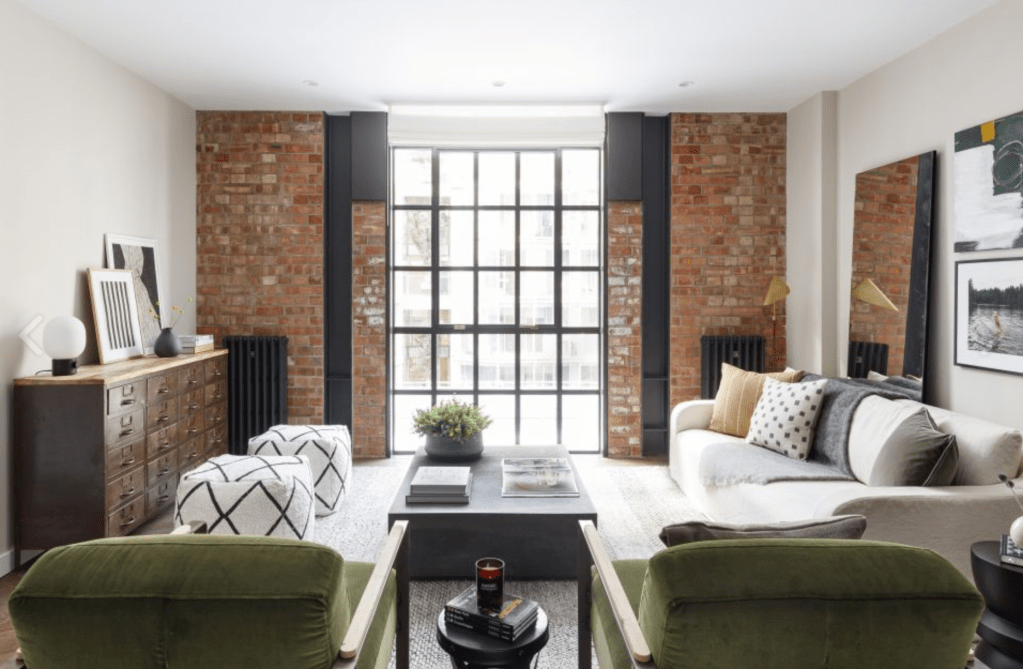
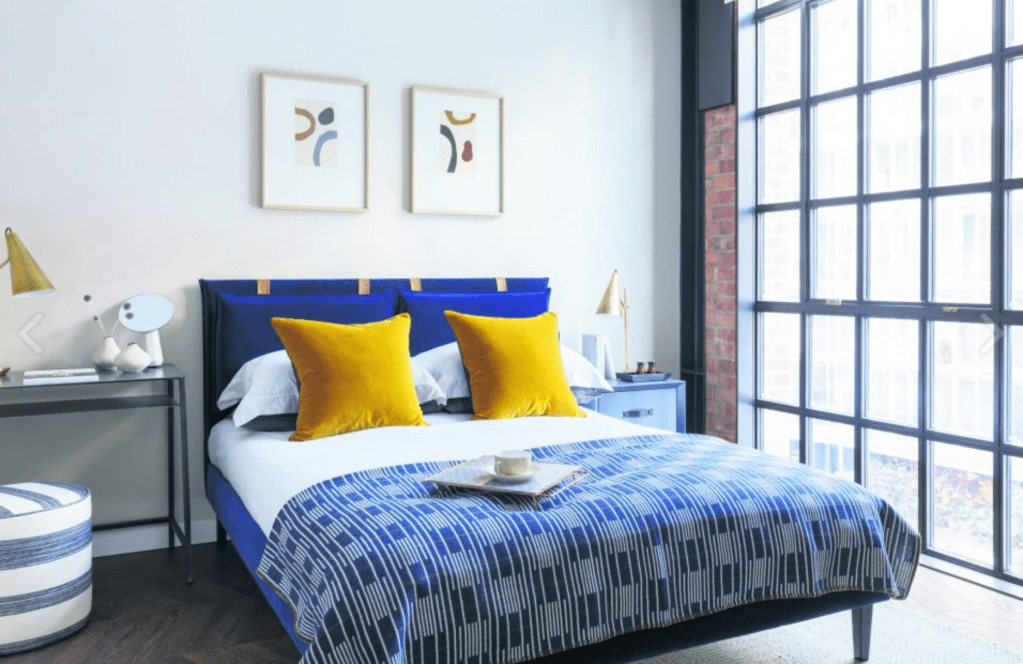

The apartments span eight floors and are accessed via wide corridors, some of them on mezzanines, with original brickwork and steel rivets along the walls. These walls will separate the apartments from the offices, shops and leisure space in the central part of the building, which they run around the outside of.

Features like the runner leading up to each apartment, the heavy wooden door and the long internal hallway within the flats signal a higher specification than many new builds and the apartment feels spacious for a one-bed.

The developers have always insisted that people have bought these flats to live in, not just as investments, and the care they have taken in fitting them out would seem to back that up.

“It’s a place for people to live in rather than just exist in,” says Siri. “It is about owning a piece of heritage and history – the apartments have been bought by people who want to pass them down through their families.”

Inspired by the art deco ‘glory years’

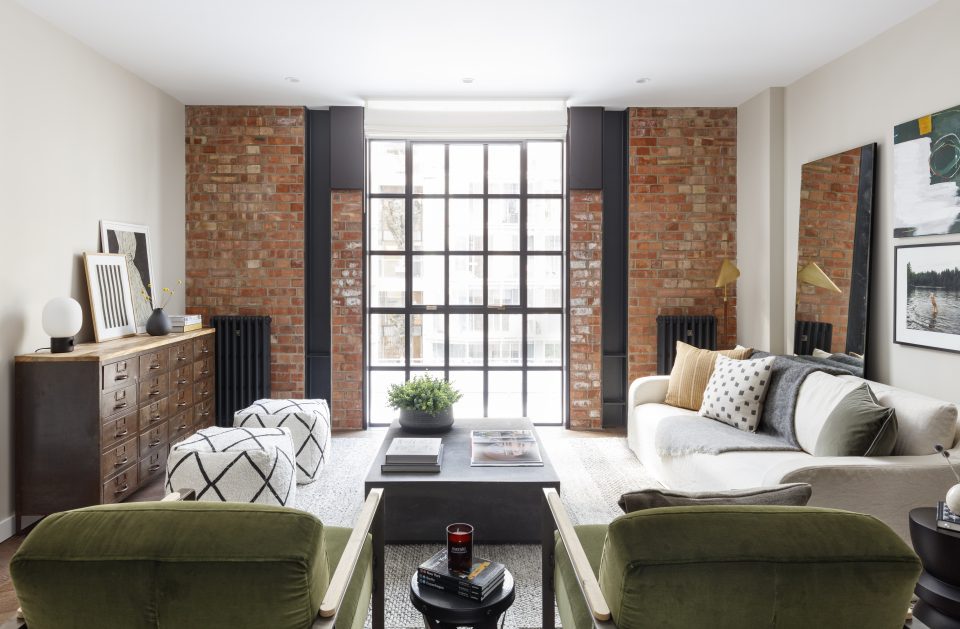
The original 1930s brickwork and steelwork are exposed, and the industrial theme is continued in the floor-to-ceiling crittal windows and cast-iron column radiators, which are painted black. The apartment was dressed by th2designs.

There are two colour palettes for buyers to choose from: Heritage 33 and Heritage 47. The power station was designed in two parts, and the palettes reflect those two eras. Heritage 33, on display in this apartment, uses bold materials and textures inspired by the power station’s art deco glory years when it produced more than a fifth of London’s electricity.

Boyd says this is referenced in everything from the toggle light switches to the bathroom which is fully tiled in teal and dark green with gold finishes. “Those colours were based on the colours of the original turbine hall,” he explains. “I like its relation to the rest of the building – it’s not like any other new development.”

The finishes are designed to last, too. “The lacquered brass in the kitchen will improve with age, as will the chevron flooring,” says Boyd.

The power station may have an impressive history, but this apartment shows there’s plenty of life left in it yet.

Office Space: Inside the opulent Mayfair base of luxury property developer Clivedale

Published in City A.M., November 2019

Real estate firms’ offices tend to fit into one of two moulds: a converted Mayfair townhouse, an old-fashioned relic left over from the days where Hanover Square was overrun with estate agents in braces and pinstripe suits; or a clinical, corporate space interchangeable with that of any other property company, law firm or accountant.

Super-prime property developer Clivedale’s is neither, and it shows the moment you walk through the door. The entrance lobby at 73 Brook Street in Mayfair sits beneath a glistening sculpture, a kind of deconstructed chandelier where curved pieces of transparent and amber glass are suspended across the entire ceiling.

Opulent, striking and modern, it immediately tells you what Clivedale is about – and it should, because the company developed the office building itself.

The sculpture was created by design studio Haberdashery, and is supposed to look like water, alluding to Brook Street’s previous life as – no prizes for this one – a river. Creating a “dramatic sense of arrival” was a priority for the building according to development director David Laycock. “The material is almost liquid-like, and it scatters light across the ceiling and floor like a moving river,” he says.

The company, which is less than a decade old, has already made a name for itself developing some of the most luxurious apartments in central London. 
“We are an exclusively super-prime developer with an eye for detail and an innate understanding of the global ultra-high-net-worth investor,” says Fred Scarlett, Clivedale’s sales and marketing director.

He wanted the office to reflect how the company is “setting new precedents in craftsmanship and service.” Studio Indigo was the interior designer, but Clivedale was involved throughout. It shares the building with just one other small company, which only occupies it part time, so it had plenty of opportunity to put its stamp on the place.

An office for grown-ups

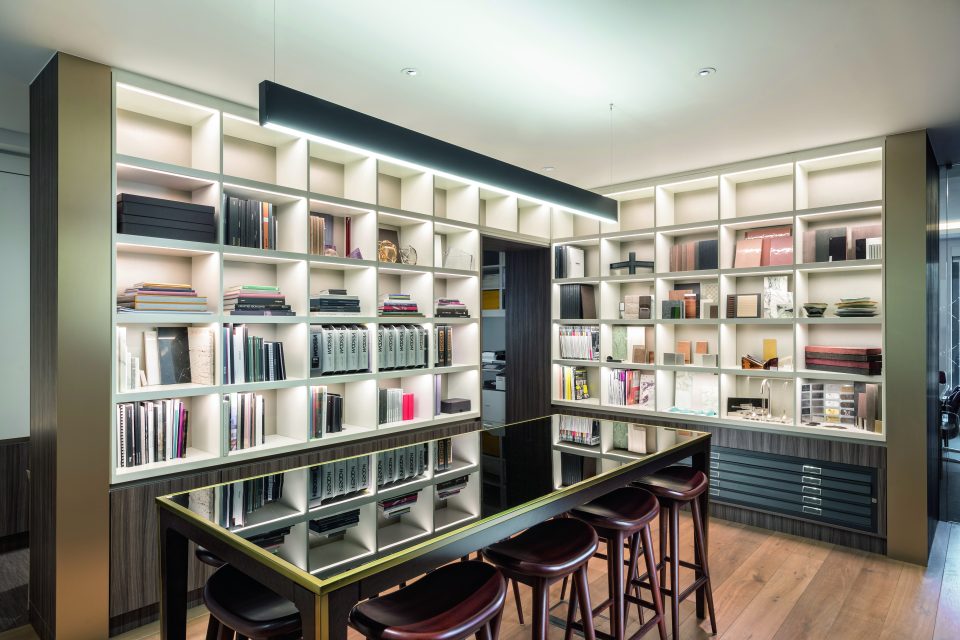
Clivedale is developing high-end apartments at the Residences at Mandarin Oriental Mayfair, and when I visit its office, there’s a table covered with weighty silver taps, slabs of glass and marble, super-soft carpet samples and fabric swatches it plans on using there.

This meticulous approach has clearly been replicated in the design of its own office. In a world of photo-fit WeWorks, it’s refreshing to see an office that isn’t even trying to be techy and trendy. If your standard co-working space looks like a child’s playroom, this is the grown-ups’ dining room where the best china is kept.

When Clivedale’s clients, who include some of the wealthiest families from both the UK and abroad, come to Brook Street, Laycock wants them to see “a world-class office building that reflects the quality we are delivering across our portfolio”.

The Mandarin Oriental apartments are going up on the site of one of Clivedale’s former offices in Hanover Square, which it vacated to move to Brook Street in late 2017. It also had a smaller back office on Bruton Street.

The Hanover Square space was more of a marketing suite than a workplace, and the larger floorplates at 73 Brook Street allowed it to separate these two functions on to different floors.

Moving out of the ‘goldfish bowl’

Another gripe with the old base was that, thanks to its location just behind Oxford Street, its “goldfish bowl” full-length windows and the fact that it was filled with pretty-looking models of houses, passing tourists would often let themselves in for a look around. Not ideal when you’re sitting down with a sensitive high-net-worth client.

Its new marketing suite, which takes up a whole floor of 73 Brook Street, is an intimate space designed for potential buyers to chat with the team one-on-one: think dark wood panelling, veined marble floors and plush soft furnishings in shades of slate and dusty blue. It also doubles up as an entertaining space, and Clivedale has held many a cocktail reception there. Laycock says he wanted the space to “mimic the look and feel of a five-star hotel,” and it doesn’t disappoint.

The centrepiece is a metal model of London with the location all of Clivedale’s developments marked out. Its stone and chrome plinth doubles up as a dinner table when the model is removed. It’s just one example of how it’s created a space which is, as Laycock describes it, “rich in design but completely functional.”

Laycock’s office is on the showroom floor, and, with its sumptuous grey carpet, marble coffee table and wood-panelled shelves lined with all manner of expensive-looking curios, it looks like a cross between an office from Mad Men and a swanky Mayfair members’ club.

Five-star ethos

Accessed via an equally extravagant lift, which has a ripple-effect wall feature achieved by layering iridescent fabric behind glass, the fourth floor is where the behind-the-scenes work happens, or as Clivedale staff refer to it, where the “messy men” sit (there are women, too, though presumably they’re more tidy). Each bank of desks has a planter filled with succulents at the end, and a gardener comes by to water them every so often.

There’s also a sample-laden table, and desks littered with pieces of fabric and materials. A well-stocked bookshelf contains the usual hard-backed property brochures as well as books about cricket, Victorian Bloomsbury and the history of Vauxhall Gardens.

The five-star ethos of 73 Brook Street continues down in the basement, where employees can enjoy the perfect post-gym set-up: spacious, stone-tiled shower rooms with huge back-lit mirrors, shelves filled with piles of fresh, fluffy towels and an espresso machine for the first coffee of the day. And there’s no stashing grotty gym gear under desks, either: tucked away next to the showers is the staff washing machine, stocked with all manner of detergents.

Clivedale is now in the process of developing another, adjoining office next door, which will make the building 73-77 Brook Street and where it will invite other companies to come and bask in its luxurious glow.

It’s bringing its facilities up to the next level of luxury, too, with plans including a humidor, gun storage and a dumb waiter, with stops on each floor. And it might not stop there. Scarlett says he wants to make “Clivedale quality products” on a larger scale, delivering “the highest standards of architectural and interior design” to more potential clients. He thinks this is crucial if companies want to keep their staff around.

It just goes to show you don’t always need a slide or a beer tap to keep the people who work for you happy. Sometimes, a really nice office with a washing machine will do.

Is your house killing you? Why some people think paint, carpets and furniture could be poisonous

Published in City A.M., October 2019

Think back to the last time you redecorated a room. Did you paint a wall? Lay a new carpet? Buy a shelving unit with a Swedish-sounding name? According to some housebuilders, architects and designers, all of these things could be making you ill.

They say that many common types of paint, carpets, flooring, kitchen and bathroom surfaces, and MDF furniture – essentially everything in our homes – contain chemicals that can be damaging to health. As a result there is a small but growing drive to detoxify new homes, and clean up existing ones. But are our homes really bad for us – or is this just hypochondria’s latest frontier?

The substances in question are called volatile organic compounds (VOCs), and are also found in cigarettes, solvents and cleaning products. The one you’ve probably heard of is formaldehyde, and others include benzene and bisphenol A. While they’re not going to poison you on contact, some believe that long periods of exposure can cause respiratory problems and skin diseases, as well as other, potentially more serious illnesses.

Top 50 architect Perkins and Will has created an open-source website called Transparency which contains a ‘precautionary list’ of materials that contain ‘questionable’ substances, in the hope that architects will start to question the materials they use. The number of substances on the list is currently 56, and the architect’s clients will be informed if any of them are to be used in their projects.

Joseph Homes' No1 Millbrook Park
Joseph Homes’ No1 Millbrook Park, where the developer has tried to reduce chemicals in the building process

“Our hope is that this will influence manufacturers to reformulate products for reduced toxicity” reads the website. “By changing one product, together with our partners in the design and construction process, we believe that we are participating in an effort to change the world.”

The website cites a US government study claiming substances in homes can “interfere with hormone regulation and physical development… lead to neurological problems, a weakened immune system, and more.”

But if the danger is real, why aren’t more people talking about it? Well, it’s almost impossible to prove – and for this reason, little evidence is being collected to even try to prove it.

Lack of evidence

“Isolating the cause of illnesses is very difficult. Is it from their home or pollution out on the streets?” says Peter Newton, architectural director at Barton Willmore and associate lecturer at Oxford Brookes University, who has been researching the hidden chemicals in our homes for more than a decade.

The figures out there tend to be from healthy air campaign groups, and it’s not always clear how they reached them. My Health, My Home says 15.3 million UK homes are at risk of ‘toxic home syndrome’ – when a combination of pollutants, allergens and chemicals mean respiratory and skin diseases “can occur more frequently.” Another such group, Clean Air Day, estimates that 45 per cent of homes exceed “healthy” levels of VOCs.

You know that fresh paint smell? It’s really not good for you

Most housebuilders aren’t paying much attention, but that hasn’t stopped Joseph Homes, which is currently building about 200 homes around London. Its managing director, Michael Bryn-Jones, says the company plans to be “VOC-free” within five years.

“You know that fresh paint smell? It’s actually really not good for you,” he says. “We are looking at the materials we put into homes and the chemical components of them, and asking, are these things we would ordinarily want to be around?”

He says people who buy Joseph homes don’t usually ask about it of their own accord, but they like the VOC-free approach when it’s explained to them. Having fewer scary-sounding chemicals in your family home isn’t a difficult sell – but is there really a serious danger to people’s health? Bryn-Jones says it’s at least “a debate we should be having”.

There is a new market for chemical-free versions of building materials, such as this sound insulation by EO Acoustic which is made out of conifer needles.

Another early mover is Facit Homes, which fits all its homes with a filter where “stale” air is extracted to remove, among other things, “chemicals released from furniture and carpets” and replaces soft furnishings with cement, wood, ceramic tiles and synthetic blinds.

“As concerns grow over air quality and pollution outside the home, particularly in cities, customers are increasingly keen to ensure the air they breathe inside their home is clean and safe,” says director Rhys Denbigh.

The idea of stripping your home of unwanted chemical nasties seems like it should tie in neatly with the current vogue for ‘wellness’ and being eco-conscious. But in reality, the two don’t sit well together. The way to make a home ‘green’ is to make it extremely airtight, so there is as little leakage of energy as possible. But doing that also traps in pollutants, allergens and chemicals.

If you’ve got an eco-friendly home, chemicals are likely to stay in there far longer

“If you’ve got VOCs in [an eco-friendly] home, they are likely to stay in there for longer,” says Newton. “So you have to think about what you put in your house far more.” He adds that in Germany, where lots of homes are built under the strictly-defined green standard, Passivhaus, “you don’t really find people building furniture out of MDF.”

Cleaner by design

Cleaning up the air inside our homes has also caught the imagination of the design industry. For example, at this year’s Global Grad Show in Dubai, which showcases the work of emerging designers across the world, Paulina Kwiatkowska of the Academy of Fine Arts in Warsaw will present a series of sculptures that are displayed as pieces of art, but also cleanse and regulate the air and humidity in a room.

“People are only now realising that the air inside our homes is dirtier and more toxic than out on the streets,” says its curator Eleanor Watson of The Design Museum in London. “And designers are trying to come up with a solution for that that is also aesthetically pleasing.”

One of the air-cleansing sculptures

At the Grand Designs showcase in Birmingham earlier this month, designers AIVAN presented Chip[s] Board: a natural MDF alternative made from potato peel, bamboo, wood and hops which doesn’t contain formaldehyde and is also biodegradable. Atticus Durnell presented That’s Caffeine; a glittering plastic substitute made out of recycled coffee which can be used on kitchen and bathroom surfaces to avoid using petrol-based resin, which also contains VOCs; and EO Acoustic presented sound insulation made out of conifer needles. There more widely available offerings, too – last year Dyson launched a “purifying fan heater” that claims to “remove gases including NO2 formaldehyde and benzene,” yours for £549.

Cost is another barrier to cutting unwanted chemicals from the places we live. With VOC-free alternatives to paint and MDF often being more costly, ‘healthier’ homes might only be for those who can afford it. Ben Adams, founder of Ben Adams Architects, says that while his clients are increasingly interested in achieving “the kind of air cleanliness we see in hospitals,” it is “usually a case of striking a balance between clean air and a sensible budget.” But he adds that people can start by trying to avoid using plastics when decorating their homes, instead using timber, steel, aluminium or leather.

Even if these theories are right, people are going to need a lot more convincing before they believe they can get ill from the stuff that they’ve been putting in their houses for years.

“At the moment, you have to do the work as the consumer,” says Newton. “If you’re deciding between one type of flooring and another, cost is the biggest determinant – and it will remain that way until there is [more evidence] about the risks.”

For now, it’s unlikely many people will be giving that lick of paint a second thought.