Portrait of a Lady on Fire review: Banishing men makes for a revolutionary period piece

Published in City A.M., Feb ’20

There’s something strange about Portrait of a Lady on Fire, the enlightenment era French-language romance set on an island off the coast of Brittany, and it took me a while to work out what it was.

It’s about three young women: Héloïse, a lonely debutante; Marianne, the bohemian artist hired by Héloïse’s mother to paint her portrait; and Sophie, the teenage housemaid who has found herself with an unwanted pregnancy.

Héloïse’s mother leaves, and for a few days, the trio get to live free of social expectations. Héloïse and Marianne start to navigate their sexual attraction to one another, as well as helping Sophie through several progressively grim attempts at a termination.

The thing that struck me, it turns out, is that there aren’t any men. This is a two-hour film in which there are no named male characters, and no man has more than a couple of minutes’ screen time.

There are only the ghosts of off-screen men – Héloïse’s prospective husband who will be sent her portrait to make sure he likes the look of her; the unknown man who got Sophie into her predicament; the all-male Parisian art establishment in which Marianne has to exhibit her work under her father’s name, or not exhibit it at all.

It’s this female focus that stops it feeling like a fusty, bosom-heaving period piece (although some bosoms are heaved). Instead, it feels revolutionary.

Sure, the central romance in Portrait of a Lady on Fire is between two women, but this isn’t just a lesbian love story. It’s an exploration of relationships between women in all their forms, something that’s become director Céline Sciamma’s trademark, most notably in 2014’s Girlhood, in which she charts the coming-of-age of modern-day French-African teenagers in a down-at-heel Parisian neighbourhood.

It’s sexy, but not gratuitous – and apparently not sexy enough for the French (Sciamma said in an interview that, unlike everyone else, her native audience ‘don’t find the film hot’).

This is a period piece for the modern day, and it’s brilliant. 

Interest in Milan is going beyond fashion week, as second home market booms in this ‘pocket metropolis’

Published in City A.M., Feb ’20

This week, the world’s fashionable people descend on Milan as the city hosts the third of the four international fashion weeks.

But the global crowd – and UK nationals in particular – are starting to show an interest in Italy’s second city that extends beyond the runway shows.

Once known for being dull and industrial outside of fashion week, Milan is fast becoming a favourite location for wealthy second home buyers.

According to property agent Knight Frank, Milan has overtaken Rome as the number one location for high-net-worth individuals applying for Italian visas – and the UK is one of the most common home nationalities.

So why is Milan proving so popular?

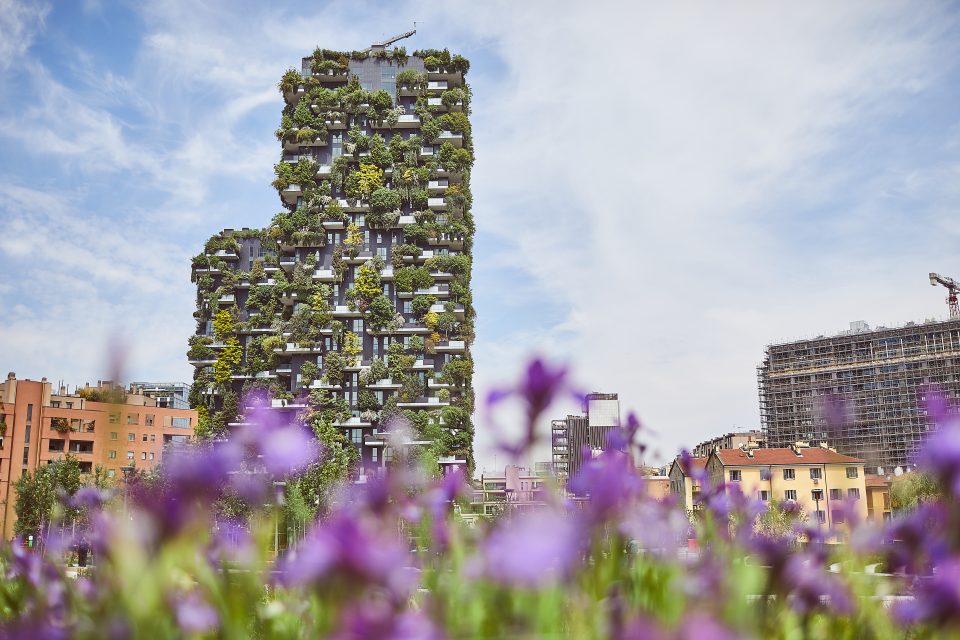
The Bosco Verticale towers at COMIA’s Porta Nuova in Milan

“It’s cosmopolitan, really it is the only international city in Italy and it has the best leisure offering,” says Lodovico Pignatti Morano, managing director at the Italian arm of Sotheby’s International Realty.

This extends beyond the luxury boutiques: Soho House and New York’s Core Club will open in Milan this year, the latter being Core’s first outside Manhattan.

Antonio Fuoco of JLL Milan describes the city as a “pocket metropolis: compact, secure and inexpensive” – and a move to Milan can be a savvy one financially.

Since 2017, non-doms in Italy have not been taxed on foreign income provided they pay an annual flat tax of €100,000, making Milan more attractive to high net worths than cities like London and Paris.

Cheap and cheerful

Property values in the city have also fallen since Italy joined the Euro in 2002. “Fifteen years ago it would have been cheaper to buy in Munich or Berlin, but now that’s not the case,” says Pignatti Morano.

This makes Milan a good bet for buyers who are in it for the lifestyle, rather than an instantly high-yielding investment.

“What drives the market is the gap between the low price of property and the high average income,” says Fuoco. “On the best streets in Monaco you might pay €20,000 per square metre, but in Milan, it’s €12,000.”

Cultural differences mean Milan will never build reams of shiny tower blocks like London, but there are several major developments under way.

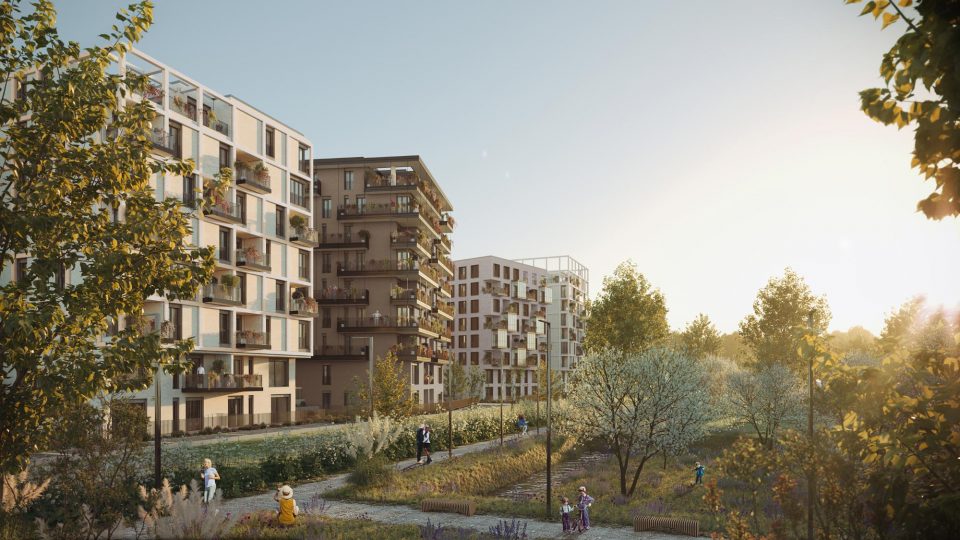
Apartments within SeiMilano

These include COIMA’s Porta Nuova, home to the HQs of Google, Amazon, and Alexander McQueen as well as 400 homes, which played host to the Versace fashion week show.

Its most recognisable feature is the Bosco Verticale, two ‘vertical forest’ apartment blocks designed by Stefano Boeri Architetti which feature more than 15,000 plants on their terraces.

Greenery is also a big feature of Varde Partners and Borio Mangiarotti’s SeiMilano, an ‘inhabited park’ with shops, offices, 500 apartments and 160,000 sq m of green space.

These verdant spaces don’t fit with Milan’s industrial image, but that’s fast being shed. Now, it’s a chic, cheap and cheerful pocket metropolis.

Push film review: A challenging look at gentrification around the world

Published in City A.M., Feb ’20

Property developers, look away now.

If you’ve never felt the slightest bit icky when buying a £4 cup of coffee in a formerly working-class neighbourhood, you’re probably not going to like Swedish filmmaker Frederik Gertten’s new documentary, Push.

It’s all about gentrification, and whether we have the right to live affordably in a major city – an issue that’s painfully relevant for Londoners.

It follows Leilani Farha, the UN’s special rapporteur on housing, as she sets off on a trip around the world to hear the human stories behind the global housing crisis.

“Who are cities for?” she asks at the outset – and this is the narrative thread which runs through the whole hour and a half as she grills politicians about the housing issues happening on their patches.

Closest to home is a powerful interview with a man who escaped from his flat in Grenfell Tower. Thanks to house price inflation, he will have to move out of London if he ever wants to own a home again.

She also visits Seoul, where homeowners on one estate were violently kicked out of their homes to make way for an apartment scheme that never happened; Toronto, where some people are spending 90 per cent of their income on rent; and Berlin’s Kreuzberg, where locals are trying to buy up treasured buildings to protect them from demolition.

Although moving, these are really just different versions of a story we’ve all heard before, and it would be impossible to explore this subject without coming off a bit heavy-handed and worthy.

But it’s not all hand-wringing – some of the most interesting parts of Push are when it exposes the lesser-known pieces of the housing market puzzle.

In particular, it shines a light on the huge role played by private equity firms and pension funds. We might be a nation obsessed with house prices, but this is the side of the coin that doesn’t get discussed.

Push is not a particularly fun night out at the cinema. And like many good documentaries, you’ll probably get more out of it if you don’t already agree with its politics than if you do.

Actually, scrap what I said earlier – property developers, go and watch this film. I dare you.

Emma film review: Stylish Austen adaptation is lacking in substance

Published in City A.M., Feb ’20

Not unlike a cabinet reshuffle, Jane Austen’s 1815 novel Emma follows a group of largely unlikeable people being shunted around in different permutations, at the whim of an aristocratic blonde who’s used to getting their own way.

In this case it’s in the pursuit of matchmaking, something in which the titular character, 21-year-old provincial heiress Emma Woodhouse, considers herself an expert.

She spends her days engineering romances between her acquaintances to pass the time, until – and this shouldn’t be a spoiler, it’s Austen – she gets into some romantic shenanigans of her own. Swooning ensues.

The latest adaptation is music and fashion photographer Autumn de Wilde’s first project as a director, and it looks every bit the part. Everything is relentlessly pastel-hued and sugary, from the fabulously fussy lace-covered dresses, to the lavish gilded drawing rooms, to the piles of intricate jellies, cakes and macarons that seem to appear every time anyone sits down for a chat.

Unfortunately, though, this spectacular style isn’t backed up by a lot of substance.

Austen wrote Emma as a comedy, but unless you’re moved to fits of hilarity by Miranda Hart and Bill Nighy doing their usual shticks, only in ruffs and petticoats, it’s not especially funny. The film is never quite sure whether it is revelling in the pomp and frippery of Austen’s world, or sending it up.

Anya Taylor-Joy’s Emma is suitably wide-eyed and coquettish, but at times she’s too removed from the action, guiding the viewer through her world of gossip and romantic intrigue like a narrator.

This means the pivotal moment when she’s supposed to see the error of her scheming society ways and have an emotional epiphany comes off as disingenuous, and we’re left wondering why anyone would really want to sweep her off her feet.

British Baroque at Tate Britain review: A compelling journey through an unsung period of history

Published in City A.M., Feb ’20

At some point over the past few years, you might have fantasised about going back to a time before politics as we know it existed. To do that, you’d have to set your time machine about as far back as the Baroque period.

Running from the late 17th to early 18th century, it began with Charles II returning to rule as an all-powerful monarch 12 years after his fathers’ execution, and ended with the foundations being laid for the two-party parliamentary system we know today.

It’s this transition that British Baroque tries to illustrate. The curators say it’s the first major exhibition covering the period, and they have amassed an impressive collection of works, some of which have never left the stately homes they were commissioned for.

The first room is dominated by Antonio Verrio’s The Sea Triumph of Charles II, which sees the monarch being driven through the sea by Neptune on a chariot made of shells. It signifies the end of the Anglo-Dutch War – the latter having conceded supremacy over the seas – and shows that humility was not especially high on the Baroque agenda.

It was an era of excess, and this is reflected not only in the sumptuously-rendered silks and painstakingly painted wigs that adorn the royals and aristocrats in the paintings, but also in little hints at the naughtiness that went on behind the scenes. In a portrait of Charles II’s mistress Barbara Palmer and her illegitimate son, by Peter Lely, the pair are cheekily posing as the Virgin and Child.

By the end, though, these are replaced by stern portraits of Whigs and Tories, which aren’t nearly as fun. What happens in between is a compelling journey through a period of history that doesn’t get the attention it deserves.

it’s high time for london’s low line

Published in City A.M., Jan ’20

Plans for the new Low Line in Southwark have got Londoners a bit excited.

The project to rejuvenate railway arches and convert them into shops and green spaces has inevitably drawn comparisons to the High Line in New York’s Meatpacking district, which became an instant hit with tourists when it opened in 2009.

But the design by PDP London architects, which won an 82-strong design competition, is more than just a copy of the stateside linear park. First of all, as the name suggests, the Low Line is more down to earth than its New York counterpart.

“What’s interesting about this is that it’s very much on the ground. It’s not an elevated park like the High Line,” says Valerie Beirne of Better Bankside, the Business Improvement District backing the project.

It will cover a stretch of working railtracks running from Blackfriars Road out to The Blue markets in Bermondsey, and focuses on making use of the arches underneath, lots of which are unused or under-used. Ideas put forward so far include yoga studios, food markets, leather workshops, model-making shops, and childrens’ play areas, and there could also be a Low Line app to help people navigate the area and hear about events.

Flat Iron Square
Flat Iron Square is one of the areas along the proposed Low Line route

Beirne says the Low Line shouldn’t feel like one big project, but a series of new additions to the neighbourhoods along the route. These include Southwark, Borough, London Bridge and Bermondsey, parts of which are disconnected by the railway arches although they sit side by side.

“It’s not a big set piece that would be imposed on the area,” she says. “The railway has been a physical barrier that has severed neighbourhoods along its length, and the Low Line will improve its permeability and accessibility.”
Pedro Roos, partner at PDP London, says he wants the Low Line to be a “shared natural and cultural resource of the people, by the people and for the people.”

Similar to the High Line, the Low Line is supposed to bring nature into the city. Areas alongside the arches will be pedestrianised and turned into a green walkway with trees, wildlife habitats and community gardens. 
“We were very interested in how nature and biodiversity could be at the heart of the low line,” says Beirne.

If it works, it could act as a template for other areas of London that are bisected by railways – and there are certainly plenty of those. 
“We’re hoping we can develop thinking and then it can apply to other parts of London where the railway acts as a barrier,” Beirne says.

Property of the Week: This £20m Fulham mansion has The Hurlingham Club and a heliport on its doorstep

Published in City A.M., Jan ’20

Cinema, swimming pool, sauna, bar, wine storage. These are things most of us can only dream of having in our homes – but that’s what one super-rich buyer will be getting if they snap up Fulham mansion, New Lodge.

New to the market with a jaw-dropping £20m price tag, the six-bed, six-bath home on Broomhouse Lane is said to be the most expensive property put up for sale in SW6 in more than a decade.

Its surroundings are suitably well-heeled. Its next-door neighbour is The Hurlingham Club; the exclusive members’ sports and social club where the rules of polo were written in 1873.

A ‘cook’s dream’

At 9,550 sq ft, New Lodge is palatial in size. The top floor houses the bedrooms, all of which are ensuite, and the master has a his-and-hers walk-in wardrobe. The formal drawing room and kitchen are on the ground floor, along with the garden which Tom Middleditch at sales agent JLL describes as a “cook’s dream” with its own barbecue pit.

Ideal for a family that likes to entertain, there is a dining room and bar area on the lower ground floor with a temperature-controlled glass wall for wine storage and a walk-in servery. There is also a 12-metre pool, sauna, steam room, gym and cinema. Staff quarters are provided, and the home has multiple security systems with direct police call-out.

“There aren’t many homes of this size in Fulham. It is so pleasant and calm that you forget where you are,” says Ken Dowling at JLL. “The previous owners were really proud of the house and the interiors are minimalist but finished to the highest degree.”

It is well-connected to Heathrow – and also fits the bill if you prefer a more private mode of transport.

“The last gentleman I showed around flew his helicopter into the Battersea heliport, which is just across the bridge,” says Dowling.

For the grandest house in Fulham, you would expect no less.

Jumanji: The Next Level review: Jack Black and Danny DeVito’s star power doesn’t make up for shaky plot

Published in City A.M., Dec ’19

As a die-hard defender of the 1994 original, and a some-time apologist for its 2017 remake, I was willing to forgive a lot of Jumanji: The Next Level. It is, once again, a body-swap comedy in which a group of teenagers become characters in a 1990s video game.

And while you don’t ask much of a film like this in terms of plot, it fails to deliver even on even the lowest of standards.

Like an old house that’s been stampeded through by an assortment of jungle animals, its foundations are shaky. At the beginning the main character decides to jump back into the game where he and his friends all nearly died in the previous film. Why? Because he just dumped his girlfriend for having too much fun at college and he wants to make himself feel better by running around in The Rock’s body for a bit. When his friends have to go in and save him, no one is angry, and we’re supposed to root for them getting back together.

At another point a character is re-introduced from the first remake, without any clue as to who he is or why anyone knows him. It’s not safe to assume that everyone is as familiar with the Jumanji canon as I am.

There are precisely two good things about this film: Jack Black and Danny DeVito. In a repeat of the best gag from the first remake, Black spends some time in character as a vacuous teenage girl, snaffling up most of the laughs. DeVito is typecast as an angry little granddad who is delighted to get an upgrade from his decrepit body; also moderately funny.

The art director also deserves a pat on the back for recreating classic 1990s video game environments, with an abundance of swimming pools and vaguely Aztec-themed stuff.

The Next Level isn’t bad enough to shake my love of this franchise, but my patience has been sorely tested.

Four reasons why selling your house at Christmas might actually work

Published in City A.M., Dec ’19

Christmas is a time for many things. Family. Bad music. Overeating. One thing it’s not the time for is putting your home on the market. Or is it? According to some London agents, selling your house during the holidays might not be the complete no-no that you think. Here are some reasons why you might consider selling your house at Christmas.

Serious buyers only

“Even if you can’t get your property listed online [before Christmas], it’s a good idea to get an agent and encourage them to conduct viewings,” says Caroline Takla, founder of buying agent The Collection. “Buyers viewing at this time of year aren’t simply window shopping, so there is a good chance that those first few viewings may result in a serious offer.”

Families can make decisions

“It’s not unusual for a property purchase to be a family consideration, and Christmas is sometimes the one quieter time we all have in common,” says Charlie Smith, managing director of London Real Estate Advisors.

It’s also a time when the emotional side of property ownership really comes in to focus: family and friends visiting might prompt people to realise their house is too small – or too big – or to consider moving to a different area to be closer to them.

Boxing day online boost

Richard Page, marketing director at Dexters, says that offers coming in on Christmas Eve is “surprisingly common” because people are keen to secure a deal before the break.

Potential buyers might take Christmas Day off, but their search is often back on on Boxing Day according to Andrew Groocock, regional partner for Knight Frank City and East.

“Every year we see a surge of online activity from potential buyers, especially on Boxing Day,” he says. “Sellers should consider taking advantage of this uplift.”

Get ahead of January rush

Your home has more chance of standing out in the relatively quiet December market than among the January rush.

“The majority of homes available in December will have been on the market for several months and become stale,” says Takla. “Hence, when a shiny new home becomes available, there is a rush of interest.” 
Even if your home doesn’t sell over Christmas, appointing an agent and preparing marketing materials will put you ahead of the competition.

… but there are logistical challenges

Although buyers may be keen to view properties and make decisions over Christmas, there are challenges when it comes to getting a sale over the line – which is why some agents recommend avoiding it altogether.

“Whilst we tend to see a consistent number of people viewing in December compared with other months of the year, many tend to offer in the new year,” says Chris Osmond, sales director at Johns&Co. “Even if we had a busy run up to Christmas, we couldn’t begin to transact until the solicitors are back at their desks.”

Selling your house at Christmas is not impossible, but it’s also not for the faint hearted. Even it does prove tricky, there’s something to be said for having a sale lined up for January 2nd.

Photo by Amber Kipp on Unsplash

2020s interiors trends: Goodbye millennial pink and hygge, hello art deco and classic blue

Some decades manifest their very selves in the form of interiors. It’s hard to conjure up an image of the 1970s that doesn’t involve shag pile carpets and brown swirly wallpaper, for example. What of the teenies, then? We round up what might one day be considered the classic styles of the decade, and predict what they might be swapped out for in the 2020s.

Millennial pink for blue

That shade of pepto-bismol pink was everywhere in the latter part of the 2010s, but it’s now all about the much more grown-up classic blue, which was just named Pantone colour of the year for 2020.

Bare bulbs for rooflights

The hanging, shade-less bulbs known as Edison bulbs once gave your home a rustic, warehouse feel, but now they’re all over your co-working office too it’s time to move on. The natural illumination offered by rooflights and lightwells is “extremely popular at the moment,” says Nick Stuttard, co founder of designer London Projects.

Metro tiles for huge tiles

Massive tiles up to three metres wide were a hit at this year’s design festivals, says Alice Simmons of Make architects. Designers will be “creating tiles that look like real marble or stone but are actually made from more durable porcelain and to much larger proportions than ever before,” she says. It’s a nice change from the ubiquitous white, rectangular tiles that now adorn the bathroom of every gastro pub within the M25.

Hygge for art deco

The 2010s have been emotional, and sometimes all we wanted was to forget our troubles with a chunky knit blanket and some vanilla candles. Now, we’ll be hiding from the world in glam art deco surroundings instead. “It’s all about great angles and velvet – keep the furniture dark and the walls light,” says Dawn Kitchener, managing director at Blocc Interiors. This vintage look will be complemented by the resurgence of curves, in everything from sofas to staircases.

Macramé for fancy details

Macrame was the way to add a bit of boho charm to a room in the 2010s. Now we’ll be jazzing up our soft furnishings instead, according to Charu Gandhi, founder of interiors studio Elicyon. “Layering trims and fringing to curtains and commissioning elaborate embroidery and beadwork to our cushions and throws adds heaps of personality,” she says.

Washed out for bold

For walls, say goodbye to wishy-washy neutrals. Julian Prieto, head designer at MyEdge2.com, says dyed and painted concrete will be used to create bold, vivid feature walls. “Expect warm earth tones or punchy, absinthe green and strengthened pastels,” he says. “Washed out, is most definitely out in 2020.”

Photo by Toa Heftiba on Unsplash