Featured

as term starts, are Universities back on course?

Published in Property Week, 18 September 2020

Main image by Element5 Digital on Unsplash

Imagine turning up to university as a fresher this month. You check in to your room online before you leave home and set off in your packed car alone – you have been asked to arrive solo if you can, to aid social distancing. When you arrive, there is no host of enthusiastic student reps to greet you – just a few masked people behind a Perspex screen. There are not even many other students milling around because arrival times have been staggered to aid social distancing.

You find your room, which you can open using your phone to avoid handling keys, and break the hygiene seal on the door to go inside. You know there is a Zoom social happening later that evening, but that is it as far as organised events go.

It is nothing like the communal, social week of non-stop partying that students were promised in the past – and yet they are being encouraged to go regardless. In a recent televised statement on Covid-19, prime minister Boris Johnson described the reopening of universities as “critical”.

Everything was brilliant. Then Covid came along

Tim Pankhurst, CBRE

But how many students will choose to start university during a global pandemic? And what does that mean for the £50bn purpose-built student accommodation (PBSA) sector?

Pre-Covid, student accommodation was going great guns, as evidenced by Blackstone’s pre-lockdown purchase in February of PBSA operator iQ for £4.7bn – the UK’s largest-ever private property deal.

“Student accommodation was set for a record year,” says Tim Pankhurst, senior director at CBRE. “The system had never been so oversubscribed. The population of 18-year-olds was rising again after 10 years of decline. There was really strong rental growth. Everything was brilliant. Then Covid came along.”

When that happened, most operators offered students refunds if they wanted to leave. Pankhurst says that while some schemes remained almost full – mostly due to international students unable to leave the country – others saw occupancy drop as low as 20%. “Some took a really big hit in terms of income,” he says.

For those who stayed, it was a strange experience. “We never closed our reception or turned off crucial services, but we had to close cinemas and gyms,” explains Jess Gallop, director of people at operator Student Roost. She estimates that around 8,500 of its residents stayed in situ, out of a total of 19,500.

Wait and see

Now, attention is turning to the new academic year. With most courses starting in late September or October, operators face an anxious wait to see how full their buildings will be.

Final student numbers for this year are not yet available, as clearing continues until 20 October, but early indications are not as dire as one might expect in the middle of a global pandemic.

UCAS data shows that, as of June, total applications were 2% higher than in 2019 – and that was before some students saw their A-level results change when the government abandoned its controversial grading algorithm in favour of teachers’ predicted grades.

Online meeting
Source: Shutterstock/ TZIDO SUN

As a result, the cap on the number of students that universities can admit has been temporarily lifted, which means numbers could well exceed last year’s. And at 5%, the current rate of deferrals is in line with 2019.

It seems that after months stuck at home, school leavers are keen to get away to university, even if they cannot yet have the full student experience. “A lot of students have decided that, although their course is going to be online to start with, they would rather be getting integrated into their new area than at home with mum and dad,” says Kevin Williamson, investment director at PBSA operator Host.

“The whole sector has been working on the basis that students are going back, and lots of them are going back.”

According to CBRE’s latest sector report on PBSA, accommodation bookings are holding up. “Although occupancy levels suffered this year, bookings for the 2020/21 academic year are now broadly in line with 2019/20,” it says, adding that headline rents have increased by around 3% in portfolio assets.

The sector may also have benefitted from a last-minute rush due to the A-level results debacle. Accommodation booking website student.com says it saw an 86% year-on-year uptick in searches on its website the day the revised results were announced.

There is a catch, however. Deposits in the sector are low (usually around £250), which means there is little to lose for no-shows. In other words, having a lot of bookings does not guarantee much.

“Do we have bums in beds? We don’t really know until lectures start,” says Pankhurst.

A particular concern is whether international students, who are vital to the PBSA market, are able and willing to travel to the UK.

“The high-end providers have upwards of 90% international residents, while the mid-range have well over half,” says David Feeney, partner at Cushman & Wakefield.

That is not necessarily a problem if there are enough domestic students to fill the beds, but they often cannot afford the prices that come with higher-end PBSA stock. There have been some reports of discounts being offered on rent, though it is not yet widespread.

“The most expensive stock seems to be offering discounts and incentives, while there has been very little discounting on lower-priced stock,” says Feeney.

To allay student fears, many operators are offering ‘no visa, no pay’ agreements, along with other assurances that students will not be held to contracts if the Covid situation changes.

Our focus this year is going to shift to mental health and wellbeing

Jess Gallop, Student Roost

Traditionally, students must sign 44- or 51-week leases on accommodation, which can only be broken if they drop out of university. But as more courses are being held fully or partly online, and some postponed until January, there is talk of more flexible leases becoming the norm. Some operators, including sector giant Empiric Student Property, are already offering single-term lets.

“Being flexible and able to adapt is key,” says Williamson.

“If you’re not, it will be detrimental to the performance of your asset.”

Assurances like these might help PBSA draw in second-and third-year students who, given all the uncertainty, are reluctant to sign a lease with a buy-to-let landlord.

“There’s a growing trend for people to choose PBSA over HMOs [houses in multiple occupation],” says Brian Welsh, chief executive of Round Hill Capital-backed operator Nido Student. “They’re better-managed, there’s more cleaning and HMOs certainly didn’t give anyone back their rent.”

Social benefits

PBSA operators will still provide some of the social aspects of halls of residence too, despite the pandemic. “Our focus this year is really going to shift to mental health and wellbeing,” says Gallop. “We’re really maxing that out because goodness knows how all this will impact our residents.”

Events will also go ahead, either socially distanced or online. For example, Welsh says Nido has hosted online yoga, quizzes, cocktail classes, magic lessons and even Friday night DJs.

So how does this affect the investment outlook for PBSA?

Financially, the sector is getting back on its feet. Unite’s share price has recovered by more than 50% from a low of £6.35, and the share prices of Empiric and GCP have recovered by 20% and 25% respectively from their lockdown lows.

“I still take calls every day with investors wanting to access the sector,” says Welsh. “There isn’t much distress at play – most assets are owned by big, institutional investors that don’t need to access that capital in the short term.”

Most in the sector are viewing the 2019/20 and 2020/21 academic years as a blip that can be overcome relatively easily – as long as Covid-19 restrictions do not last more than two years.

“For September 2021, everyone is betting on quite a big return,” says Pankhurst.

For the freshers starting university in the next few weeks and for the owners and operators of student accommodation blocks the message is the same: hunker down, get through the next year and hope that the best is yet to come. 

Featured

should covid prompt a design rethink in build-to-rent blocks?

Published in Property Week, September 2020

Main photo by Ján Jakub Naništa on Unsplash

One of the build-to-rent (BTR) sector’s biggest selling points are the amenities.

As the market has grown, the likes of cinema rooms, gyms and co-working spaces – as well as a host of weirder and more wonderful options – have become standard features. After all, these shared spaces are one of the main differences between renting in a BTR scheme and from a buy-to-let landlord.

It’s fair to say that social distancing during the coronavirus pandemic has thrown a massive spanner in the works. Most amenities were closed during the early days of lockdown, and although they are reopening now, many have reduced capacity.

Conversely, outdoor spaces – whether a balcony, roof terrace or garden – have been in high demand. Co-working spaces have also proved popular in recent weeks, as more people have become comfortable enough to leave their apartments while still working at home.

So, do developers now need to rethink the design of their blocks and the amenities they provide?

“While investment in [BTR] has grown considerably over the last five years, there are lots of schemes still in planning and development,” says Rosie Ashton, an architect in CBRE’s multifamily consultancy.

“Our response to Covid and its impact on how we live now will influence the developments completing over the next few years.”

Encouragingly, those on the ground report that residents are still using amenity space – just in a more careful way. “The spaces are more bookable, it’s more organised and the density is lower,” says Russell Pedley, co-founder of architects Assael, who has worked on BTR schemes including Legal & General’s Blackhorse Mills in Walthamstow. There, even the swimming pool has reopened thanks to a new booking system.

‘Virtual community’

Vertus, Canary Wharf Group’s BTR arm, opened its first building at 10 George Street in mid-February just weeks before the lockdown. Alastair Mullens, head of Vertus, says it created a “virtual community” for residents during lockdown and has now made amenities bookable, moved around furniture to support social distancing and reduced the size of events such as fitness classes.

“It is really important for our residents to be able to continue using these areas in a safe manner,” Mullens says, describing them as “the heartbeat of life at 10 George Street”.

East Village Summer
East Village: Get Living says residents value amenities that are ‘an extension out of their apartments’

Different amenities pose different challenges, however. Christian Armstrong, director of brand, product and technology at Get Living, says residents are really valuing amenities that are “an extension out of their apartments”, such as the sky garden at its Elephant Central scheme. This is supported by anecdotal reports that some operators are looking to up their amenity provision due to demand from residents. However, Armstrong says “highly communal spaces” like cinemas are “more difficult to provide” at the moment.

Flexible spaces

Wisely, those drawing up new BTR developments are designing in flexible spaces that can be adapted to more than one use. Before coronavirus, some developers had started to build ‘shell’ amenity spaces that they could adapt over time based on residents’ needs – but in the Covid era spaces could change use in the space of a single day.

John Badman, director at global architecture, planning and design practice CallisonRTKL, envisions “adaptive spaces that can change by the hour – yoga in the morning, co-working space at lunch and a pop-up bar in the evening”.

Assael has been asked to carry out ‘audits’ on amenity space in BTR developments since the pandemic took hold, and has added features such as wider corridors and separate up and down staircases to enable social distancing.

“It’s important to think about design resilience,” says Pedley. “Right now, the issue might be social distancing because of Covid, but in future the space could be holding a large-capacity event and those features would still be beneficial.”

Covid’s impact will influence developments in the next few years

Rosie Ashton, CBRE

Others see less need to hedge their bets. “Will BTR residents still use cinemas and gyms? Sure they will,” says Graham Bates, senior director strategy – Europe at LIV Group. “This will pass. Design should be about what is right for the building and the target demographic.”

One amenity everyone agrees BTR needs to factor in, whether in apartments or in the communal space is a functional place to work.

“If you’re working from home, things like fast internet, co-working spaces, a gym and on-site food and beverage are a benefit,” says John Dunkerley, chief executive of BTR investor Apache Capital Partners.

He adds that Covid has “probably accelerated” the letting of its Angel Gardens scheme in Manchester, which is now more than 50% occupied.

Demand for workspace could see a shift in priorities in terms of BTR amenities, believe some.

“Where once you might have found a cinema room, in future it will be a printing room complete with stationery cupboard, while the bookable dining room will double as a virtual boardroom,” says Badman.

“The concierge will offer IT support, while phone booths might pop up along corridors to allow meetings and video calls to be taken privately.”

Schemes at the design stage certainly look to be including more co-working space. “We are advising clients to design spaces for co-working and in some cases, spaces previously allocated for commercial use are now being repurposed,” says Bates.

Repurposing space

Operators are also rushing to repurpose space in existing buildings. Get Living, for example, is converting its front offices into workspace.

“We’re starting to see the fabric of the community come together,” says Armstrong.

“You can’t artificially create a community, but people working from home more is contributing to that.”

Not everyone wants to work collectively, though, particularly in this time of social distancing – and this could prompt a rethink of how space is allocated inside individual flats.

Because of the economic imperative for critical mass in BTR schemes, it is unlikely we will ever see studies being provided en masse.

“It’s probably going to be more down to intelligent design rather than increasing floor areas,” says Mark Clegg, international partner at Cushman & Wakefield.

Angel Gardens
Angel Gardens: Apache Capital Partners says Covid-19 ‘probably accelerated’ the letting of its Manchester scheme

Pedley adds that “something like a cupboard opening or a space in front of a bay window” could become a functional desk space, while Lesley Roberts, executive development director at Allsop, says the whole layout of apartments could be radically changed to create a true hybrid space.

“I think we might see more ‘work-live’ units like we saw in east London in the 1980s and 90s,” she says. “It’s the sort of thing that BTR could embrace.”

Residents are also becoming more discerning about the specifications of their apartments, having spent so much time in them.

“They’ve been paying more attention to things like the quality of light, aspect, fresh air, biophilic design and layout,” Roberts says.

One element that comes up time and time again is the need for outdoor space. During lockdown, the divide between those with proper balconies and those without was thrown into sharp relief, and as such, private outdoor space has become a priority for those developing or investing in BTR.

“Conversations I’ve had with developers and investors over the past couple of months suggest the days of the Juliet balcony are over,” says Clegg.

Where balconies are not economically feasible, for example in lower-priced units, communal outdoor areas will be vital.

“We already see developers introducing sheltered outdoor spaces such as podium and rooftop gardens, as well as traditional ground-floor-level communal gardens, which can be zoned to support social distancing,” says Ashton.

Ultimately, though, there’s only so much green space an inner-city apartment block can provide. With so many of us reconnecting with nature during the pandemic, could the golden rule that BTR schemes must be within striking distance of a station start to shift?

“Renters might be happy to walk an extra five or 10 minutes to the station if their apartment is next to a park,” says Clegg, while others go even further, suggesting Covid might be the catalyst for BTR to finally make its move out of the city.

Suburban BTR

“We’ve noticed there’s more appetite to live in suburban build-to-rent,” says Pedley, who envisions the rise of the “garden-style development, where amenities are housed in a centralised clubhouse, and there are individual houses and small apartment blocks in a parkland setting”.

Really, the debate about the future of BTR relies on making guesses about how quickly life might return to some kind of normality – and what that ‘new normal’ might look like.

Knee-jerk responses don’t seem like a good idea to me

Graham Bates, LIV Group

While there are plenty of ideas and lots of short-term tweaking of amenity space, no one is rushing to make sweeping long-term changes.

“Knee-jerk responses don’t seem like a good idea to me, when over the longer term Covid-19 will hopefully not be present,” says Bates.

Covid has been a reminder of the unpredictable factors the industry deals with when designing buildings, and how quickly things can change in the few years it takes for a floor plan to become a functioning building. These are things that are very difficult to plan for.

“If we change everything to make it fit-for-purpose to avoid contagion, then what’s the next thing to come along?” says Roberts. “It reminds me of when the iPod came out and all the new cars were fitted with iPod jacks, and then three years later they were obsolete.”

The only way the sector can prepare for the future is to make sure buildings are adaptable and resilient. Those that don’t rise to the challenge could find that in the new normal, their buildings are a whole lot less popular than they were in the old.

Featured

where will we be working after coronavirus?

Published in Property Week, June ’20. Pic: Santander’s proposed campus office in Milton Keynes, designed by LOM.

As we emerge from the coronavirus pandemic, it is becoming clear that while lockdowns may ease and scary lines on graphs fall, life will never be quite the same.

A shift in attitudes towards office space looks set to be one of the biggest changes. Having gone about their business via remote desktop, email and video link for the past three months, many office workers in the South East have realised they don’t need to commute into central London five days a week. For employers, this is an opportunity to make bold changes to the function, size and location of their office space.

With the property market having only clicked back into gear in the past few weeks, occupiers have yet to decide how much office space they
will need in the future. But
one option being discussed
in (virtual) boardrooms is the ‘hub and spoke’ model. Broadly speaking, this involves retaining a central London office that’s potentially smaller than the existing space a company occupies and supplementing

it with other premises dotted around the South East.

This gives staff a base closer to home that they can reach by car, bicycle or a short journey on public transport, easing fears about the contagion risk of crowded commuter trains. And it helps companies spread staff out across multiple locations to comply with social distancing.

“Many people aren’t comfortable travelling into London, but want to get out of the house,” says John Avery, director at architecture and workplace design firm LOM. “That is where the suburbs come in to play.”

So what kind of firms will look for suburban hubs and which towns are set to benefit from the anticipated trend?

Office-based businesses of all kinds are currently putting serious thought into the buildings they occupy. In Savills’ recent Office Fit survey, which polled 65,000 clients, 20% of respondents in the South East said they wanted to spend time working from home, compared to 8% before Covid-19.

“This means more people are likely to pop to a satellite office,” says Jonathan Gardiner, Savills’ head of UK office agency. “That will be as relevant to a firm of lawyers as it will be to a start-up.”

However, it is large companies such as law firms, consultancies and financial sector businesses who have the staff numbers and resources to support a fully fledged hub-and-spoke office location strategy.

Many people aren’t comfortable travelling into London

John Avery, LOM

Many property experts think banks are particularly likely to adopt this approach, as many were already rethinking their space requirements before the pandemic.

“Santander is opening a massive campus in Milton Keynes and I suspect there will be a few others like that,” says Jonathan Radcliffe, senior broker at office search website Offices. co.uk. “Rather than building a skyscraper, they will go out of town and build outwards.”

JP Morgan an early mover

Investment bank JP Morgan is one of only a handful of firms to have made a move so far, hiring temporary space in Basingstoke, which has housed some of its City staff since March.

Another sector expected to accelerate decentralisation plans following Covid-19 is tech. “At the end of last year, a number of tech occupiers were thinking about bespoke operations,” says James Finnis, head of South East office agency at JLL. “This was aimed at tapping into different talent pools; Guildford, for example, has become the focus for the computer gaming sector, driven by the [presence of] University of Surrey”.

The South East office market already boasts a large sprinkling of IT, telecoms and pharma companies and Vail Williams partner Guy Parkes says that for firms in those sectors, a move from the capital to other South East locations could provide “an antidote to the war for talent” in London, giving them access to a wider pool of potential recruits.

However, one sector that might struggle with the hub- and-spoke model is creative industries. “It could be harder for creative companies, where staff really feed off sitting next to people who do exactly what they do and sharing ideas constantly,” Gardiner concedes.

Postcode surveys

For those sectors where hub-and-spoke models do
make sense the location of a company’s offices will largely depend on where their staff tend to live. Many firms are carrying out postcode surveys to ascertain this. Generally, areas to the west and north of London will be more popular than east and south, purely because the latter have a smaller catchment area, only stretching for around 75 miles before hitting the coast.

Finnis predicts that requirements will “initially be small – sub 20,000 sq ft”, which shouldn’t pose a problem in terms of office availability in any major town in the South East.

“Based on how many people commute into Waterloo, my instinct is that a lot of relatively senior people tend to live to the south west of London in Surrey, Sussex and Hampshire,” says David Cuthbert, principal at Hanover Green.

He pinpoints the area to the west of the West End, which includes key office locations such as White City, Chiswick and Osterley, as one that could potentially benefit from Covid- 19-related moves.

Gardiner casts the net wider, saying Savills has fielded enquiries for hub-type offices in location stretching from “St Albans in the north, Reading to the west and Guildford to the south of London”.

Slough could also be a popular option, as it is already an established corporate office location with a mix of business parks and town-centre space.

However, London-centric companies could need a fair bit of persuasion about its merits. “They might have a preconception of somewhere like Slough and not appreciate that it has one of the greatest concentrations of corporates outside of the capital and therefore quality office space comparable to central London,” says Gardiner.

Whatever location they choose, the saving on an office in the South East compared to a similar one in central London is around 60% according to Parkes, who adds that the Winnersh Triangle business park in Reading, which Vail Williams acts for, has seen a spike in interest in recent weeks.

One of the key considerations for occupiers looking to embrace a hub-and-spoke model is whether business parks are the right way to go. In their favour, they are less crowded than town

centres and often have access to open spaces, making them ideal for social distancing. They are also lower-rise with buildings that lend themselves to single occupancy, at a time when having fewer shared spaces may be seen as an advantage.

“People might feel more comfortable with their own front door so they can be completely in control of their environment,” says James Raven, chief executive of Arlington, which owns office complexes including Uxbridge Business Park and Arlington Square in Bracknell.

Some are predicting that business parks will receive a post-lockdown shot in the arm, but other property experts argue campuses can feel quite isolated and lack amenities.

After-work drinks with colleagues might seem like a long-forgotten memory right now, but work-based socialising will return, and companies can’t forget the lifestyle element of office life, especially if they are moving staff away from London.

Amenities, lifestyle and what’s around the office are really important

Jonathan Goring, U+I Group

page3image33707840“We have a development in Brighton, which is a fantastic place,” says U+I’s group development director Jonathan Goring. “Amenities, lifestyle and what’s around the office are really important.”

Another asset unique to business parks is their substantial car parking. Savills’ Office Fit survey found that 74% of workers in the South East commute by car and anecdotal reports suggest staff that don’t currently use a car to get to work could start to do so to avoid crowded public transport.

Regardless of where satellite offices are located, access to public transport will still be important if links to London are to be maintained.

“The east to west Crossrail line has already caused a migration of companies further south to places like Slough, Reading and Maidenhead, and St Albans and Watford in the north also have great train links,” says Gardiner.

Whether out of town or in town, flexible space that can be scaled up or down will also be key. “At the moment companies need to accommodate social distancing, but may need less space once we can be more socially close together again,” says Avery.

As people are more likely to do admin tasks and answer emails at home, the focus will shift away from banks of desks and towards collaborative areas.

“Standard, desk-based work can be done quite easily from home,” says John Mulqueen, head of offices for EMEA at CBRE GI.

“What can’t is all the other reasons people go to the office: for collaboration, career development, learning, being seen or driving the culture of the organisation. The wellness and health trends will really be accelerated too, and I think there will be a move away from grade-B space.”

Satellite functions

Radcliffe adds: “Businesses will want big, bookable rooms and conference facilities. People will go to these satellite offices to do a specific meeting or task, and then go home.”

While many people have ideas about how hub-and- spoke office models might work, the big question is how many companies will ultimately embrace them. Not everyone is sold on the concept.

Mulqueen is sceptical about firms replacing London space with suburban offices in the long term. “I don’t see the logic in taking an office in Woking or Guildford instead of central London,” he says. “If you’re going to be working from home a few days a week, when you do go to the office you want to be in the centre, part of the buzz. It makes more sense to centralise a company’s efforts in creating a space that attracts their people.”

Some people argue the hub- and-spoke model will only work for certain types of businesses. “It won’t be one cap fits all – we won’t see many firms decamping en masse to the home counties,” believes Cuthbert.

Regardless of how things pan out, property experts agree, Covid-19 has taught businesses a valuable lesson about the need to diversify their office portfolios.

“This kind of scenario will continue to weigh on people’s minds,” says Raven, adding that firms will “consider the real work-life balance needs of all their staff and the operational resilience of having diversity in their real estate strategy”.

The hub-and-spoke model may not be the right solution for all businesses, but it’s something all businesses would be wise to consider post-pandemic.

Featured

London festival of architecture panel: rethinking city homes for a post-pandemic world

I chaired a panel with Ben Adams of Ben Adams Architects and Michael Katsibas of KAP Studio as part of the digital London Festival of Architecture.

We discussed how design can improve residents’ health and wellbeing in apartment blocks using two example projects in London and Los Angeles, as well as the importance of social spaces and how community can be encouraged in the post-Coronavirus era.

Featured

WE TRIED OUT THE HÄSTENS BED BEYONCÉ IS SAID TO SLEEP ON

Read on City A.M. here

Imagine if you could have the best sleep of your life, every night.

To climb into a bed that is tailored to your every need; so comfortable it feels as if you are floating in mid-air the moment you sink in. No lumpy mattress; no squeaking springs. If your sleeping partner is tossing and turning, you won’t even feel it.

How much would that be worth to you?

Some would say it is priceless – and it’s for those people that Hästens exists. Its signature navy-and-white gingham beds are the stuff of legend, having been painstakingly hand-crafted in a workshop in Köping, Sweden since 1852. Rumour has it that 49 of the top 50 Hollywood actors sleep on one.

Its chief executive Jan Ryde believes that sleep can change the world – and won’t rest until everyone has the mattress of their dreams (metaphorically, that is: we’re sure he sleeps very well indeed).

“We believe that our planet could be a kinder place – if more people had the energy to be kind every day,” its latest brochure reads. “Oh, how much we would like to invite all presidents, prime ministers and dictators to sleep for one night on a Hästens bed.”

Sleep – Londoners are doing it wrong

Just in time for National Sleep Awareness Week (March 8 – 14) I headed to the Hästens showroom in Chelsea to learn what Londoners are doing wrong when it comes to sleep, and hopefully experience a night of blissful slumber.

Store manager Caroline Webster was there to give me an induction into the Hästens way of life. First things first, she says, I need to get away from the idea that a very firm bed is a good thing. “Lots of our customers think they need a firm mattress, because they’ve been told that lying on a hard surface cures back problems – it’s a very British thing,” she says, explaining that Hästens produces mattresses in soft, medium and firm. “But a soft or medium mattress could be better for your body.”

The most important thing, she explains, is for your spine to remain straight – if the surface is too firm, all of your weight will be held in your hips and shoulders.

I get to work trying out the different beds that are dotted around the store. A bed and mattress will range in price from around £4,000 to £200,000 – but Hästens says these are not super-luxe products: they just work really, really well.

100 per cent natural

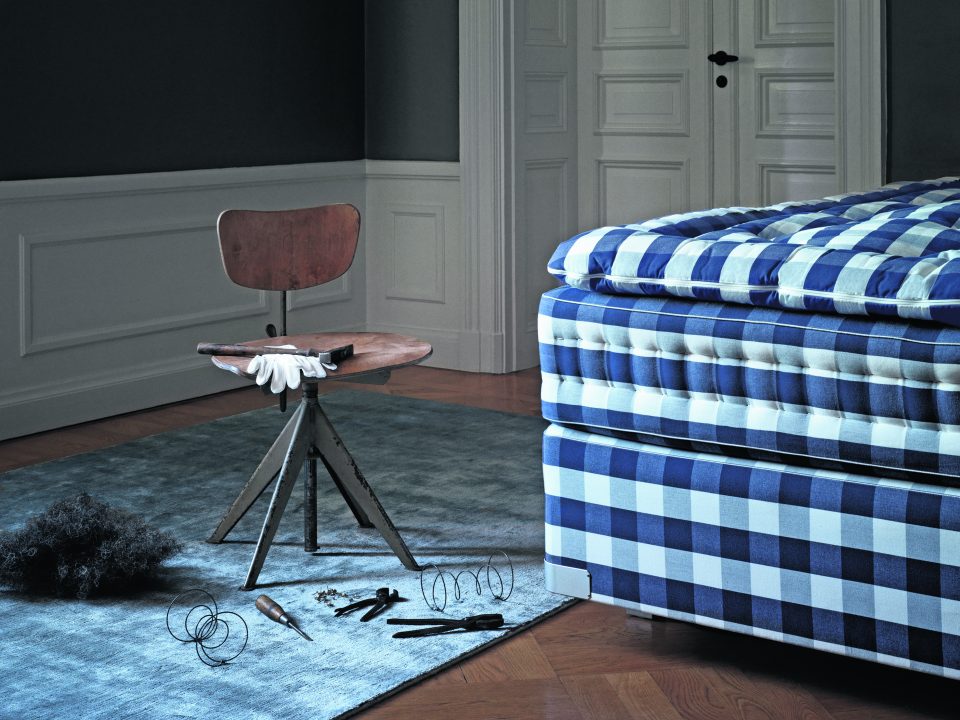
What you are paying for is time, and skill. Its flagship bed, the Vividus, weighs 300kg and takes a team of nine master craftsmen 350 hours to build.

“All the little details have been considered. The feet of the beds are set inwards so you don’t stub your toe on them, and the bases don’t have any screws in them so they don’t creak,” Caroline explains.

They are also made from completely natural materials: the bases from sustainably-sourced pine grown in the north of Sweden, and the mattresses from up to 34 layers of horse hair, wool, flax and cotton, as well as three different sizes of steel springs. Mind-blowingly, a team of four people are employed at the factory solely to ruffle horse hair.

Hästens doesn’t do this just to tap into the eco-friendly zeitgeist – the absence of solvents or synthetic memory foam means the beds wick away moisture so your body can regulate its temperature.

Having tried out all the beds the showroom has to offer, I plump for the Vividus, apparently also the choice of Beyoncé – although Caroline is keen to point out that the most expensive bed is not the best choice for everyone. Some of its most high-profile customers have opted for the 2000T (coming in at £20,000 – £40,000).

Changing our night-time habits

Before I settle in for the night, Caroline says she thinks I’ll wake up on my back – this is the most natural way to sleep for most people, she explains, but they end up sleeping on their side most of the time because their mattress isn’t comfortable enough. I don’t think I’ve ever slept on my back in my life, so we agree to disagree.

My bed has a soft mattress on one side, and medium on the other (a service they provide for couples), but I prefer the medium – you don’t fully sink into it, but it’s still cosy. Reclining atop the umpteen bouncy layers, you do feel weightless.

There’s a heavy quilt on the bed, but I’m neither hot nor cold, and I realise how unusual a sensation this is. I’m not twisting or turning or kicking the duvet off. I’m just instantly comfortable, and predictably I’m asleep within minutes.

I’d been worried about my ability to get up in the morning after a night in the world’s best bed, but it’s actually surprisingly easy when you’ve had such a decent night’s kip. I wake up feeling light, rested, and ready to face the day. And despite my scepticism, Caroline is right – I’m also on my back.

If a Hästens bed can change the sleep habit of a lifetime, I’m sold.

Hästens’ Chelsea store is at 115 Fulham Road, SW3 6RL. Call 020 7225 0974

Featured

Aubrey Beardsley at Tate Britain review: Delight in these bawdy drawings that railed against Victorian prudishness

“I am nothing if I am not grotesque,” Victorian illustrator Aubrey Beardsley once said when asked to explain his art.

It’s a fitting summary for the new exhibition of his work at Tate Britain, which takes the viewer on a tour of life’s darker and more sinister corners.

Wandering its 15 rooms, you are shunted continually between the gruesome and the bawdy, the ugly and the erotic. One minute you’re looking at an image of Salomé kissing the severed head of John the Baptist, the next a caricature of a man with a comically giant erection.

Given the amount of material on show, it’s a surprise to learn that Beardsley died in 1898 at the age of just 25. By that time he had produced well over a thousand illustrations, working feverishly because he knew the tuberculosis he contracted aged seven would make his life a brief one.

During that quarter of a century, he did all he could to push the boundaries of Victorian propriety. Beardsley was known as a decadent dandy, probably dabbled in transvestism, and counted Oscar Wilde as one of his closest friends, something for which he once lost a job on a society magazine. He refused to shy away from sexuality in his work, and there are drafts in the exhibition where penises have been scribbled out by nervous editors.

You can put your phone away, because this is not a blockbuster spectacle of an exhibition. In fact there’s barely even any colour, the whole thing having a brooding, gothic sensibility befitting of the artist.

The real joy of Beardsley’s work is getting drawn in to the details. The cast of recurring characters who linger suspiciously in the background of his works include gnarled foetuses, little demons, mermaids, and horned, goat-like deities.

His illustrations may have been made in the dying days of the Victorian era, but their bold style, sense of humour and rebellious spirit means they remain as pertinent as ever.

Featured

Portrait of a Lady on Fire review: Banishing men makes for a revolutionary period piece

Published in City A.M., Feb ’20

There’s something strange about Portrait of a Lady on Fire, the enlightenment era French-language romance set on an island off the coast of Brittany, and it took me a while to work out what it was.

It’s about three young women: Héloïse, a lonely debutante; Marianne, the bohemian artist hired by Héloïse’s mother to paint her portrait; and Sophie, the teenage housemaid who has found herself with an unwanted pregnancy.

Héloïse’s mother leaves, and for a few days, the trio get to live free of social expectations. Héloïse and Marianne start to navigate their sexual attraction to one another, as well as helping Sophie through several progressively grim attempts at a termination.

The thing that struck me, it turns out, is that there aren’t any men. This is a two-hour film in which there are no named male characters, and no man has more than a couple of minutes’ screen time.

There are only the ghosts of off-screen men – Héloïse’s prospective husband who will be sent her portrait to make sure he likes the look of her; the unknown man who got Sophie into her predicament; the all-male Parisian art establishment in which Marianne has to exhibit her work under her father’s name, or not exhibit it at all.

It’s this female focus that stops it feeling like a fusty, bosom-heaving period piece (although some bosoms are heaved). Instead, it feels revolutionary.

Sure, the central romance in Portrait of a Lady on Fire is between two women, but this isn’t just a lesbian love story. It’s an exploration of relationships between women in all their forms, something that’s become director Céline Sciamma’s trademark, most notably in 2014’s Girlhood, in which she charts the coming-of-age of modern-day French-African teenagers in a down-at-heel Parisian neighbourhood.

It’s sexy, but not gratuitous – and apparently not sexy enough for the French (Sciamma said in an interview that, unlike everyone else, her native audience ‘don’t find the film hot’).

This is a period piece for the modern day, and it’s brilliant. 

Featured

Interest in Milan is going beyond fashion week, as second home market booms in this ‘pocket metropolis’

Published in City A.M., Feb ’20

This week, the world’s fashionable people descend on Milan as the city hosts the third of the four international fashion weeks.

But the global crowd – and UK nationals in particular – are starting to show an interest in Italy’s second city that extends beyond the runway shows.

Once known for being dull and industrial outside of fashion week, Milan is fast becoming a favourite location for wealthy second home buyers.

According to property agent Knight Frank, Milan has overtaken Rome as the number one location for high-net-worth individuals applying for Italian visas – and the UK is one of the most common home nationalities.

So why is Milan proving so popular?

The Bosco Verticale towers at COMIA’s Porta Nuova in Milan

“It’s cosmopolitan, really it is the only international city in Italy and it has the best leisure offering,” says Lodovico Pignatti Morano, managing director at the Italian arm of Sotheby’s International Realty.

This extends beyond the luxury boutiques: Soho House and New York’s Core Club will open in Milan this year, the latter being Core’s first outside Manhattan.

Antonio Fuoco of JLL Milan describes the city as a “pocket metropolis: compact, secure and inexpensive” – and a move to Milan can be a savvy one financially.

Since 2017, non-doms in Italy have not been taxed on foreign income provided they pay an annual flat tax of €100,000, making Milan more attractive to high net worths than cities like London and Paris.

Cheap and cheerful

Property values in the city have also fallen since Italy joined the Euro in 2002. “Fifteen years ago it would have been cheaper to buy in Munich or Berlin, but now that’s not the case,” says Pignatti Morano.

This makes Milan a good bet for buyers who are in it for the lifestyle, rather than an instantly high-yielding investment.

“What drives the market is the gap between the low price of property and the high average income,” says Fuoco. “On the best streets in Monaco you might pay €20,000 per square metre, but in Milan, it’s €12,000.”

Cultural differences mean Milan will never build reams of shiny tower blocks like London, but there are several major developments under way.

Apartments within SeiMilano

These include COIMA’s Porta Nuova, home to the HQs of Google, Amazon, and Alexander McQueen as well as 400 homes, which played host to the Versace fashion week show.

Its most recognisable feature is the Bosco Verticale, two ‘vertical forest’ apartment blocks designed by Stefano Boeri Architetti which feature more than 15,000 plants on their terraces.

Greenery is also a big feature of Varde Partners and Borio Mangiarotti’s SeiMilano, an ‘inhabited park’ with shops, offices, 500 apartments and 160,000 sq m of green space.

These verdant spaces don’t fit with Milan’s industrial image, but that’s fast being shed. Now, it’s a chic, cheap and cheerful pocket metropolis.

Featured

Push film review: A challenging look at gentrification around the world

Published in City A.M., Feb ’20

Property developers, look away now.

If you’ve never felt the slightest bit icky when buying a £4 cup of coffee in a formerly working-class neighbourhood, you’re probably not going to like Swedish filmmaker Frederik Gertten’s new documentary, Push.

It’s all about gentrification, and whether we have the right to live affordably in a major city – an issue that’s painfully relevant for Londoners.

It follows Leilani Farha, the UN’s special rapporteur on housing, as she sets off on a trip around the world to hear the human stories behind the global housing crisis.

“Who are cities for?” she asks at the outset – and this is the narrative thread which runs through the whole hour and a half as she grills politicians about the housing issues happening on their patches.

Closest to home is a powerful interview with a man who escaped from his flat in Grenfell Tower. Thanks to house price inflation, he will have to move out of London if he ever wants to own a home again.

She also visits Seoul, where homeowners on one estate were violently kicked out of their homes to make way for an apartment scheme that never happened; Toronto, where some people are spending 90 per cent of their income on rent; and Berlin’s Kreuzberg, where locals are trying to buy up treasured buildings to protect them from demolition.

Although moving, these are really just different versions of a story we’ve all heard before, and it would be impossible to explore this subject without coming off a bit heavy-handed and worthy.

But it’s not all hand-wringing – some of the most interesting parts of Push are when it exposes the lesser-known pieces of the housing market puzzle.

In particular, it shines a light on the huge role played by private equity firms and pension funds. We might be a nation obsessed with house prices, but this is the side of the coin that doesn’t get discussed.

Push is not a particularly fun night out at the cinema. And like many good documentaries, you’ll probably get more out of it if you don’t already agree with its politics than if you do.

Actually, scrap what I said earlier – property developers, go and watch this film. I dare you.

Featured

Mini bar, pepper spray pump, sound system: What the super-rich want in a panic room

Most of us will never have the need for a panic room. The sum of our valuables and the size of our homes means dropping in a huge, heavy steel structure at a cost of (at least) hundreds of thousands of pounds doesn’t even cross our minds.

Those who do find themselves in need of this highly exclusive service, tend to head to the panic room department in Harrods, run by Florentine safe manufacturer Agresti.

Here, they can step into the store’s example panic room – a glossy, marble-lined affair that most closely resembles the bathroom of a five-star hotel, except it’s filled with cutting-edge gadgets – to get a taste for what’s possible, before designing a bespoke vault all their own.

The man that runs it is Massimo Vignola, director of Italian Design Living at Agresti and an expert on how best to store your insanely valuable, well, valuables.

The first thing you need to know about panic rooms, he says, is they can be as small and basic or as large and ostentatious and you desire (on the inside, obviously – on the outside they have to blend in seamlessly with their surroundings). The cost of installing one starts at around £500,000, and Vignola tells me there really is no upper limit.

The door and control centre of a typical panic room

He’s had a hand in designing panic rooms ranging from barely the size of a cupboard in Belgravia, to a 30sqm behemoth in Nigeria. They are then made in Italy by “artisans who have been doing this for generations.”

“The aesthetic depends on the client,” he says. “It can be simple and basic, or it can be made to look like a spaceship landed in their property. For a very powerful Russian client we created a classic, almost baroque design with a lot of gold.”

The anatomy of a panic room

So how does a panic room work? First of all, you enter it using fingerprint access. This includes a ‘coercion code’ which means that, if an intruder is forcing the owner to open their panic room, they can use a certain finger and the emergency services will immediately be alerted.

The rooms are completely cut off from the rest of the home – the supply of air is from outside, and they are fitted with a separate phone line so that the police can be called even if the line is cut.

Panic rooms are given a numeric grade based on the thickness of the door and walls, which are made from steel and can go up to around 20 inches. The scale starts at one, and anything above a grade seven would only be found in a bank.

The door and control centre of a typical panic room

In terms of location, most people want it next to their bedroom – but sometimes it has to be in the basement because it’s so heavy it could bring down the floor. Clients’ security requirements are mostly dictated by insurers, who will base their coverage of their valuables on the specifications of the room where they are stored.

Back in the Harrods room, Vignola shows me what he calls the ‘control centre,’ hidden behind a mirror. In an actual home this would be linked up to security cameras, and can be modified so that the homeowner can pepper spray intruders remotely from a pump close to the camera, or activate a ‘fogging’ system which makes it difficult for intruders to see inside the house.

Some clients use it like a little apartment within their apartment

Massimo Vignola, Agresti

“It’s not harmful – it just creates a bit of a panic,” he explains.
I’m surprised by how plush the panic room is. It has marbled walls and floor, and the walls are lined with built-in shelves. There’s a compartment for cash, pull-out drawers that can be used for pieces of art and a watch storage shelf with automatic winders. There is a cigar box, and a jewellery cabinet with compartments for cufflinks, rings and bracelets.

It also has a comfy-looking white leather chair in front of the mirror, giving it the air of a ladies’ dressing table – and lots of people do actually use it for this purpose.

A jewellery storage area

“Some clients use it like a little apartment within their apartment,” Vignola says. The model in the store is even fitted with a Bose sound system. “It is a place you can go if you want to concentrate, to meditate quietly… or just spy on your family using the cameras,” he adds.

He says he’s been asked to create bespoke rooms to store all manner of things – some more innocuous than others.

‘An emotional purchase’

“Even though it’s about safety, a panic room is actually quite an emotional purchase. It is for people who have hobbies and passions and want to keep those things in a safe place: watches, paintings, rifles, your secret stash of substances – whatever you are passionate about. Russian families quite often want one for their knives and kalashnikovs.”

One Omani client, he adds, requested a bespoke storage unit to store all of her Hermes Birkin bags, which she then colour-coded so it looked like a painter’s palette.

There are still challenges he’d like to take on, though. “There is one guy who always talks with me about creating a panic room for his whisky collection, but he hasn’t bought one yet,” he says.

Some of his clients are referred by Harrods Estates, the department store’s luxury estate agency arm, which says an increasing number of high net worth clients want a panic room.

“There’s a real demand for these at the moment – London can be pretty scary at times,” says Monica Rowe, its marketing manager. “It is for a very particular market, and it has taken a while for them to catch on – but I think the next wave of prime central London developments will have them built in.”

Back in the showroom, I notice that alongside the chemical toilet and first aid kit, there is also a mini bar, presumably so you can kick back with a chilled glass of something while your home is ransacked.

It just goes to show that, with the right budget, anything is possible – whether you want a storage vault for your priceless jewels, or just an extremely secure man cave.

Featured

Inside ‘co-living’: the flats where millennials trade living space for free craft workshops and yoga

My alarm goes off at 6.30am, which means it’s time for yoga.

As I wipe the sleep from my eyes, I glance around the unfamiliar apartment I’ve just spent the night in, which doesn’t take long because it’s barely bigger than a walk-in wardrobe. I get dressed and stumble out the door, traipsing down the stairs behind a row of others dressed in identical kit. We’re directed to the ‘Wellness Pavilion,’ where we start the day with an hour of downward-facing dogs and warrior poses.

Welcome to co-living – the new trend trying to persuade millennials that living in a small, expensive rented room isn’t not, in fact, a total bummer, but a lifestyle choice. It’s not a commune, exactly, but a building where you rent a poky studio apartment and have access to shared social spaces and a roster of ‘fun’ activities to take part in. You also don’t have to bother yourself with such arduous tasks as cleaning up or paying the bills.

A handful of these buildings have sprung up in the capital over the past couple of years, claiming to offer an alternative to dingy house shares and dodgy landlords. As a single 30-something living in London, I’m the target market – so I spent the night in two of them to see what it’s really like to exist in the co-living bubble.

‘A more joyful way of living’

First up is The Italian Building in Bermondsey, a brand-new 28-studio development run by a company called Mason & Fifth. It’s so new the first residents haven’t yet moved in, but I’m promised a taster of the experience they can expect, so I turn up with my overnight bag on a rainy Tuesday, armed with a schedule for the evening’s activities.

Mason & Fifth is focused on ‘wellness’ – take a drink – and promises “a transformational home that connects you to a more joyful way of living”. The building is nice, its interiors all polished concrete and snaking monsteras. But the studios are what you would charitably call bijou at just 170 sq ft, less than half the minimum space standard of 398 sq ft outlined by the Greater London Authority. This is allowed under planning rules because the building was converted from an office.

The entrance to Mason & Fifth’s The Italian Building in Bermondsey. Image: Nicholas Worley

It’s nicely decked out with hanging plants, ‘quirky’ wall art, Ottolenghi cookbooks and an inexplicable bowl of lemons, but basically just consists of a bed, kitchenette, shower room, wardrobe and a table and chairs. It feels more like a hotel room than an apartment.

Some say it’s just a formalisation of the house shares that city-dwellers in their 20s and 30s begrudgingly find themselves in. An even rosier view is that it harks back to the kind of close-knit communities that people lived in in the past.

“The idea of living collectively is almost ingrained in our DNA and we’ve done it for hundreds of years,” says Richard Lustigman, director of co-living at property consultancy JLL. That might be true, but it hasn’t always been so expensive. It costs £1,650 per month to live here – far more than the average room in a shared house, and slightly more than the average £1,633 rent for a one-bed property in Bermondsey, according to Zoopla.

The communal living area at The Italian Building. Image: Nicholas Worley

The reason Mason & Fifth thinks people will pay it is because of the less tangible things the building offers, based around five ‘pillars of well-living’ it has come up with: healthy spaces, daily nourishment, modern fitness, mental clarity and something called ‘conscious hedonism’.

Along with your tiny room you get a big communal living room, kitchen and dining area downstairs, bills included and access to free activities including running clubs, meditation, yoga, gardening workshops, bike rides, a ‘rant and reflect talking circle’ and a ‘mental resilience workshop’. You can also have a chef cook you dinner and packed lunches and have someone do your laundry for an extra fee. The owners predict people will stay for three months to a year.

Free activities include running clubs, meditation, yoga, gardening workshops, bike rides, a ‘rant and reflect talking circle’ and a ‘mental resilience workshop’.

Ben Prevezer, the 30-year-old creative director of the project says the rooms “balance our generation’s growing need for both community and privacy” and enable “meaningful exchanges and generous individual space within the metropolis.”

My evening sampling the co-living lifestyle starts with a paper marbling workshop, then a dinner in the communal area consisting of shared plates of burrata, quinoa, root veg and plaice. We are served ‘social spirits’ from Third Way; strange non-alcoholic herbal elixirs which claim to have ‘active feel-good compounds’.

The kitchenette in one of the Italian Building co-living apartments. Image: Nicholas Worley

We have our auras read. When we go to bed, herbal sleeping tablets have been left on our pillows. I take one and it seems to work, which is good because I’m booked in for a yoga class at 7.30am in the “wellness pavilion”, which we all turn up to in our Mason & Fifth branded hoodies. It feels like a new age version of a school residential.

‘Sleepovers are sexy, squatting is not’

Continuing the school theme, there are also lots of rules. When the building opens in January, residents will be given a book full of them. “Sleepovers are sexy, squatting is not,” it proclaims, pointing out that if a partner stays over for more than ten nights in four weeks you may be asked to “upgrade” to a couples room fee. They can also be asked to leave after three warnings if they don’t respect the “calm, relaxed and welcoming environment” of the building.

There are only 28 apartments, and Mason & Fifth will hand pick the residents to try and create a harmonious atmosphere. So far, 800 people have registered interest in The Italian Building, so they’ve got their work cut out.

Over dinner, one of the staff confesses that they’ve been a bit worried about how potential relationships – and inevitable breakups – might ruin the carefully curated dynamic. And that’s the problem with co-living, really: there’s no accounting for the fact that people might want to have an ill-advised hook up with someone in their building, or own more than a couple of suitcases worth of possessions, or just watch TV alone in their apartment on a hungover Sunday, rather than in a communal room with 27 other people.

Here, you have no choice but to be the best version of yourself.

The entrance lobby of The Collective in Canary Wharf. Image: Ed Reeve

When I walk into The Collective at Canary Wharf, a new 21-storey co-living block which opened three months ago, the first thing I notice is a huge chalkboard with the programme of events for the week. You can add managing our own social lives to the list of things that millennials clearly can’t be trusted with, along with mortgages and cutting up an avocado.

There’s circuit training, a running club, yoga, three film club sessions, a ‘pimp my G&T’ masterclass, a cooking class and a session on how to make a kokedama (a type of Japanese hanging planter). Deep down, I know that the session I would be most likely to attend if I lived here would be the Friday happy hour in the top-floor bar and restaurant, Mthr.

The community manager, Jackson Torchia, shows me around the place. The walls in the communal areas are aptly painted millennial pink, and there are neon art installations everywhere.

The sun lounge at The Collective. Image: Ed Reeve

There’s a co-working space, a giant living room filled with sofas, a meditation room, a gym, a screening room and a huge kitchen for cooking classes.

We get a lot of young professionals here who are just out of home,” says Torchia, who says recent recipes have included vegetable curries and pumpkin bread. In the next room, an electronic putt returner for practicing golf is being installed. “Not to curse it, but I think our members will use it once and never again,” he adds.

There are fake cobwebs left over from the Halloween party a few days earlier, and just to infantilise things even further, a giant hopscotch grid on the floor

Long-term residents will pay £1,300 per month for a year-long stay in the smallest room here, or up to £2,080 for the space with the highest specification.

All in, the communal spaces take up three whole floors of the building. In the basement is a student-style bar with graffiti on the walls, a DJ booth, ping pong table. There are fake cobwebs left over from the Halloween party a few days earlier, and just to infantilise things even further, a giant hopscotch grid on the floor. “It’s just to get people talking,” says Torchia.

One of the apartments at The Collective. Image: Ed Reeve

Finally, on the top floor is the incongruous combination of the bar and restaurant, Mthr, which is open to the public, and a pool – the highest in East London – complete with inflatable flamingo.

“One of our members put it in and I didn’t have the heart to take it away,” says Torchia. Conveniently, it’s also the kind of thing that people love to post on Instagram. The only way this could be more perfect is if it was a unicorn.

Social, ‘student’ lifestyle

The people trying to sell the co-living lifestyle say it addresses two of millennials’ biggest reported problems: bad housing and feeling lonely. There’s definitely a community here – and it’s strikingly similar to the one you might find in a student halls of residence. Strangers say hi to me when I get in the lift, friends bump into each other in the hallways and there are clusters of people hanging out in most of the rooms I pop my head into.

The similarity to being at university isn’t lost on the people that live there, either. “It appealed to me to be able to live a more social lifestyle, more akin to my uni days – that’s something that I missed since I graduated,” says 28-year-old software programmer Jonas Hou, who has just moved here after living in The Collective’s sister building in West London for a year and a half. “I came to London five years ago from Germany, and because I didn’t grow up here it’s not like I have a clique of old friends.”

The library at The Collective. Image: Ed Reeve

He says it’s better than the flatshares he used to live in, but anyone who’s navigated the minefield of aggressive WhatsApp groups and broken boilers that is the standard London flatshare will know that’s not particularly hard. 

My apartment here is a bit bigger than at Mason & Fifth, but I still wonder where I’d put all my stuff, as the storage amounts to a small-ish wardrobe, kitchen cupboards and a few shelves. Whoever designed this room has clearly taken to heart the oft-spouted marketing edict that millennials value experiences over possessions.

Co-living isn’t for me. Admittedly, that’s partly because I’m too miserable – I don’t like waking up early to do yoga, and I can barely be bothered to socialise with my existing friends on a Tuesday night, let alone make new ones. But you can’t hide the fact that these buildings are expensive and don’t offer enough private space.

Unless co-living can overcome one or both of these problems, it’s not going to be an option for the average twenty-something renter – no matter how many yoga classes and hanging plants you throw at them.

Featured

Office Space: Inside the opulent Mayfair base of luxury property developer Clivedale

Published in City A.M., November 2019

Real estate firms’ offices tend to fit into one of two moulds: a converted Mayfair townhouse, an old-fashioned relic left over from the days where Hanover Square was overrun with estate agents in braces and pinstripe suits; or a clinical, corporate space interchangeable with that of any other property company, law firm or accountant.

Super-prime property developer Clivedale’s is neither, and it shows the moment you walk through the door. The entrance lobby at 73 Brook Street in Mayfair sits beneath a glistening sculpture, a kind of deconstructed chandelier where curved pieces of transparent and amber glass are suspended across the entire ceiling.

Opulent, striking and modern, it immediately tells you what Clivedale is about – and it should, because the company developed the office building itself.

The sculpture was created by design studio Haberdashery, and is supposed to look like water, alluding to Brook Street’s previous life as – no prizes for this one – a river. Creating a “dramatic sense of arrival” was a priority for the building according to development director David Laycock. “The material is almost liquid-like, and it scatters light across the ceiling and floor like a moving river,” he says.

The company, which is less than a decade old, has already made a name for itself developing some of the most luxurious apartments in central London. 
“We are an exclusively super-prime developer with an eye for detail and an innate understanding of the global ultra-high-net-worth investor,” says Fred Scarlett, Clivedale’s sales and marketing director.

He wanted the office to reflect how the company is “setting new precedents in craftsmanship and service.” Studio Indigo was the interior designer, but Clivedale was involved throughout. It shares the building with just one other small company, which only occupies it part time, so it had plenty of opportunity to put its stamp on the place.

An office for grown-ups

Clivedale is developing high-end apartments at the Residences at Mandarin Oriental Mayfair, and when I visit its office, there’s a table covered with weighty silver taps, slabs of glass and marble, super-soft carpet samples and fabric swatches it plans on using there.

This meticulous approach has clearly been replicated in the design of its own office. In a world of photo-fit WeWorks, it’s refreshing to see an office that isn’t even trying to be techy and trendy. If your standard co-working space looks like a child’s playroom, this is the grown-ups’ dining room where the best china is kept.

When Clivedale’s clients, who include some of the wealthiest families from both the UK and abroad, come to Brook Street, Laycock wants them to see “a world-class office building that reflects the quality we are delivering across our portfolio”.

The Mandarin Oriental apartments are going up on the site of one of Clivedale’s former offices in Hanover Square, which it vacated to move to Brook Street in late 2017. It also had a smaller back office on Bruton Street.

The Hanover Square space was more of a marketing suite than a workplace, and the larger floorplates at 73 Brook Street allowed it to separate these two functions on to different floors.

Moving out of the ‘goldfish bowl’

Another gripe with the old base was that, thanks to its location just behind Oxford Street, its “goldfish bowl” full-length windows and the fact that it was filled with pretty-looking models of houses, passing tourists would often let themselves in for a look around. Not ideal when you’re sitting down with a sensitive high-net-worth client.

Its new marketing suite, which takes up a whole floor of 73 Brook Street, is an intimate space designed for potential buyers to chat with the team one-on-one: think dark wood panelling, veined marble floors and plush soft furnishings in shades of slate and dusty blue. It also doubles up as an entertaining space, and Clivedale has held many a cocktail reception there. Laycock says he wanted the space to “mimic the look and feel of a five-star hotel,” and it doesn’t disappoint.

The centrepiece is a metal model of London with the location all of Clivedale’s developments marked out. Its stone and chrome plinth doubles up as a dinner table when the model is removed. It’s just one example of how it’s created a space which is, as Laycock describes it, “rich in design but completely functional.”

Laycock’s office is on the showroom floor, and, with its sumptuous grey carpet, marble coffee table and wood-panelled shelves lined with all manner of expensive-looking curios, it looks like a cross between an office from Mad Men and a swanky Mayfair members’ club.

Five-star ethos

Accessed via an equally extravagant lift, which has a ripple-effect wall feature achieved by layering iridescent fabric behind glass, the fourth floor is where the behind-the-scenes work happens, or as Clivedale staff refer to it, where the “messy men” sit (there are women, too, though presumably they’re more tidy). Each bank of desks has a planter filled with succulents at the end, and a gardener comes by to water them every so often.

There’s also a sample-laden table, and desks littered with pieces of fabric and materials. A well-stocked bookshelf contains the usual hard-backed property brochures as well as books about cricket, Victorian Bloomsbury and the history of Vauxhall Gardens.

The five-star ethos of 73 Brook Street continues down in the basement, where employees can enjoy the perfect post-gym set-up: spacious, stone-tiled shower rooms with huge back-lit mirrors, shelves filled with piles of fresh, fluffy towels and an espresso machine for the first coffee of the day. And there’s no stashing grotty gym gear under desks, either: tucked away next to the showers is the staff washing machine, stocked with all manner of detergents.

Clivedale is now in the process of developing another, adjoining office next door, which will make the building 73-77 Brook Street and where it will invite other companies to come and bask in its luxurious glow.

It’s bringing its facilities up to the next level of luxury, too, with plans including a humidor, gun storage and a dumb waiter, with stops on each floor. And it might not stop there. Scarlett says he wants to make “Clivedale quality products” on a larger scale, delivering “the highest standards of architectural and interior design” to more potential clients. He thinks this is crucial if companies want to keep their staff around.

It just goes to show you don’t always need a slide or a beer tap to keep the people who work for you happy. Sometimes, a really nice office with a washing machine will do.

Featured

Is your house killing you? Why some people think paint, carpets and furniture could be poisonous

Published in City A.M., October 2019

Think back to the last time you redecorated a room. Did you paint a wall? Lay a new carpet? Buy a shelving unit with a Swedish-sounding name? According to some housebuilders, architects and designers, all of these things could be making you ill.

They say that many common types of paint, carpets, flooring, kitchen and bathroom surfaces, and MDF furniture – essentially everything in our homes – contain chemicals that can be damaging to health. As a result there is a small but growing drive to detoxify new homes, and clean up existing ones. But are our homes really bad for us – or is this just hypochondria’s latest frontier?

The substances in question are called volatile organic compounds (VOCs), and are also found in cigarettes, solvents and cleaning products. The one you’ve probably heard of is formaldehyde, and others include benzene and bisphenol A. While they’re not going to poison you on contact, some believe that long periods of exposure can cause respiratory problems and skin diseases, as well as other, potentially more serious illnesses.

Top 50 architect Perkins and Will has created an open-source website called Transparency which contains a ‘precautionary list’ of materials that contain ‘questionable’ substances, in the hope that architects will start to question the materials they use. The number of substances on the list is currently 56, and the architect’s clients will be informed if any of them are to be used in their projects.

Joseph Homes' No1 Millbrook Park
Joseph Homes’ No1 Millbrook Park, where the developer has tried to reduce chemicals in the building process

“Our hope is that this will influence manufacturers to reformulate products for reduced toxicity” reads the website. “By changing one product, together with our partners in the design and construction process, we believe that we are participating in an effort to change the world.”

The website cites a US government study claiming substances in homes can “interfere with hormone regulation and physical development… lead to neurological problems, a weakened immune system, and more.”

But if the danger is real, why aren’t more people talking about it? Well, it’s almost impossible to prove – and for this reason, little evidence is being collected to even try to prove it.

Lack of evidence

“Isolating the cause of illnesses is very difficult. Is it from their home or pollution out on the streets?” says Peter Newton, architectural director at Barton Willmore and associate lecturer at Oxford Brookes University, who has been researching the hidden chemicals in our homes for more than a decade.

The figures out there tend to be from healthy air campaign groups, and it’s not always clear how they reached them. My Health, My Home says 15.3 million UK homes are at risk of ‘toxic home syndrome’ – when a combination of pollutants, allergens and chemicals mean respiratory and skin diseases “can occur more frequently.” Another such group, Clean Air Day, estimates that 45 per cent of homes exceed “healthy” levels of VOCs.

You know that fresh paint smell? It’s really not good for you

Most housebuilders aren’t paying much attention, but that hasn’t stopped Joseph Homes, which is currently building about 200 homes around London. Its managing director, Michael Bryn-Jones, says the company plans to be “VOC-free” within five years.

“You know that fresh paint smell? It’s actually really not good for you,” he says. “We are looking at the materials we put into homes and the chemical components of them, and asking, are these things we would ordinarily want to be around?”

He says people who buy Joseph homes don’t usually ask about it of their own accord, but they like the VOC-free approach when it’s explained to them. Having fewer scary-sounding chemicals in your family home isn’t a difficult sell – but is there really a serious danger to people’s health? Bryn-Jones says it’s at least “a debate we should be having”.

There is a new market for chemical-free versions of building materials, such as this sound insulation by EO Acoustic which is made out of conifer needles.

Another early mover is Facit Homes, which fits all its homes with a filter where “stale” air is extracted to remove, among other things, “chemicals released from furniture and carpets” and replaces soft furnishings with cement, wood, ceramic tiles and synthetic blinds.

“As concerns grow over air quality and pollution outside the home, particularly in cities, customers are increasingly keen to ensure the air they breathe inside their home is clean and safe,” says director Rhys Denbigh.

The idea of stripping your home of unwanted chemical nasties seems like it should tie in neatly with the current vogue for ‘wellness’ and being eco-conscious. But in reality, the two don’t sit well together. The way to make a home ‘green’ is to make it extremely airtight, so there is as little leakage of energy as possible. But doing that also traps in pollutants, allergens and chemicals.

If you’ve got an eco-friendly home, chemicals are likely to stay in there far longer

“If you’ve got VOCs in [an eco-friendly] home, they are likely to stay in there for longer,” says Newton. “So you have to think about what you put in your house far more.” He adds that in Germany, where lots of homes are built under the strictly-defined green standard, Passivhaus, “you don’t really find people building furniture out of MDF.”

Cleaner by design

Cleaning up the air inside our homes has also caught the imagination of the design industry. For example, at this year’s Global Grad Show in Dubai, which showcases the work of emerging designers across the world, Paulina Kwiatkowska of the Academy of Fine Arts in Warsaw will present a series of sculptures that are displayed as pieces of art, but also cleanse and regulate the air and humidity in a room.

“People are only now realising that the air inside our homes is dirtier and more toxic than out on the streets,” says its curator Eleanor Watson of The Design Museum in London. “And designers are trying to come up with a solution for that that is also aesthetically pleasing.”

One of the air-cleansing sculptures

At the Grand Designs showcase in Birmingham earlier this month, designers AIVAN presented Chip[s] Board: a natural MDF alternative made from potato peel, bamboo, wood and hops which doesn’t contain formaldehyde and is also biodegradable. Atticus Durnell presented That’s Caffeine; a glittering plastic substitute made out of recycled coffee which can be used on kitchen and bathroom surfaces to avoid using petrol-based resin, which also contains VOCs; and EO Acoustic presented sound insulation made out of conifer needles. There more widely available offerings, too – last year Dyson launched a “purifying fan heater” that claims to “remove gases including NO2 formaldehyde and benzene,” yours for £549.

Cost is another barrier to cutting unwanted chemicals from the places we live. With VOC-free alternatives to paint and MDF often being more costly, ‘healthier’ homes might only be for those who can afford it. Ben Adams, founder of Ben Adams Architects, says that while his clients are increasingly interested in achieving “the kind of air cleanliness we see in hospitals,” it is “usually a case of striking a balance between clean air and a sensible budget.” But he adds that people can start by trying to avoid using plastics when decorating their homes, instead using timber, steel, aluminium or leather.

Even if these theories are right, people are going to need a lot more convincing before they believe they can get ill from the stuff that they’ve been putting in their houses for years.

“At the moment, you have to do the work as the consumer,” says Newton. “If you’re deciding between one type of flooring and another, cost is the biggest determinant – and it will remain that way until there is [more evidence] about the risks.”

For now, it’s unlikely many people will be giving that lick of paint a second thought.

Featured

INTERVIEW: actress Tracy Ann Oberman on her latest role, twitter trolls and why Eastenders is like the golden age of Hollywood

First published in City A.M. Magazine, October 2019. Image by Joseph Sinclair.

Stage actress, Eastenders mega-bitch, social media warrior. With her voluminous blonde mane, practiced side-eye and reputation for being fearlessly outspoken, Tracy-Ann Oberman cuts an intimidating figure. We meet at a bijou cafe just off Hampstead Heath, the kind that sells £400 vintage chairs and is filled with brunching mums and toddlers. She breezes in, fashionably late, wearing a long floral dress and dazzling white sneakers, her hair wavy rather than in her trademark corkscrew curls.

“I’m on a little WhatsApp group with a load of fantastic women,” she tells me, sipping a glass of bright green juice. “We’re talking about some of the sexiest women on British television, and they’re getting their first grandma roles, even though their own children are under the age of 10. Women are having children later, their careers are longer, they’re sexy longer, they’re sexually active longer. But where are these women on television?”

You could make a decent case for Oberman, 53, being one of them. Her TV roles have included a stint as an anti-villain in Doctor Who, supporting roles in hit comedies Friday Night Dinner and After Life, and playing Chrissie Watts in Eastenders. She’s also run the gamut on stage, from being part of the Royal Shakespeare Company to appearing alongside Celia Imrie in the recent Pinter at the Pinter season, to taking on the lead in Fiddler on the Roof. She’s also found the time to star in more than 600 radio plays, and has now penned several of her own on the subject of golden-era Hollywood.

The term ‘strong female lead’ is bandied around a lot these days but Oberman defines a good role a bit differently. “I don’t mind whether a character is ‘strong’ or not,” she says. “I just want them to be well-written and rounded and interesting, not tacked on to the story of a male protagonist.”

So what roles is she itching to play? On TV, a period drama – “I’ve got the hair for it” – and on stage, a Chekhov. One arena that consistently offers up great female characters is soaps. Although she was only in Eastenders for a year and a half, Oberman had the honour of bumping off one of Albert Square’s most iconic characters, ‘Dirty’ Den Watts, in her role as black widow Chrissie. “When you murder one of soap’s hugest icons and bury him under the Queen Vic, the moniker follows you around – you’re always going to be ‘Eastenders actress,” she says. “It’s a badge of honour.”

Bravery is very important to me – not just sitting back and going with the flow

She makes the unlikely connection between Britain’s best-loved soap and the golden age of Hollywood cinema, of which she’s a huge fan (she says Now Voyager, Mildred Pierce and “anything with Bette Davis” are her favourites). “Those golden age of Hollywood films have always had fantastic female stories, and soap is kind of like that – you’re darting around a set a bit like you would on the Warners lot in a little buggy,” she says. This is the subject of many of the plays she writes for Radio 4, which tell the stories of icons like Davis, Joan Crawford and Doris Day.

Her latest project is new play Mother of Him, at the Park Theatre in London. Written by Evan Placey, it is the real-life story of a teenage boy under house arrest after committing a terrible crime, told from the perspective of his mother. “It’s about how single mothers are viewed, and their responsibility for their children,” she says. “As a mother, are you meant to love your child no matter what they do?”

One of the most striking things about Oberman is her confidence: you don’t get the impression that she has ever been intimidated by anyone, or anything. Has she always been this way?

She pauses for a long time. “I think I’ve always been like that,” she says eventually. “Bravery is very important to me, not just sitting back and going with the flow. It’s about sticking your head above the parapet, and I think I’ve always been brave enough to do that, but age has made it easier.”

Oberman in Mother of Him at the Park Theatre

A case in point is when Oberman spoke out about her past experience of working with high-profile theatre director Max Stafford-Clark, who was accused of making inappropriate sexual comments to two young actresses in 2017 – around the time the #MeToo movement was taking off in the US.

“I remember getting a message saying the narrative was going to be [that these were] silly snowflake girls who couldn’t let a 70-year-old-man have a laugh,” she says. “It really bothered me because this man had a reputation. I personally experienced it, I knew other people who had experienced it and I really didn’t want those young women to be thrown to the wall.”

This drive to stand up for what she believes runs through many of the things she’s involved in outside of acting. This stems in part, she says, from her family history, which includes Jewish relatives who died in the Warsaw Ghetto. “I was always very aware of family who didn’t make it out of Poland and Germany and it’s something we always discussed a lot in our family. It made me feel that I had to speak out, that nobody else was going to do it.”

A project she hopes to get off the ground soon is a version of the Merchant of Venice, set against the Oswald Mosley fascism of the 1930s East End and the Battle of Cable Street, in which Oberman would play a female Shylock.

“We’re working based on my family history, and my grandmother being an East End Jewish matriarch,” she says, folding her hands and smiling pointedly to signal that that’s all she wants to say on the matter.

Her grandparents were members of the Jewish Labour movement in East End, and this heritage played a part in her deciding to speak out against the Labour Party – of which she used to be a member – on Twitter, with regard to the ongoing and well-publicised allegations of anti-Semitism. “I kept thinking ‘is anyone going to come in from the Labour Party and speak out on it’, and nobody did, so I found myself saying my political thing.”

She was encouraged to join Twitter in the late noughties by her early-adopter friends David Baddiel, David Schneider and Omid Djalili. At first, she loved it. “It was like being at the wittiest cocktail party, you could talk to anybody, follow anybody. I never had a negative tweet sent my way.” She pauses. “Well, the odd dick pic,” she says, leaning towards me knowingly, “but you just block them and move on.”

But after speaking out online about the anti-Semitism crisis in the Labour Party, things took a turn, and she began to receive abusive messages. “Thousands of people jumped at me and it was intimidating and scary, but I thought ‘They want to drive me off and I won’t let them’.”

It was this experience that inspired her to start her podcast, Trolled, where celebrities and other public figures discuss their experiences of social media and being online. So far, the guests have included Gary Lineker, Luciana Berger and Al Murray.

She still thinks social media can be a force for good, though, and this is reflected in her new play, which is set before the social media era in 1998. The mother, Brenda, is portrayed negatively in the press due to her son’s actions and finds she has little control over her own image. “In 1998, when the papers wanted to write that you were a dreadful human being and you’d been doing x, y and z, they could get away with it because there was no other redress. Today Brenda could control her own story, she could have her own Twitter account.”
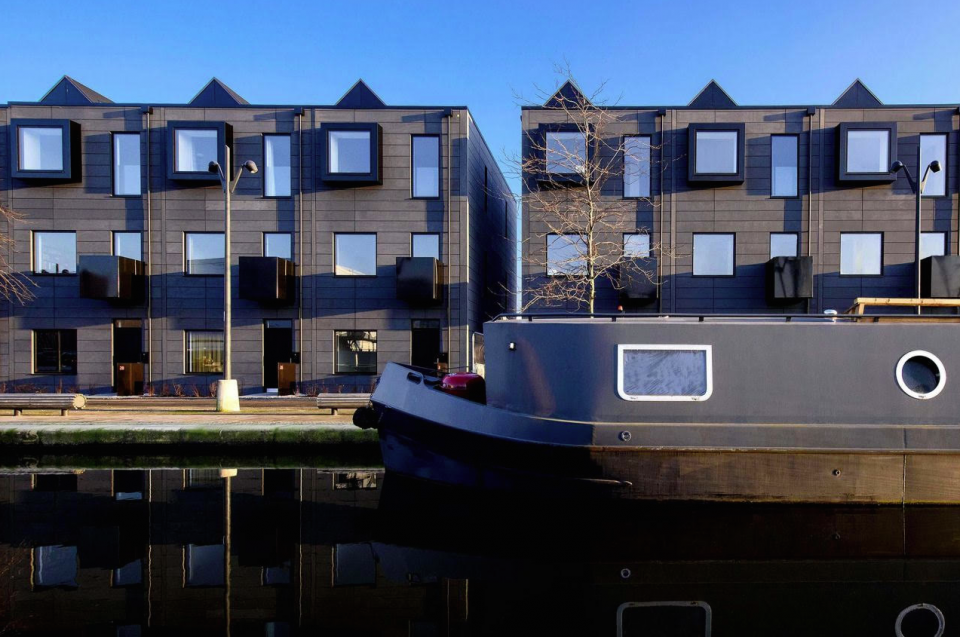
Thankfully Oberman has no such problem. Few public figures tackle the issues that count with such relish. Long may it continue.

Featured

The modular model: Can factory-built homes solve the housing crisis?

Published in City A.M., September 2019

Picture a vast warehouse somewhere in the north of England. Workers in hard hats are poring over intricate plans against a background of humming machinery.

Robot arms slice through sheets of metal and wood as they pass by on a conveyor belt, precisely cutting out shapes that look like huge versions of Airfix models. Across the production line, windows are carefully fitted on to a glossy, new frame.

The unit is then packed on to a lorry to be driven hundreds of miles across the country, where its new owner will arrive in a couple of weeks.

This isn’t a car we’re talking about, by the way. It could be your next home.

Dave Sheridan is the executive chairman of Ilke Homes, which from its Harrogate factory builds neat, modern family homes that wouldn’t look out of place on any suburban housing estate. It completes eight on an average day. “We want to go where the housing need is greatest,” he says. “Most people want to live in a house with a front door and a back door.”

Modular housing being built at Weston Group's factory
Parts for a modular home being built at Weston Group’s factory in Braintree

Modular construction – homes being built in factories, in other words – is being touted by some as a high-tech solution to the UK’s housing crisis. For others, these homes are no different to the low-quality, temporary prefab housing that went up across London in the 1950s to replace homes lost in the Blitz. So can a home built on a production line ever be a desirable place to live?

This might seem like cutting-edge new technology to us, but – somewhat predictably – countries including Germany and Japan have been doing it for decades. The latter’s largest housebuilder, Sekisui House, has produced more than 2.4m modular homes since 1960, and has now signed a deal with the UK government and developer Urban Splash to set up a factory and build 2,000 homes a year here over the next decade. Although it’s a huge corporation, Sekisui brands itself as a friendly homebuilder with a social conscience.

Meeting housing requirements in the UK, according to government estimates, means building 300,000 additional homes a year – a target that was missed by around 82,000 in both 2017 and 2018. Ilke’s homes cost between £65,000 and £79,000 to buy, although you also need to have a plot of land to put it on.

Zedpods modular homes in Bristol

The real selling point is speed. Houses and apartments are built as a series of identical blocks or ‘modules,’ often with bathrooms and kitchens already fitted. Because walls and floors are precisely engineered and there are no real-world variables like bad weather, a home can be made in a couple of weeks. The modules are then transported to the site and craned in on top of each other to make a house, or stacked around a concrete core to create an apartment block. Projects vary, but using modular elements usually cuts construction time by at least half.

These are not piled-up, boxy apartments, but large, light, airy ­­­family homes. “They have a love of humanity, they understand how people want to live and what makes homes better and more attractive,” says Urban Splash founder Tom Bloxham. For example, Sekisui plants five indigenous trees around each of its homes – ‘three for birds and two for butterflies’. Its utopian vision of the world extends to humans, too. In Japan, homes are generally considered worthless and demolished after 30 years – so Sekisui buys them back and retrofits them before re-selling them to cash-strapped youngsters at a low cost.

I can’t see how you can create great architecture with modular

Peter Leiper, architect at CZWG

Urban Splash has already been building its own modular homes under its HoUSe brand. They are a modern incarnation of perennially popular Victorian and Georgian properties – high ceilings, three storeys, big windows – but wrapped up in a contemporary exterior. “If all you want is a house that looks like it’s built out of brick, build it out of brick,” says Bloxham. “For us, it’s more about how they perform.”

On the other end of the scale are the vast apartment blocks that have predominated in London so far. Tide Construction and Vision Modular Systems’ 101 George Street in Croydon, which is currently being built, would have been the world’s tallest modular tower at 135 metres and 44 storeys, but a block planned for Singapore will surpass it by five metres. “If you’re going to build a 44-storey building, it has to look great,” says Simon Bayliss, from project architect HTA Design.

Urban Splash’s modular ‘HoUSe’ homes

101 George Street will be covered in iridescent, dark green triangulated panels (pictured, top) that reflect the area’s art deco architecture, and there are certainly worse-looking towers in London. But some believe modular construction is at odds with attractive design. “I can’t see how you can create great architecture with modular,” says Peter Leiper, architect at CZWG. “You have to create [buildings] that are quite linear, where everything stacks up one above the other.”ADVERTISING

On completion, 101 George Street will be one of the growing number of build-to-rent blocks in London, owned by a corporate landlord with the 546 flats rented out to young professionals.

Some argue this is the only model – that modular only works with homes that aren’t for sale. This is because, no matter how quickly you build them, houses take time to sell – and housebuilders don’t want to end up with stock they can’t shift. “It’s being hailed as the great saviour of housing in Britain, but speed is the last thing housebuilders want,” says Leiper.

One area where this isn’t an issue is affordable housing. Demand is bottomless, and factory-built homes are hard-wearing and cheap to heat. Boklok, the modular company owned by Ikea, has already struck a deal with Worthing Council in West Sussex to build 162 flats, of which a third will be handed over to the council at cost for affordable housing. It also allows homes to be built in places where “conventional construction won’t work”, according to Dr Rehan Khodabuccus, operations director at Zedpods. His firm has installed homes on stilts above car parks, for example.

The sticking point is that it’s not cheaper than building a bricks-and-mortar home, because so much has been invested in developing the technology. “It will get cheaper, in the same way that cars and TVs eventually get cheaper,” says Bloxham.

An Ilke Homes house is craned in on a site in Hull

Modular homes are also eco-friendly, which is significant given that the construction industry accounts for 38 per cent of the world’s energy-related carbon emmissions. Bayliss thinks it’s “the only way” the UK can achieve its target to reach net zero emmissions by 2050, and this could be a selling point for eco-conscious home buyers. But the average person still doesn’t know what a modular home actually is. “It’s not penetrated the mainstream yet,” says Rory O’Hagan, architect at Assael. “But if you’re delivering really great homes, why should the technology be the first consideration for the purchaser?”

The idea that these are small, identikit, prefab homes will be a challenge to surmount, and the people building them know it. “We owe it to the British public to build only high-specification, quality, permanent housing that will create popular, aspirational dwellings,” says Khodabuccus. But given the need for new housing isn’t going away, the production lines look set to keep rolling.

Featured

SEOUL SCIENCE: A VISIT TO THE WORLD’S LARGEST RESEARCH CAMPUS IN South Korea

Published in Property Week, July ’18

Photo by Sunyu Kim on Unsplash

Featured

down to experience: the new retail stores that don’t sell products

Published in Property Week, April ’18

jenrick’s proposed algorithm means higher housing targets

Published in Property Week, 17 September 2020

Main image by Breno Assis on Unsplash

‘Algorithm’ has become something of a dirty word in recent weeks, thanks to the furore over A-level results.

So it was unfortunate for housing secretary Robert Jenrick that his recently announced suite of planning reforms also included the use of an algorithm, in this case to determine housing need in local authority areas.

It might not be as nefarious as it sounds, however. In reality, an algorithm of sorts has already been used for this purpose for several years. So what is set to change?

The proposed algorithm is an adapted version of the ‘standard method’ for calculating housing need, first introduced in 2018.

The difference is that the new iteration would incorporate existing housing stock into the calculation and remove the cap that exists under the current approach. Both of these will result in higher housing need figures overall, although a minority of local authorities may see their targets fall.

“[The new method] takes household projections, or alternatively existing housing stock, and applies an uplift based on the affordability of the average house when compared to the average salary,” explains Jonathan Dixon, director, planning at Savills. “The less affordable the typical house, the greater the uplift.”
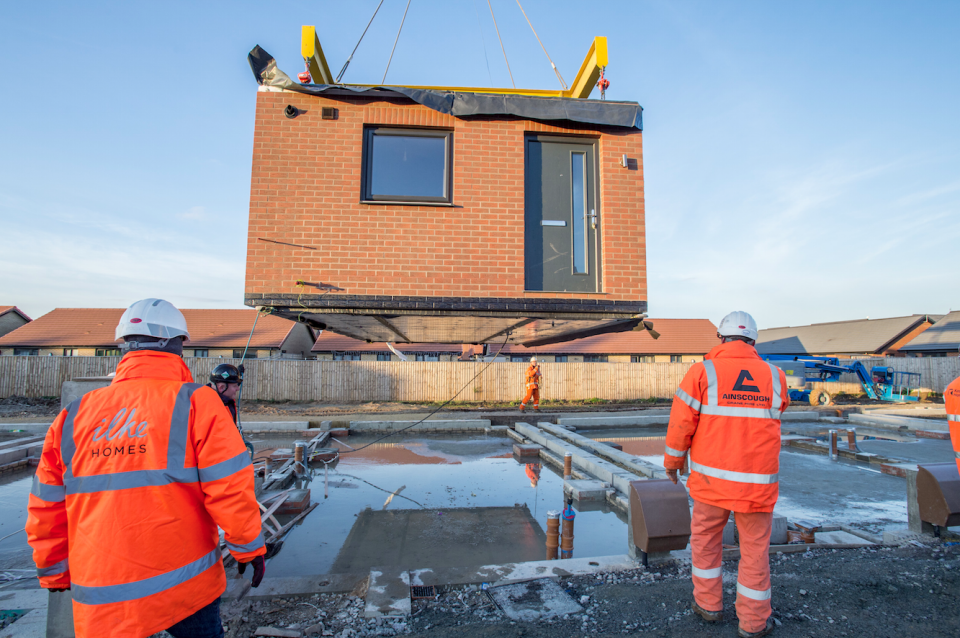
Government is proposing to set LAs a binding number they have to meet

Matthew Spry, Lichfields

Mitigating circumstances (such as ecological concerns, areas of natural beauty or green belt land) will be assessed at central government level and factored into the targets before they are handed down to local authorities, meaning they will not be able to negotiate a reduction in their numbers as they currently do.

“Currently, every local authority gets a standard number from the formula, then they say: ‘We’ve looked at our level of brownfield land, our ecology, and here’s what we think we can deliver’,” says Matthew Spry, senior director at planning consultancy Lichfields. “What the government is proposing is to do all that centrally for every local authority and set them a binding number they have to meet – no ifs, no buts.”

Analysis by Lichfields suggests that this will give the UK a new national target of 337,000 homes a year compared with 270,000 under the current approach. This overshoots even Jenrick’s stated aim to get to 300,000 a year.

Increase in housing

There is still more work to be done on the algorithm and government sources said in an article in The Times that it could still be “update[d] or refine[d]”. But Lichfields’ initial analysis suggests that all regions of the UK would see an increase in the housing required of their collective local authorities. London would be asked to up its provision to a gargantuan 93,532 homes a year, compared with a current target of 56,023 and average delivery over the past three years of 35,815.

“The growth in London is huge, and it’s undeliverable,” says Mike Derbyshire, head of planning at Bidwells.

Conservative areas in the South East – some of which have serving cabinet ministers as their MPs – could also see big increases, which could cause consternation for the government.

“It will certainly result in development on green belt and other rural sites, although the government is saying green belt status will be taken into account,” says Derbyshire.

Levelling up

The South East’s annual target would be increased to 61,276 from the current 49,773 under the new proposals. The region has delivered an average of 39,120 in the past three years.

This increase in the most expensive areas of the country is inevitable, because the methodology puts emphasis on affordability – but experts say the real aim of the new algorithm is to ‘level up’ the Midlands and North.

Under the standard method, these regions have delivered more homes than planned each year, and now they will be asked to stretch that further. For example, local authorities in the West Midlands currently deliver 22,003 homes a year, more than the current target of 19,667. Under the new plans it would be asked to deliver 27,503.

Planners agree that these top-down targets are a bold move, but believe they are a response to other policies not having produced the desired results.

Green belt
Source: Shutterstock/ smudge

“The government has asked local authorities to deliver on numbers and they have singularly failed,” says Derbyshire.

One area of concern is local plans, which set out how and where councils will grant planning permissions in order to meet housing need.

All councils must be operating under an up-to-date local plan by 2023, but recent research by the Campaign to Protect Rural England found that only 30% were currently doing so.

Developers say the new algorithm and government-enforced targets will help them, by making it easier for councils to formulate and stick to their local plans.

“I think it will streamline the local plan process and that will help everyone – councils, government, developers,” says Andrew Taylor, head of planning at Countryside. “We spend far too much time arguing with the housing figures. If you can remove that, that’s great.”

A Pandora’s box

However, others say that if the targets are too high, this could actually prompt councils to deviate from their local plans.

“It could open a Pandora’s box for developers to come forward with sites that aren’t allocated in the local plan, to help meet targets,” says Faraz Baber, director at Terence O’Rourke.

And that is if the local authorities even accept the targets in the first place.

Baber says this could be a particular issue in the South East, where emotions run high when it comes to things like the green belt.

It will result in development on green belt and other rural sites

Mike Derbyshire, Bidwells

“Some of these sleepy shires generally don’t care what the government has come forward with and will always repel homes in their constituencies,” he says.

But it is not just about Home Counties Nimbys; it is easy to see other councils baulking at their lack of involvement in the process, too.

“Top-down targets might be difficult to get local authorities to accept,” says Spry, noting the contrast with the localism agenda espoused by the Conservative government of the early 2010s.

“It’s quite a gamble, but with a majority of 80 perhaps the government feels confident in telling them what their numbers are going to be.”

A crucial question, and one that has not yet been answered, is what will happen if councils do not meet these new targets.

If they really wanted to push housing numbers, says Baber, central government could take over local planning departments. “It could be as radical as the government taking over via the planning inspectorate and doing their local plan – but that’s not a pretty thing to have to do,” he says.

With consultation and potential tweaking still to get through, this is not necessarily the housing need calculator we will end up with. But what its introduction tells us is that, when it comes to increasing housing numbers, the government is prepared to play hard ball.

Green retail shoots in the Emerald Isle

Published in Property Week, August 2020

Main image by Gregory Dalleau on Unsplash

Retail is one of the industries that has borne the brunt of Covid-19. As the pandemic took hold, shops across the world pulled their shutters down – some temporarily, some, unfortunately, for good – and Ireland was no exception.

Now, retailers are starting to count the cost of the pandemic. While few have dared estimate the value of lost sales, the figure will no doubt be eye-watering.

But despite these huge losses, green shoots have started to show themselves in the Irish market in the weeks since non-essential retail reopened in mid-June.

So what is the state of play on the Republic of Ireland’s high streets, in shopping centres and on retail parks? And who is looking to take vacant space?

As in the UK, Irish high street footfall has been badly hit – particularly in Dublin and Cork, where the likes of Grafton Street and St Patrick’s Street rely heavily on tourists.

“Footfall has dropped by as much as 50% in some areas and the cost base of many businesses is now way out of line with the trading reality,” said Arnold Dillon, director at trade body Retail Ireland, in a statement in mid-August.

Suburban high streets are performing slightly better than city centres because so many people are working from home, but Karl Stewart, head of retail at Cushman & Wakefield Ireland, worries that this is a “false economy” that could correct itself later on.

Footfall has dropped by as much as 50% in some areas 

Arnold Dillon, Retail Ireland

There have already been significant retail closures, the most high-profile of which was Debenhams’ liquidation of its Irish business on 9 April. The department store chain closed five stores in Dublin, Cork, Limerick, Galway and Waterford.

However, liquidator KPMG says an unnamed retailer is interested in taking over some stores and keeping on the staff.

Stewart, who is acting on some Debenhams sites, is positive about the enquiries received. “There are enough people to be discussing with,” he says.

Oasis and Warehouse Group entering administration in June resulted in 13 Irish stores and

29 concessions closing, while Laura Ashley’s collapse resulted in six closures and Cath Kidston’s two. Chains such as Monsoon, Urban Decay and Topman have also closed individual stores in the wake of Covid-19, as have many independents.

Less exposed than UK

But experts say Ireland is less exposed to failing retailers and excess floorspace than the UK. “We haven’t seen the same number of closures as the UK, but there is an awful lot of noise about restructuring and that is going to make it difficult considering where we’re at in the cycle,” says Stewart.

Despite the wider gloom, some interesting lettings offer a glimmer of hope.

Nasdaq-listed sportswear retailer Columbia signed for its first-ever Irish store two weeks before lockdown and opened the 1,300 sq ft shop on Trinity Street in Dublin city centre on 4 July.

“They’re not concerned about Covid, because outdoors products are doing really well,” says Jenny Donnelly, associate at QRE, who acted for the landlord on the deal.

Dublin King St Zara
Back to business: shoppers queuing outside Zara in Dublin’s King Street soon after non-essential retail reopened. Source: Shutterstock/ AJNizetto.

Another bold move is Vodafone’s decision to open its first Irish ‘experience store’, a deal signed in early June. It will exit two existing locations on Dublin’s Henry Street and move into a larger 6,800 sq ft unit. Inditex-owned Pull & Bear will leave that store and upsize to a 14,000 sq ft store on Mary Street, with both opening later in 2020.

Vodafone hopes the experience store will capitalise on the brand’s digital presence, allowing customers to try out products they have seen online.

Irish shoppers have traditionally been less keen on online shopping than their counterparts in the UK and Europe – but lockdown may have changed their minds. Parcel delivery company DPD Ireland made 730,000 deliveries per week in May and June, up more than 100% on the previous year.

The growing penetration of online shopping in the Irish market was also a motive for Columbia’s Irish debut.

“They had a huge online presence in Ireland and needed a store where people could see the products and get that brand experience,” says Donnelly.

Away from the high street, shopping centres in Ireland reopened on 15 June and footfall numbers look pretty solid.

Shopping centres recovering

“High streets aren’t doing so well, but centres are doing OK,” says Declan Stone, managing director of Colliers International in Ireland, adding that footfall is now back up to 85% of the normal level at some locations.

What has changed more dramatically is dwell time. “You don’t have the cinemas, bars, restaurants and all the things that make it a nice experience,” says Stone. “People are looking at a product online and then going into a centre, buying it and leaving. There’s no browsing.”

Nevertheless, even in the troubled world of department stores a handful of deals have successfully completed. Brown Thomas agreed a deal for a new 63,000 sq ft flagship at Dublin’s Dundrum – the largest shopping centre in Ireland – in February.

Landlord Hammerson confirmed to Property Week that this is still going ahead on the same terms, albeit with a slight delay in opening due to lockdown. It will replace two floors of the former House of Fraser in the centre.

Stewart says some retailers are still in the market for shopping centre space, mostly in the value and essential goods sectors.

“TK Maxx is a strong one, Boots did quite a lot during Covid and we also work for Dealz [Poundland’s Irish brand], which took four or five new stores during Covid and trades very, very well,” he says.

“Sports Direct is doing stuff, albeit the deals are very competitive from their perspective, and Penneys [Primark’s Irish brand] is looking at a few things.”

Irish retail might be helped by the fact its excess retail space, while significant, is not at the same level as the UK. “We don’t have quite the same amount of retail floorspace and the same oversupply as the UK,” says Stewart. “A lot of our shopping centre stock was developed from the early 1990s onwards, so it’s still fairly modern.”

Retail parks bounce back

Retail parks are also reported to be trading well. “They have out-of-town locations and are outdoors,” says Donnelly. “An investor looking to the future might think: ‘If this happens again, retail parks will be able to come back much quicker than other locations.’”

In July, perhaps buoyed by people’s zeal for home improvement during lockdown, Scandinavian homeware store Jysk signed a deal for its first Dublin store at Gulliver’s Retail Park. The store will open by the end of 2020. Jysk will also open in Sligo this year and plans to expand from seven stores to 20 in Ireland by the end of 2021.

Also in July, interiors store Harvey Norman opened a huge new flagship on the Gateway Shopping Park in Knocknacarra, County Galway.

Another business that boomed during lockdown is sportswear retailer Decathlon, which “has opened its first store in Ireland and [wants] eight more around the country”, according to Stone.

Bigger-box retailers remain acquisitive, both because the types of products they sell are more pandemic-proof, but also because they do not want to pass up on opportunities.

“For retailers that need 15,000 sq ft or more, there isn’t really the supply out there so we haven’t seen widespread abandonment of 18- to 24-month acquisition strategies,” says Stone.

There will be rent corrections, particularly in prime locations 

Jenny Donnelly, QRE

Supermarkets are also on the lookout for space. “Aldi and Lidl are still acquisitive and there is an awful lot of activity in the supermarket space among Tesco, Dunnes and SuperValu,” says Stewart.

New lettings are a welcome boost, but landlords will need to put equal thought into how they renegotiate leases with existing tenants.“There’s no evidence that rents have come down yet, but naturally they will,” says Donnelly. “There will definitely be rent corrections, particularly in prime locations such as shopping centres where there are a lot of legacy leases.”

The last wave of shopping centre development in Ireland happened before the last recession in the early noughties. Many retailers signed 20-year leases, so there are many 15-year break options coming up in the next few years.

“[These retailers] are on rents that are out of kilter with the market and turnover,” says Stone, adding that savvy landlords will look to “blend and extend” – offering a rent reduction or rent-free period in exchange for the retailer adding an extra few years to their lease.

Turnover rents are another option Stone believes some retailers will be pushing for – something that was on the agenda before the outbreak of Covid-19.

Landlords will need to make compromises, but arguably some can afford to. A number of Irish shopping centres changed hands in the past few years as prices came down, with many being snapped up by foreign private equity players.

“These owners bought them at discounted levels and they have the latitude to weather the storm,” says Stone.

In short, they can afford to make a few concessions to persuade tenants to stay put.

The full extent of the pandemic’s impact on Irish malls, high streets and retail parks will not be fully clear for some time. For now, landlords will be hoping that acquisitive supermarkets, sportswear and DIY brands will plug some of the gaps left by fashion retailers.

With more businesses going into administration or closing stores, it may not be enough to keep some locations afloat, but it should keep the green shoots of recovery growing in others.

Covid-19 storm shakes Channel Islands

Published in Property Week, July 2020. Pic: Shutterstock/Alagz

It is no secret that leisure and tourism have been among the sectors hit hardest by the coronavirus pandemic.

Choppy waters: Jersey and the Channel Islands have taken a big hit from the fall in visitor numbers due to Covid-19

With hotels, restaurants, bars and leisure facilities unable or unwilling to open during the height of lockdown, premises across the country were left empty and businesses put in jeopardy.

The effects of this have been particularly strong in areas such as the Channel Islands. While the offshore financial services sector dominates the islands’ economy, the region’s good weather makes the tourism industry one of its most important secondary assets. An Oxford Economics report in March 2019 found that tourism accounted for 8.7% of Jersey’s economy (as measured by GVA), equivalent to a total of £372m.

In addition, prior to the Covid-19 pandemic, restaurants and bars traded well on the Channel Islands, supporting the affluent lifestyle that many in the financial services sector enjoy, as well as serving visitors.

Now the world is starting to tentatively reopen, the Channel Islands will be counting the cost of this downtime. So, which businesses are back up and running, what casualties have there been – and what has been the overall impact of the pandemic on the property market?

As in the rest of the UK, hotels have been particularly badly hit. Although some kept trading through lockdown, bookings plummeted and for the most part they remain at much lower levels than in a normal summer season.

Hotel occupancy down

“One leading hotel we are aware of is 55% occupied, compared with 95% occupancy for the corresponding period last year,” says Julian Mallinson, director in CBRE’s Jersey office.

Before coronavirus hit, tourism on the islands was on the up. In 2019, Jersey alone welcomed its highest number of holidaymakers since 2001, according to figures from local tourism body Visit Jersey. This had reversed a downward trend that had lasted for decades, so the pandemic could not have come at a worse time.

“Tourism on the Channel Islands really had its heyday in the 1970s, before it became cheaper to jump on a plane to mainland Spain,” says Brian McCarthy, managing director of Le Masurier, one of Jersey’s largest property companies.

“In recent years, we’ve seen hotels being converted to apartments, particularly outside St Helier – but these trends have been reversing of late and Visit Jersey has done an excellent job of promoting it. Pre-Covid, there was actually an uplift in visitors to the island.”

The type of accommodation available has been modernised, including the development in 2018 of the first Premier Inn on Jersey. Le Masurier developed the 91-bed property in St Helier, and is also developing a second 120-bed scheme in the town as part of a larger mixed-use project. Premier Inn is also opening its first Guernsey site, which is being brought forward by developer Comprop.

The operator says it remains confident about the region’s prospects. “We’re investing strategically and we don’t see coronavirus diminishing the attractiveness of the Channel Islands as a place to do business or take a leisure break,” says Alex Flach, UK development director at Premier Inn parent company Whitbread.

Premier Inn

“I suspect Jersey and Guernsey will become even more popular as tourist destinations as people continue to seek out shorter ‘staycation’-type breaks.”

Figures from Visit Jersey support this idea; it reported a 40% spike in its month-on-month web traffic in July. It believes this increase has been boosted by visitors from the UK, who make up the vast majority of the island’s holidaymakers, looking for holidays closer to home.

However, an increase in staycations over the coming months and years may not make up for the huge amount of income lost.

“Hotels in particular are dependent on a good summer’s trade to manage the less profitable winter and ‘shoulder’ months,” says Mallinson.

“Although staycations will undoubtedly increase this summer, they will not replace the level of overseas tourists who have cancelled bookings.”

Tourists can visit Jersey if they produce a negative coronavirus test on arrival, among other conditions, but the Bailiwick of Guernsey still has a mandatory 14-day self-isolation period in place for visitors.

Once this is lifted, Guernsey might be particularly attractive for tourists looking for a safer place to holiday, as it was the first place in the British Isles to be declared coronavirus-free at the end of May.

Early return to offices

Companies on Guernsey have started returning to business-as-usual more quickly than those across the rest of the British Isles, with some firms returning to their offices as early as the end of May. It is too early to fully assess the impact of this, but anecdotal reports suggest that this boosted service businesses in the island’s main office hubs.

Meanwhile, Jersey has had 331 confirmed Covid-19 cases (as of 22 July). It also relaxed lockdown measures more quickly than the rest of the UK, entering the first phase of its lockdown exit strategy on 11 May.

“Jersey came out of lockdown relatively quickly and this has potentially lessened the impact of lockdown somewhat,” says Nick Trower, head of agency at D2RE in Jersey.

“Now the borders are open and there are testing procedures in place, the island is trying to get tourism and the leisure industry back on its feet.”

Businesses have had to adapt to a different post-lockdown reality, though. McCarthy notes that “pubs and restaurants can reopen now, but have had to reinvent themselves. Part of Broad Street in St Helier has been pedestrianised to allow pubs to open alfresco and trade is certainly picking up”.

Many food and beverage (F&B) businesses secured rent holidays or reductions during the pandemic, according to Mallinson, and this has limited the scale of business closures and vacant units.

“During the second and third quarters, many restaurant and pub tenants requested rental reductions, rent deferments or rental holidays from landlords and these were generally granted,” he says.

St Helier high st

Tourism uptick: prior to Covid-19, an increase in visitor numbers helped boost St Helier’s retail and leisure sectors

“There have been a few business closures, but demand for vacant restaurants is expected to remain low.”

Jersey lost the Shipyard restaurant at the St Helier ferry port and a handful of restaurants at Jersey Airport when Casual Dining Group called in administrators and closed 91 of its 250 outlets. However, the group had been experiencing difficulties before the coronavirus pandemic.

Trower echoes Mallinson’s point that there have not been many business closures yet. He says his firm has only dealt with one small retail unit, which was re-let within two weeks, and he believes operators and landlords are assessing the market before making any difficult decisions.

“Generally, the letting market is tough. People are taking stock of trends and we expect it will stay this way for a few months yet,” he says. “[However], the government of Jersey’s code of practice has allowed landlords and tenants to act properly and in most cases we have dealt with, they have come to amicable agreements.”

McCarthy describes the restaurant market in Jersey as “saturated” and predicts that units where businesses have closed could stay vacant for some time.

The outlook for pubs is more positive. Mallinson estimates that 90% of pubs on Jersey have already reopened. This is partly because trade in the Channel Islands is dominated by two medium-sized pub companies, Liberation Group and Randalls, eliminating some of the risks faced by small and independent operators.

Pubs back in business

Liberation, which operates 68 pubs on Jersey, Guernsey and Alderney, has opened a proportion of its managed pubs already, while Randalls has opened all 19 of its pubs.

The drop in income for pubs, restaurants and hotels is likely to result in falling capital values for properties, but it is too early to predict what the scale of this might be.

Mallinson adds that there has been no “transactional evidence” in the sector this year thanks to the halt in the market caused by the pandemic.

It is also hard to tell what impact the pandemic will have on property development in the leisure and F&B sectors, but early indications seem positive.

Most projects that stalled during lockdown have now resumed and Flach says Premier Inn sees “the potential for further growth on the islands”.

Local property experts think the islands could bounce back fairly quickly, but redundancies and salary cuts across the UK have had a knock-on effect on regions heavily reliant on tourism. Staycations and restaurants are not at the top of people’s priority lists this year and that could put a further dent in the region’s finances.

As a result, the Channel Islands may need to work up contingency plans to ensure local hospitality businesses stay afloat.

change is coming for birmingham’s creative quarter

Read on Property Week online here

London’s Shoreditch, Manchester’s Northern Quarter, Glasgow’s Finnieston – every big city has its own hipster haven. In Birmingham, that’s Digbeth – and if you haven’t heard of it yet, you soon will.

The story is a familiar one. Once a Victorian centre of industry, Digbeth was home to factories producing everything from buttons and Bird’s Custard to sheet metal and Typhoo tea.

While heavily populated in its heyday, most residents had left by the time the last of that era’s slum housing was cleared in the 1970s.

Light industrial buildings remain to this day, but the real life force in Digbeth are the artists, musicians and start-ups that have taken over former warehouses, turning them into studios, venues and workspaces.

Now, property developers want a piece of the action. Their plans are bold, encompassing everything from towering apartment blocks to a filming complex backed by the creator of Peaky Blinders – one of modern-day Birmingham’s proudest exports.

But will they be able to deliver their vision without compromising the creative community at the heart of the resurgent location?

Digbeth is a surprisingly well-connected part of the city

Mark Sitch, Barton Willmore

Most of the developments planned are residential and proponents argue that this will support the burgeoning creative community. They note that it is a prime location, steps away from the city centre — the start of Digbeth’s high street is across the road from Selfridges – but that it is still primarily a night-time economy.

“The aim is to return a population to Digbeth, which is what it needs,” says Mark Sitch, senior partner in Barton Willmore’s Birmingham office. “It’s a surprisingly well-connected part of the city, but also a forgotten part of the city.”

Most of Digbeth is less than 10 minutes’ walk to the future HS2 station and a new tram stop will arrive on Adderley Street under the extension of the city metro.

The new schemes coming forward are far larger in scale than anything that has been delivered in the past few years.

Hub’s 2,000-home Digbeth Bus Garage is at the design stage and Seven Capital’s £200m Connaught Square scheme secured planning consent for 770 units last year. Court Collaboration’s 928-unit Stone Yard is in for planning and the same developer will lodge plans for a 454-unit tower on the site of Digbeth’s Irish Centre next month.

UpperTrinityStreet
Building blocks: 930 units are planned at Cole Waterhouse’s mixed-use Upper Trinity Street

Meanwhile, Homes England has acquired land for up to 1,000 homes on Montague Street and 930 units at Cole Waterhouse’s mixed-use Upper Trinity Street are in for planning.

Most of this will be a combination of build-to-rent (BTR) and build-to-sell.

“The council is keen to deliver build-to-sell, BTR, co-living and student to help create a mixed, diverse demographic,” says Joe Shorney, head of residential development sales at Savills in Birmingham.

Attracting new residents

Many homes will be occupied by young professionals – Birmingham has seen a spike in graduate retention thanks to the likes of HSBC moving to the city.

The council has pushed for family-sized apartments in other city-centre schemes such as Lendlease’s Smithfield market and developers think there is potential for something more intergenerational in Digbeth. For instance, Hub’s Damien Sharkey says it is considering senior living in its Digbeth scheme, which he says would create “a real mixed community”.

But none of the schemes mentioned above have spades in the ground, and there are concerns about their deliverability – particularly with a recession looming. 

“Digbeth’s been earmarked for this kind of development for a number of property cycles,” Joe Williams, associate, residential agency at Cushman & Wakefield says. “Other developments in the city might be achieving £400/sq ft, but values in Digbeth are untested.”

Once one development proves it can sell, he believes others will come forward.

The main commercial developments planned for Digbeth are: Mercian Studios, a £500m television studio complex with 1,000 homes masterminded by Peaky Blinders creator Steven Knight and developed by Nikal; The Gooch Estate’s 1m sq ft Typhoo Wharf; Salhia’s 250,000 sq ft Beorma Quarter; and Oval Real Estate’s refurbishment of The Custard Factory.

Start-up culture

According to Shorney, the city’s preference is for “developments that reflect the area’s start-up culture”. The Custard Factory currently houses 400 small businesses, making it the largest cluster of tech, digital and creative SMEs outside London. This has put the area on the map as a location where young businesses can flourish.

Many schemes are proposing space for the arts, too. “It’s about having flexible floorspace, ensuring we’ve got spaces for makers and creators as opposed to an office scheme,” says Sitch.

The exception is Beorma Quarter, which is being built in the part of Digbeth closest to the city centre. The Princes’ Trust moved into the first phase, a converted warehouse, in 2017, and a new grade-A tower is under way.

HUB_Bordesley Junction_Bordesley Brewing Co (shedkm architects + Uniform)

On the waterfront: new developments could give Digbeth the green space it currently lacks

“The offer in Digbeth is mostly fashionable, low-tech offices in former warehouses, but this is going to change things,” says Scott Rutherford, partner at Cushman & Wakefield. He thinks tech, marketing or forward-thinking law firms could take space.

Digbeth already has plenty of retail and leisure, but new developments are still coming. Art.quarter, masterminded by Birmingham entrepreneur Jordan Patel, is a mixed-use complex in a former warehouse that will include a gallery, food court, multimedia centre and fitness facilities among other uses, and aims to provide affordable space for independents and training for people in the local area.

“Digbeth has been a place where everyone’s said it’s up-and-coming – I think now we’ve arrived,” Patel says. 

Many planned developments are on land that has been amassed over the years to create large estates. If developers take a co-ordinated approach, this offers a big opportunity to improve connectivity and streetscapes.

The progress of the resi schemes will help clean up the area

Scott Rutherford, C&W

“Digbeth is in a state of transformation,” says Rutherford. “The progress of the resi schemes will help clean up the area and make it feel much more like its own quarter.”

Landowners Oval, Gooch and Homes England have published a Digbeth Vision, which focuses on environmental improvements such as opening up the area’s canals and making the street environment safer and more pleasant, suggesting a mid-rise, mixed-use format for new buildings. The council is also consulting on a new draft SPD for Digbeth, which should be published later this year.

“The critical mass of development means developers can really go at the public realm and improve Digbeth’s streets,” says Anthony McCourt of Court Collaboration.

At Stone Yard, it is opening up a thoroughfare that has been closed off for generations, and it will also soundproof all its apartments to ensure residential can co-exist with the area’s night-time economy.

“Digbeth is renowned for its music and indie economy and we don’t want to move that on,” McCourt says.  

HUB_Bordesley Junction_Canalside (shedkm architects + Uniform)

Like much of inner-city Birmingham, Digbeth is short on green space – and this is something the new developments could help rectify. Oval’s plans for the Custard Factory include a new public park along the Duddeston Viaduct modelled on New York’s Sky Line and Cole Waterhouse is planning a public park called Pumphouse Park.

Gentrification debate

Not everyone believes development will improve Digbeth, though. Some worry it will be just another area that is ruined by gentrification.

“One of the biggest fears is that Digbeth will lose what it is,” says Sharkey. “Locals have asked what will happen to creatives and whether they will be able to afford to rent space there. It’s a reasonable question.”

Developers talk the talk about staying true to its artistic roots and there are some early signs that they are walking the walk, too. Cole Waterhouse has employed Birmingham musician Jez Collins as the ‘cultural lead’ on Upper Trinity Street. After dialogue with locals, it decided to have three or four anchor creative tenants in its retail and studio spaces.

“We want to try and create a cool space for creatives, not just pricey places they can’t afford,” says Rod Priestley, its chief operating officer.

It’s important it welcomes people from all social backgrounds

Damien Sharkey, Hub

He wants the feel to be akin to Bermondsey Street in London. “What we will not have is Costa Coffee, that sort of bland, generic awfulness,” he says.

Most plans incorporate some kind of space for independent or creative businesses, but with many still in the planning process, it remains to be seen how much will materialise.

It’s not all about artists, though. Like many post-industrial inner-city areas, social deprivation in Digbeth and its surrounds is high. “It’s important we create a scheme that welcomes people from all social backgrounds and all walks of life. It shouldn’t just be for creatives,” says Sharkey.

This is also a key focus for Patel, who wants to use Art.quarter to provide training for local people in the retail and service businesses, as well as to bring together people from the hugely diverse range of communities that make up inner-city Birmingham.

“There’s a lack of culturally diverse space,” he says. “Birmingham is such a melting pot of cultures and races, but we haven’t found a space that brings it all together.”

Patel is planning a 24-hour prayer room in the complex, which he says will be the first in a retail space in Birmingham. In the city’s shopping malls, people are often forced to use changing rooms.

With the bulk of developments currently in planning, the next few years will be crucial in shaping Digbeth’s future.

One thing is certain: locals will be watching closely to see if developers’ promises of artist studios, affordable workspaces and an inclusive environment are kept.

Is building your own house set to take off in the uk?

Read in Property Week online here

Don’t let the popularity of Grand Designs fool you: the UK is lagging far behind the rest of Europe when it comes to people self-building or custom-building their homes.

Only around a tenth of homes are commissioned directly by the future occupant in the UK, compared with an average of 50% across Europe as a whole. In Austria, that figure rises to around 80%, and the Netherlands has a whole garden city, Almere, composed of self-build homes.

But in March, a new loan scheme was introduced in Wales that could help self-build finally start to gather momentum in the UK. Self Build Wales is a £210m scheme financed by the Welsh government and managed by the Development Bank of Wales that will provide loans to those wanting to build or commission their own homes.

So what does the Welsh government hope to achieve with this scheme, and will it really inspire more people to take the DIY approach to home ownership?

Under the new scheme, people will be able to borrow enough money to cover the full cost of the build, as well as 75% of the cost of the land, and will not need to pay anything back until the project is complete.

‘OVEN READY’

Sites will be provided by local authorities, which will sell them ‘oven ready’ with planning permission in place. The Welsh government claims that this is the first government-backed self-build scheme in the world to offer funding as well as sites that can be developed straight away.

“We’ve had self-build schemes in England and Scotland, but never as complete,” says Andrew Baddeley-Chappell, chief executive of the National Custom and Self- Build Association (NaCSBA).

One aim of the scheme is to open up self-build to a wider audience. When Self Build Wales launched, Welsh deputy housing minister Hannah Blythyn said self-build should not be the preserve of the most privileged households.

“As we work to increase the amount of housing available, this scheme will help people who wouldn’t normally think of self-build to consider it seriously,” she said.

It aims to do this by breaking down some of the common barriers faced by self-builders, including difficulties finding land, accessing finance and securing planning permission.

“Bringing planning, design, construction and funding together will open the doors to self- and custom-build for people who would not otherwise have considered it a realistic option,” says Cenydd Rowlands, property director at the Development Bank of Wales.

For many people, the first thing that comes to mind when they think of self-build is the grand, multi-million-pound modernist masterpieces that crop up on the likes of Grand Designs – but that is not what Self Build Wales is about.

“It’s definitely appealing to the general public”

Ifan Glyn, Wales director, Federation of Master Builders

Because local authorities will sell sites complete with planning permission outlining what can be built, buyers will not be able to go completely off- piste with their designs – so it is reasonable to assume that many of these will be ordinary family homes.

“It’s definitely appealing to the general public,” argues Ifan Glyn, Wales director at the Federation of Master Builders. “Among people who are looking to buy homes, the self-build concept is a popular one.”

The homes could be relatively affordable, too. The government says its scheme will offer a “route into home ownership for people who want to stay in their local area but haven’t previously been able to afford to buy there”, citing figures that suggest a self-built home costs 70% to 75% of the price of a traditional new-build, because there are no developer profits to factor in.

But as welcome as this funding is, self-build projects will barely make a dent in housing targets – so what is in it for the Welsh government?

Branding exercise

Baddeley-Chappell says it is partly a branding exercise. “People who are attracted to self- build tend to have a particular get-up-and-go ethos, and the government will want to show that there are opportunities that exist there, especially with the Welsh countryside, that are not as easily available in other regions of the UK,” he says.

The government also sees this as an opportunity to provide a boost for small and medium-sized builders in Wales, as these firms are most suited to taking on self- and custom-build projects.

“At the moment, more than 80% of homes in Wales are built by five plc companies,” says Glyn. “They are likely to build in more affluent areas around the M4 corridor, and are not particularly interested in the Valleys and more rural areas.”

Glyn also believes the self- build scheme could lead to better housing and more choice in those under-served areas – but he adds

that buy-in from local authorities will be crucial to the success of the scheme, particularly as the land put forward will be owned by them.

“They need to offer land where people want to be,” he says. “What you don’t want is for local authorities to see this as a way of getting rid of land that has been sitting in their local development plans for decades.”

Glyn is also concerned that under-resourced local councils may not be able to cope with the additional workload that running Self Build Wales might

incur, suggesting that some parts of the process may need to be outsourced.

“If [councils] are being asked to provide land and go through the planning process themselves, they haven’t got the resource to do that, and they’re not actually obliged to do it,” he explains.

’Potential limitation’

Baddeley-Chappell says the fact that only local authority land will be offered is a “potential limitation” of Self Build Wales, adding that there is “nothing to prevent it being expanded to allow other landowners to bring forward sites”.

As it stands, 24 sites are currently being advertised on the Self Build Wales website. Three are listed as being in the planning process – none are yet open for applications.

“Given how much the UK has to learn about self-build, this is a scheme that will start small, and it will take time for the homes to start coming out of the ground,” says Baddeley-Chappell.

“In the long term, the aim is for it to make fundamental changes – but it will take time to accelerate.”

Launched at the start of March, and with the housing market effectively shut down for the foreseeable future due to Covid-19, the Self Build Wales scheme still needs to prove itself – but the general consensus is that it is a positive first step for potential self-builders.

“I often criticise the Welsh government for not governing with any imagination, and you can’t say that about this,” says Glyn.

The UK is still a way off from having its own self-built garden city, but this scheme is as good a starting point as any.

hunters series review: Al Pacino hunting Nazis makes for gripping lockdown fodder

Read on City A.M. online here

If you’re looking for a nice, cuddly box set that you can watch half-comatose under your anxiety blanket as the world unravels around you, Amazon Prime’s latest big-budget series Hunters probably isn’t for you.

It’s about Nazis, for one thing, and someone gets shot in the head approximately once every three minutes. Set predominantly in 1977 New York, it follows a group of vigilantes who are on the hunt for Nazis who escaped justice after World War Two, and are hiding in plain sight as they plot to bring about the Fourth Reich.

As the group pick off their individual targets, a wider plot is revealed which puts the whole city in danger.

Al Pacino puts in an unexpected turn as the deceptively kindly Jewish patriarch at the head of the Nazi-hunting operation, but he doesn’t outshine the relative unknowns taking on the other leading roles.

This is a true ensemble cast, and part of the fun is unravelling the backstories and motivations of each member of the rag-tag crew – not all of whom are Jewish – as the series moves along.

Flashbacks to Auschwitz and Buchenwald provide the stark emotional backdrop to the action scenes, reminding us that this might be bad-ass arse-kicking, but it’s bad-ass arse-kicking for the good of humanity.

Hunters is also peppered with surreal, comedy vignettes where the characters re-enact a retro commercial or dance to a disco track for a couple of minutes, some of which are a little awkward, but you have to fill the time between people getting shot in the head somehow.

It’s not exactly one for the ages, but you’ll be gripped by the end of the first episode and the ten hour-long instalments will keep you occupied for many a lonely lockdown eve. Well, at least two.