Since it opened in 1967, the 26-storey Balfron Tower in Poplar has gone full-circle.
The concrete behemoth was initially considered the masterpiece of modernist architect Erno Goldfinger, who even took a flat there himself. By the 1980s, it had become a symbol of urban deprivation, featuring in films such as the post-apocalyptic thriller 28 Days Later. But today, the grade II* listed property is once again revered by architecture lovers as a classic example of the Brutalist style.
The Ab Rogers show apartment
It is these urban, well-to-do design aficionados that Poplar Harca and Londonewcastle, who have just carried out a high-end refurbishment and modernisation of the once council-owned tower, will be trying to attract as buyers for the 146 flats.
The developers have just launched two show apartments within the Balfron, created by Ab Rogers Design and 2LG Studio respectively. Both saw an opportunity to play on the building’s harsh, concrete exterior and reference its mid-century heritage, while also adding contemporary twists.
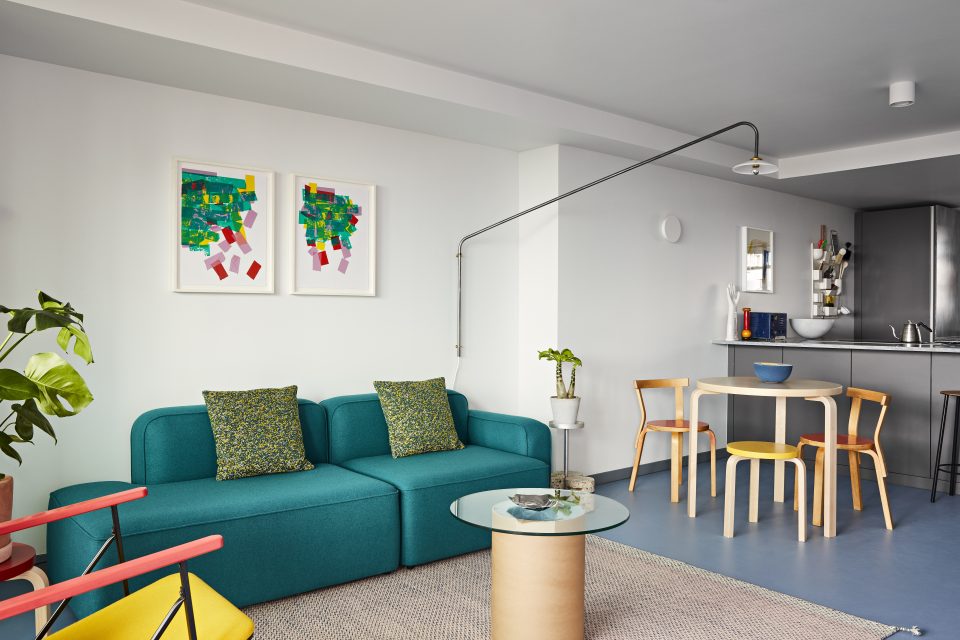
The Ab Rogers show apartment
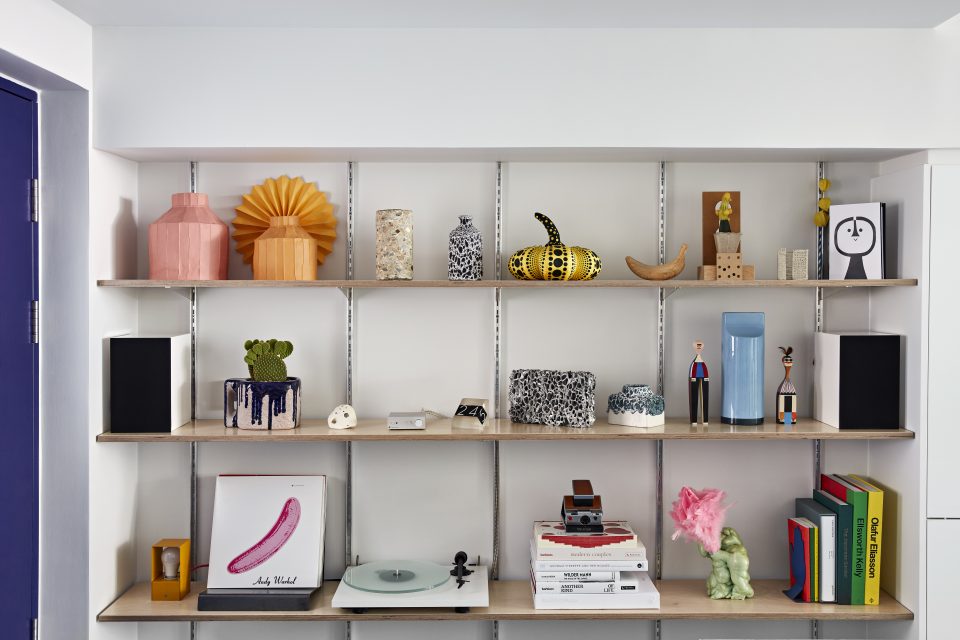
Working in partnership with Blue Farrier, the former creative director at fashion label Issa, Ab Rogers designed its flat for a fictional occupant named Ursula Kim. According to founder Ab Rogers, Ursula “loves film and vinyls, and collects old objects.” He says she is also meticulous about her home and a fan of vintage design – hence the use of raw materials to evoke “Brutalism in its true meaning.”
The firm retained the red bathroom ceiling from Goldfinger’s original design, and used period furniture in shades of green, yellow and blue. “We felt we were in dialogue with the ghost of Goldfinger,” Rogers says. “It was an extraordinary honour.” It also recycled materials from the construction site to create an aluminium side table and planter base, a glass table and felt headboard.
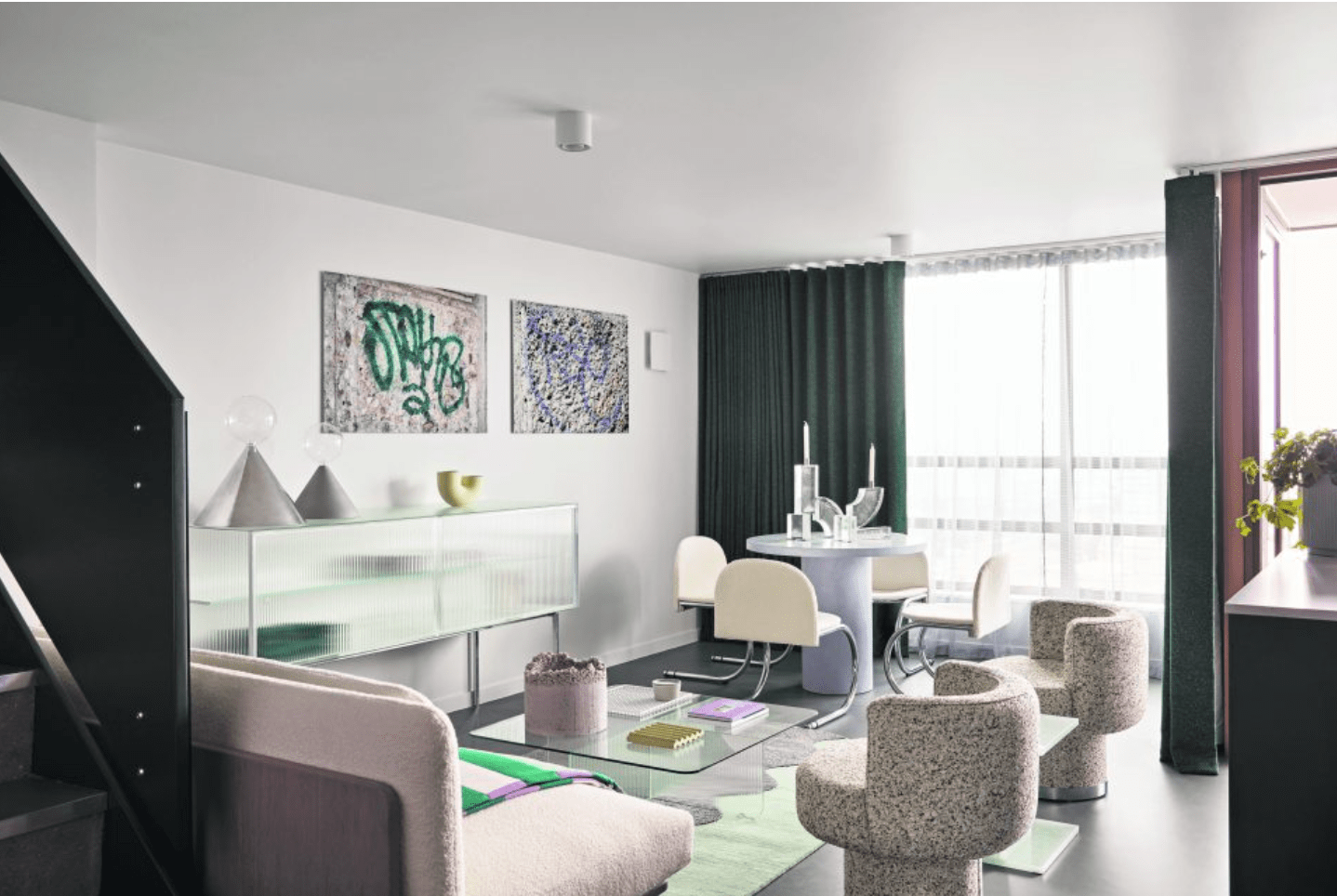
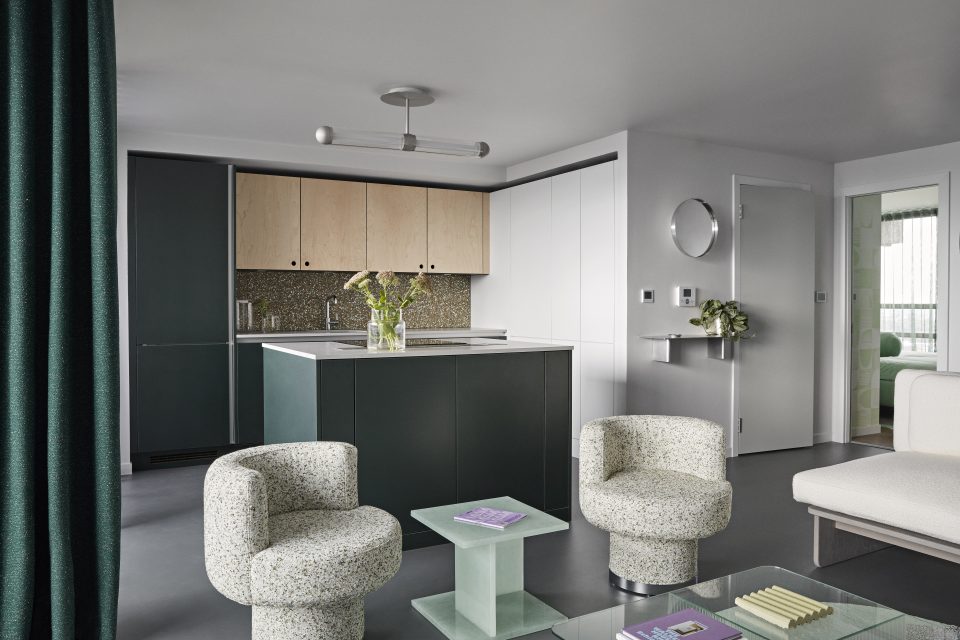
The 2LG show apartment
The 2LG apartment also borrows heavily from the Brutalist exterior of the Balfron, incorporating concrete, aluminium and jesmonite but softening this with lilac and mint accents. They created chairs in a speckled, stone-coloured fabric that looks like concrete, as well as a series of photographs, a wallpaper and soft furnishings inspired by the Balfron exterior, which are available to buy.
“Obviously the Brutalism of the building itself was a huge inspiration,” says Russell Whitehead of 2LG Studio. “We wanted to do a retro-futurist take on the Balfron.”
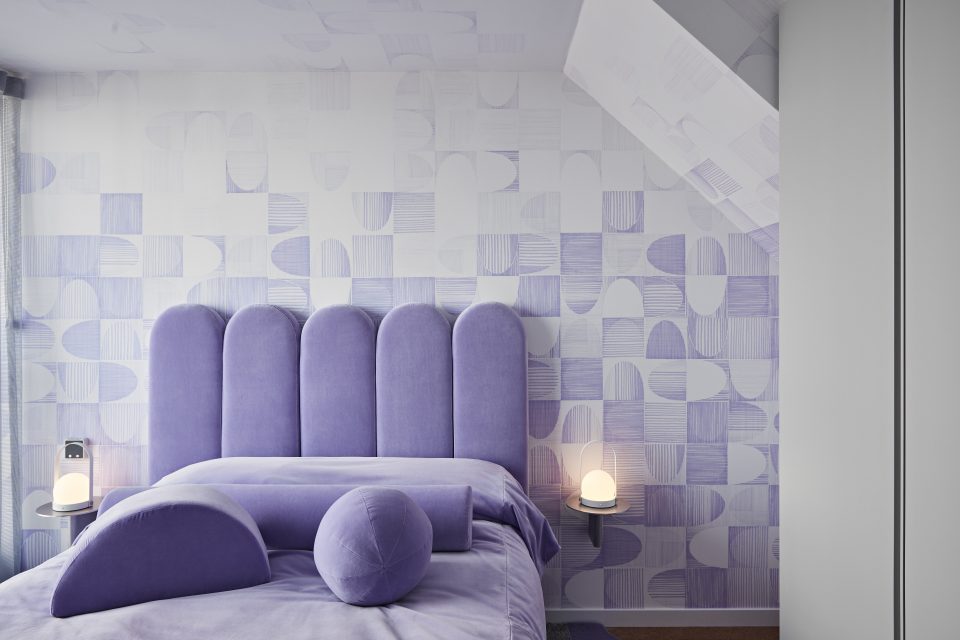
The 2LG show apartment
Most of the pieces are bespoke, but the bed with its cushioned lilac headboard – one of the highlights of the show flat – is a tweaked version of one that they produced as part of their collaboration with online luxury furniture retailer Love Your Home.
By fusing grit and glamour, both designers have created quirky, modern apartments worthy of any Ursula Kim.
First published in City A.M. Magazine, October 2019. Image by Joseph Sinclair.
Stage actress, Eastenders mega-bitch, social media warrior. With her voluminous blonde mane, practiced side-eye and reputation for being fearlessly outspoken, Tracy-Ann Oberman cuts an intimidating figure. We meet at a bijou cafe just off Hampstead Heath, the kind that sells £400 vintage chairs and is filled with brunching mums and toddlers. She breezes in, fashionably late, wearing a long floral dress and dazzling white sneakers, her hair wavy rather than in her trademark corkscrew curls.
“I’m on a little WhatsApp group with a load of fantastic women,” she tells me, sipping a glass of bright green juice. “We’re talking about some of the sexiest women on British television, and they’re getting their first grandma roles, even though their own children are under the age of 10. Women are having children later, their careers are longer, they’re sexy longer, they’re sexually active longer. But where are these women on television?”
You could make a decent case for Oberman, 53, being one of them. Her TV roles have included a stint as an anti-villain in Doctor Who, supporting roles in hit comedies Friday Night Dinner and After Life, and playing Chrissie Watts in Eastenders. She’s also run the gamut on stage, from being part of the Royal Shakespeare Company to appearing alongside Celia Imrie in the recent Pinter at the Pinter season, to taking on the lead in Fiddler on the Roof. She’s also found the time to star in more than 600 radio plays, and has now penned several of her own on the subject of golden-era Hollywood.
The term ‘strong female lead’ is bandied around a lot these days but Oberman defines a good role a bit differently. “I don’t mind whether a character is ‘strong’ or not,” she says. “I just want them to be well-written and rounded and interesting, not tacked on to the story of a male protagonist.”
So what roles is she itching to play? On TV, a period drama – “I’ve got the hair for it” – and on stage, a Chekhov. One arena that consistently offers up great female characters is soaps. Although she was only in Eastenders for a year and a half, Oberman had the honour of bumping off one of Albert Square’s most iconic characters, ‘Dirty’ Den Watts, in her role as black widow Chrissie. “When you murder one of soap’s hugest icons and bury him under the Queen Vic, the moniker follows you around – you’re always going to be ‘Eastenders actress,” she says. “It’s a badge of honour.”
Bravery is very important to me – not just sitting back and going with the flow
She makes the unlikely connection between Britain’s best-loved soap and the golden age of Hollywood cinema, of which she’s a huge fan (she says Now Voyager, Mildred Pierce and “anything with Bette Davis” are her favourites). “Those golden age of Hollywood films have always had fantastic female stories, and soap is kind of like that – you’re darting around a set a bit like you would on the Warners lot in a little buggy,” she says. This is the subject of many of the plays she writes for Radio 4, which tell the stories of icons like Davis, Joan Crawford and Doris Day.
Her latest project is new play Mother of Him, at the Park Theatre in London. Written by Evan Placey, it is the real-life story of a teenage boy under house arrest after committing a terrible crime, told from the perspective of his mother. “It’s about how single mothers are viewed, and their responsibility for their children,” she says. “As a mother, are you meant to love your child no matter what they do?”
One of the most striking things about Oberman is her confidence: you don’t get the impression that she has ever been intimidated by anyone, or anything. Has she always been this way?
She pauses for a long time. “I think I’ve always been like that,” she says eventually. “Bravery is very important to me, not just sitting back and going with the flow. It’s about sticking your head above the parapet, and I think I’ve always been brave enough to do that, but age has made it easier.”
Oberman in Mother of Him at the Park Theatre
A case in point is when Oberman spoke out about her past experience of working with high-profile theatre director Max Stafford-Clark, who was accused of making inappropriate sexual comments to two young actresses in 2017 – around the time the #MeToo movement was taking off in the US.
“I remember getting a message saying the narrative was going to be [that these were] silly snowflake girls who couldn’t let a 70-year-old-man have a laugh,” she says. “It really bothered me because this man had a reputation. I personally experienced it, I knew other people who had experienced it and I really didn’t want those young women to be thrown to the wall.”
This drive to stand up for what she believes runs through many of the things she’s involved in outside of acting. This stems in part, she says, from her family history, which includes Jewish relatives who died in the Warsaw Ghetto. “I was always very aware of family who didn’t make it out of Poland and Germany and it’s something we always discussed a lot in our family. It made me feel that I had to speak out, that nobody else was going to do it.”
A project she hopes to get off the ground soon is a version of the Merchant of Venice, set against the Oswald Mosley fascism of the 1930s East End and the Battle of Cable Street, in which Oberman would play a female Shylock.
“We’re working based on my family history, and my grandmother being an East End Jewish matriarch,” she says, folding her hands and smiling pointedly to signal that that’s all she wants to say on the matter.
Her grandparents were members of the Jewish Labour movement in East End, and this heritage played a part in her deciding to speak out against the Labour Party – of which she used to be a member – on Twitter, with regard to the ongoing and well-publicised allegations of anti-Semitism. “I kept thinking ‘is anyone going to come in from the Labour Party and speak out on it’, and nobody did, so I found myself saying my political thing.”
She was encouraged to join Twitter in the late noughties by her early-adopter friends David Baddiel, David Schneider and Omid Djalili. At first, she loved it. “It was like being at the wittiest cocktail party, you could talk to anybody, follow anybody. I never had a negative tweet sent my way.” She pauses. “Well, the odd dick pic,” she says, leaning towards me knowingly, “but you just block them and move on.”
But after speaking out online about the anti-Semitism crisis in the Labour Party, things took a turn, and she began to receive abusive messages. “Thousands of people jumped at me and it was intimidating and scary, but I thought ‘They want to drive me off and I won’t let them’.”
It was this experience that inspired her to start her podcast, Trolled, where celebrities and other public figures discuss their experiences of social media and being online. So far, the guests have included Gary Lineker, Luciana Berger and Al Murray.
She still thinks social media can be a force for good, though, and this is reflected in her new play, which is set before the social media era in 1998. The mother, Brenda, is portrayed negatively in the press due to her son’s actions and finds she has little control over her own image. “In 1998, when the papers wanted to write that you were a dreadful human being and you’d been doing x, y and z, they could get away with it because there was no other redress. Today Brenda could control her own story, she could have her own Twitter account.”
Thankfully Oberman has no such problem. Few public figures tackle the issues that count with such relish. Long may it continue.
Although it is only divided from Kew by a thin stretch of river, Brentford and its West London neighbour could not be more different. Take their history, for example. While the former started out as a country retreat for royals, Brentford has built itself on being a hive of industry.
In the Victorian era a dock designed by Isambard Kingdom Brunel was built there, where workers loaded up boats with coal, steel and timber from the railway to be sent along the river to the Docklands. Post-war, Brentford became the starting point of The Golden Mile – a stretch of art deco factories that once produced everything from gyroscopes to potato crisps.
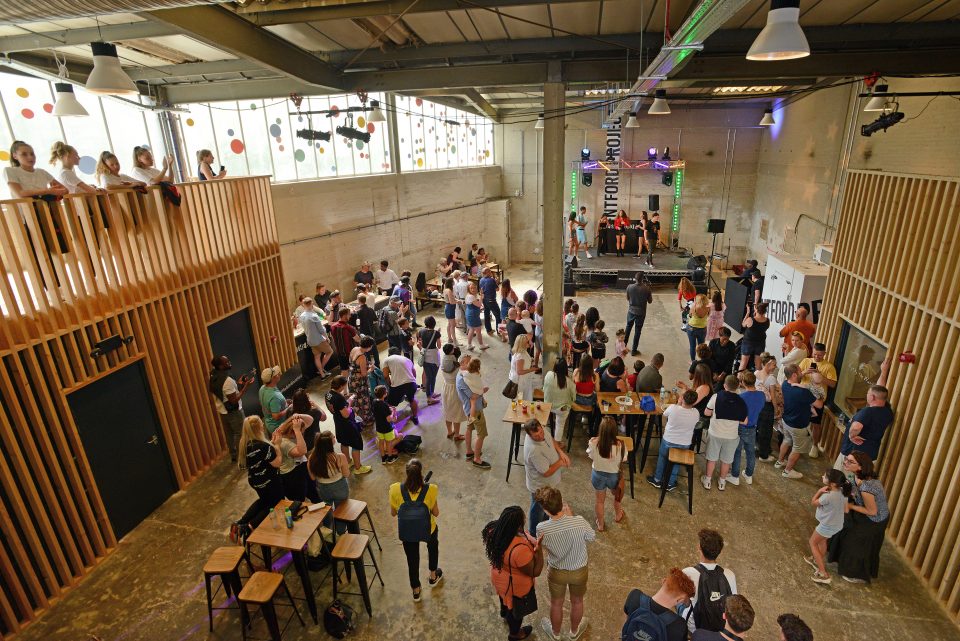
An event at The Brentford Project. Credit: Daniel Lynch
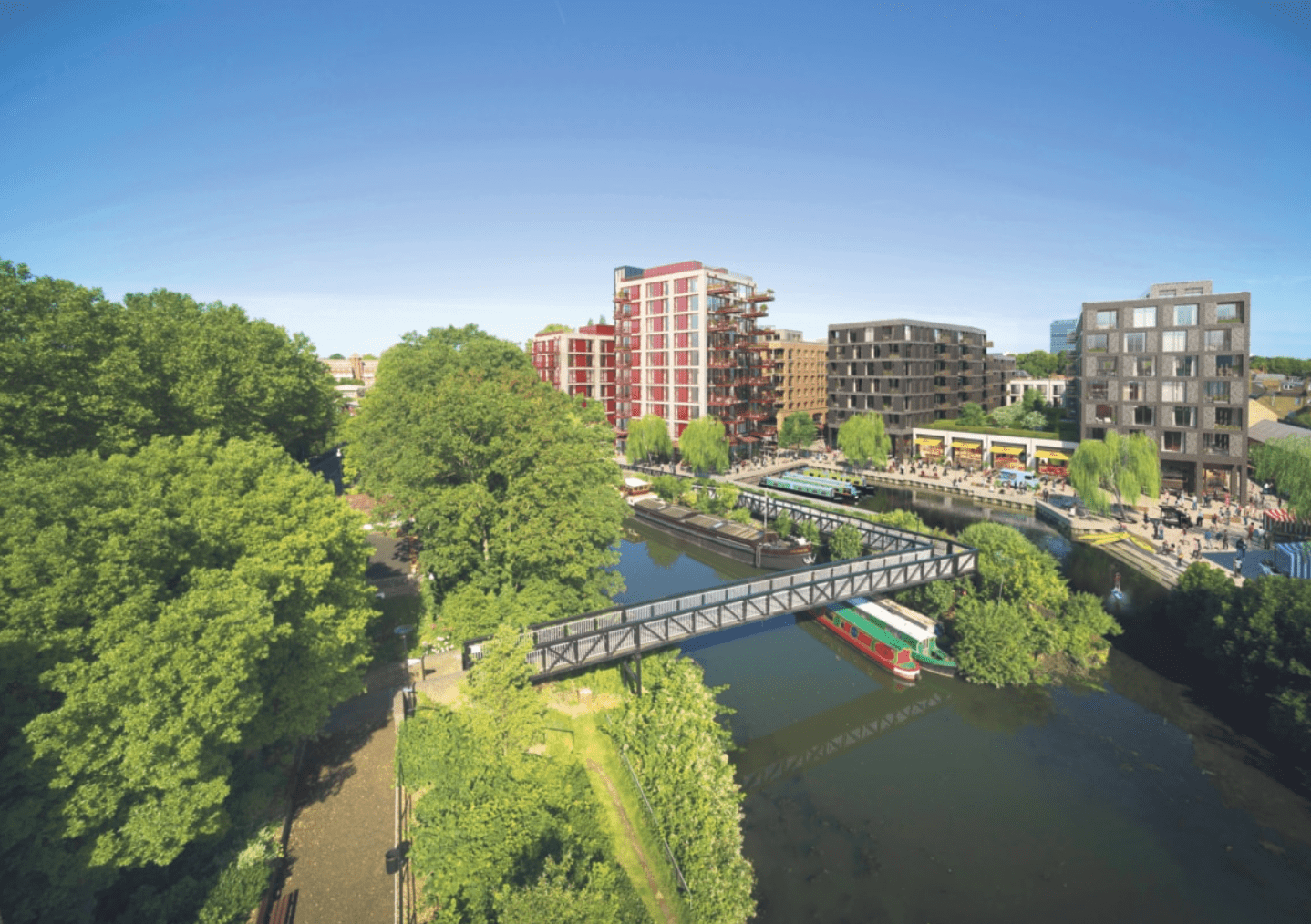
Developer Ballymore is now trying to capitalise on this industrial heritage by creating a new district combining housing, independent shops and restaurants and cultural spaces. It is called The Brentford Project, and the first homes are available to buy this week.
There is a template for this kind of thing in Peckham and Hackney. But what does post-industrial regeneration look like when it happens just down the A4 from Heathrow?
Walking down Brentford High Street, the development is impossible to miss. This is because the floor and walls have been painted bright blue, in an installation by artist Huw Morgan. Ballymore’s sales director Jenny Steen tells me this is to signpost the presence of the water, which “even some residents have forgotten about” because it was closed off for many years.
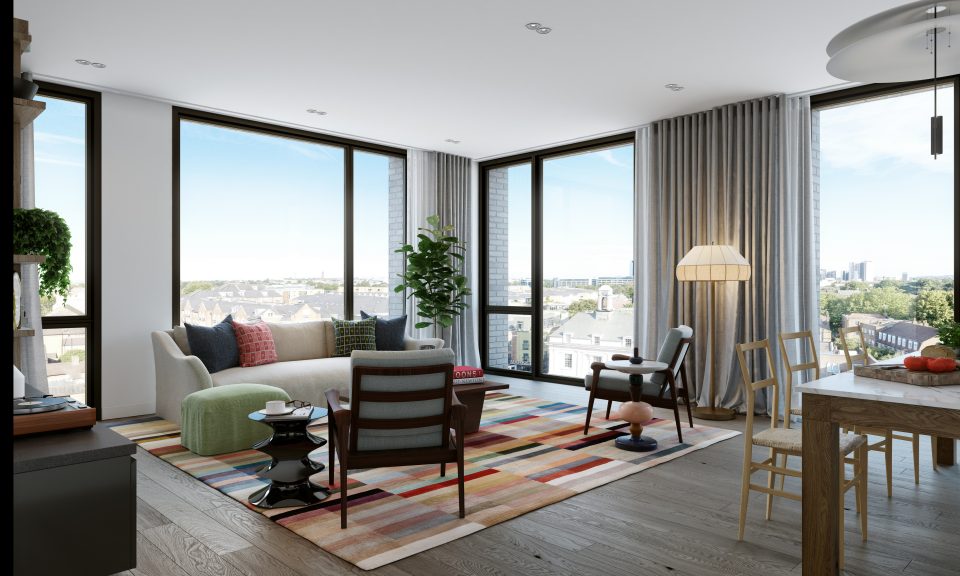
A show home interior
Ballymore has already opened a hipster-friendly cafe and events space on the waterside to try and pull people into the 11.8-acre site. Over the summer it has played host to live music, art and baby yoga. It is building a total of 876 new homes, the first phase of which will comprise 300 studio, one, two and three-bed apartments starting from £369,500. Steen says The Brentford Project is aimed at “people who love to be in their home,” and the spacious show flat boasts unusually high ceilings, a range cooker and a balcony that could comfortably fit a dining table and four chairs.
In keeping with the local area, lots of the apartments will have an industrial feel: think cantilevered balconies and concrete worktops.
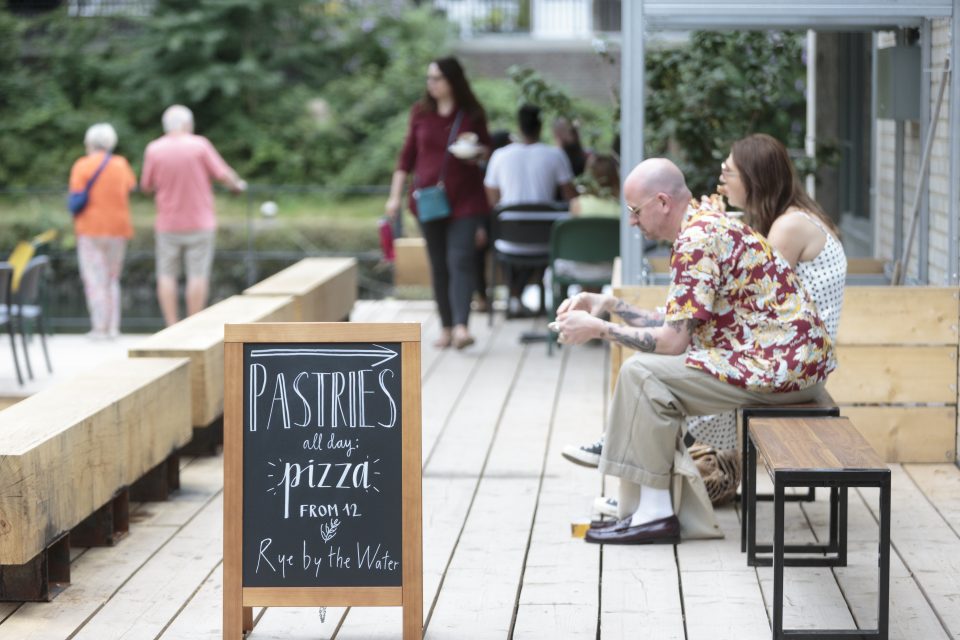
There is already a cafe on site
Ballymore also has plans for 50 new retail spaces, including a new set of pedestrianised ‘lanes and yards’ which will play host to independent retailers, craftspeople and artisans. A 15th-century church will become a ‘cultural and foodie hub’ with an open-air pool in the grounds.
John Mulryan, group managing director at Ballymore, says he wants the project to “bring fresh energy to the area in a way that honours and builds on its historic past – as well as its abundance of creativity and culture.”
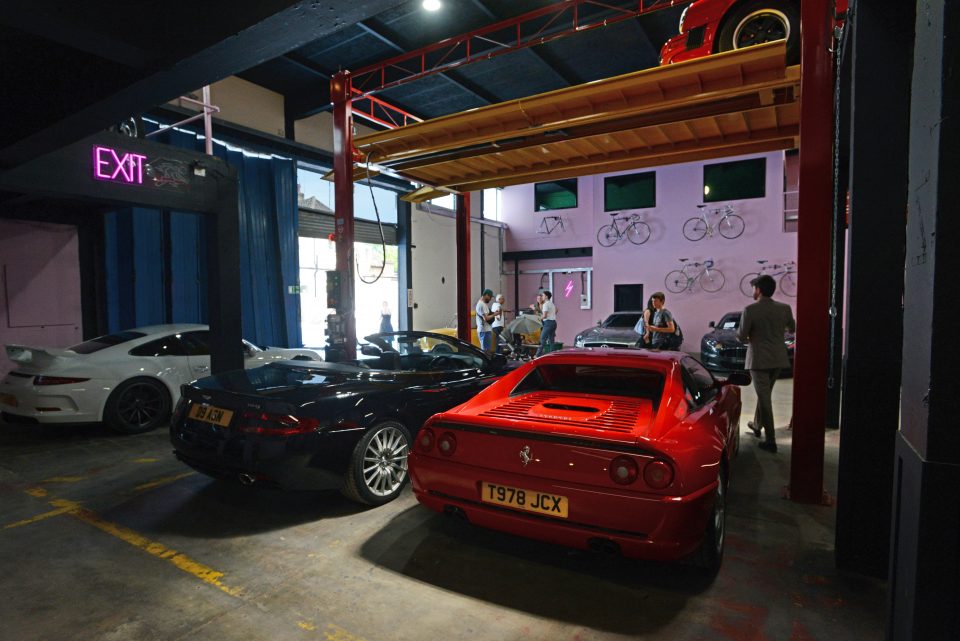
Duke of London. Credit: Daniel Lynch
Already installed on the site is classic car restoration business, Duke of London. As well as a working garage and forecourt, it also runs an events space, The Factory, which is as likely to be found hosting a supper club as it is a meet for motor enthusiasts. It will soon be offering food from Le Swine and Santa Maria Pizza, and is even set to host an event for London Fashion Week.
“I’ve lived in this area all my life, and before this there wasn’t much reason for people to venture past the Chiswick roundabout,” says founder Merlin McCormack.
There is still a long way to go – but it looks as if that is starting to change.
When Taylor Swift released her latest album, Londoners were surprised to find she had penned an ode to our city in a track called London Boy.
In the song, she travels around the capital using routes that anyone with a cursory knowledge of the transport system would find completely illogical, such as going from Shoreditch to Highgate then back to Hackney.
She also describes her love for having high tea, browsing in Camden Market and watching rugby in the pub with her boyfriend, British actor Joe Alwyn.
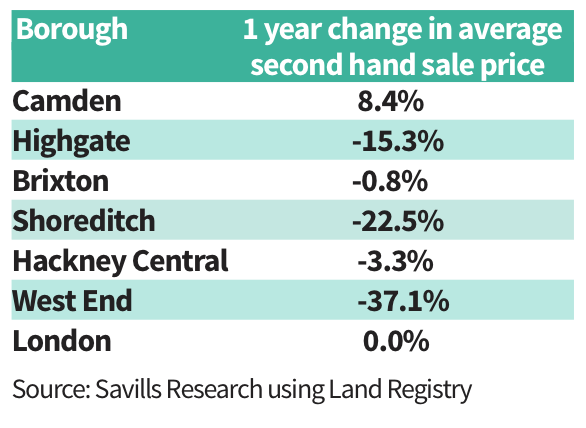
So if Tay-tay decided she liked London enough to buy a pad here, which of the locations in the song would be her best bet? Researchers at Savills have totted up the totals and say Shoreditch represents the best value, with the average second-hand home coming in at just £516,250 in the year to May.Taylor sings about spending time in Camden – and it has seen property prices increase in recent years
In the song Swift expresses a penchant for hanging out in Hackney over Louis Vuitton on Bond Street – and she could pick up a tidy bargain there too, with the average sale price in Hackney Central sitting at £576,339. This is the third-cheapest location after Shoreditch and Brixton, which comes in at £539,433. If she’s looking for an investment, though, Camden might be a good shout.
It is the only area that has seen house prices go up, rather than down, in the year to May, and by a not-insignificant 8.4 per cent. In the last five years, the average sale price has increased by 35.1 per cent – again the highest on the list, and compared to a London average of 22.3 per cent.
The West End (which takes in Soho and Bond Street, both mentioned in the song) is unurprisingly the priciest location at £2.08m.
While the pop star won’t have any problem handing over that kind of cash, she might want to consider that the sale price of homes in the area fell by 37.1 per cent in the last year.
It is the also the only London Boy location where the average sale price is lower now than it was five years ago. Nick Verdi, head of Savills Shoreditch, says: “Shoreditch is home to some of London’s coolest bars and restaurants, Brixton is renowned for its food markets and the woods in Highgate provide some quiet space in the city. It’s great to be able to draw attention to some of London’s well-loved areas and all that they offer.”
Picture a vast warehouse somewhere in the north of England. Workers in hard hats are poring over intricate plans against a background of humming machinery.
Robot arms slice through sheets of metal and wood as they pass by on a conveyor belt, precisely cutting out shapes that look like huge versions of Airfix models. Across the production line, windows are carefully fitted on to a glossy, new frame.
The unit is then packed on to a lorry to be driven hundreds of miles across the country, where its new owner will arrive in a couple of weeks.
This isn’t a car we’re talking about, by the way. It could be your next home.
Dave Sheridan is the executive chairman of Ilke Homes, which from its Harrogate factory builds neat, modern family homes that wouldn’t look out of place on any suburban housing estate. It completes eight on an average day. “We want to go where the housing need is greatest,” he says. “Most people want to live in a house with a front door and a back door.”
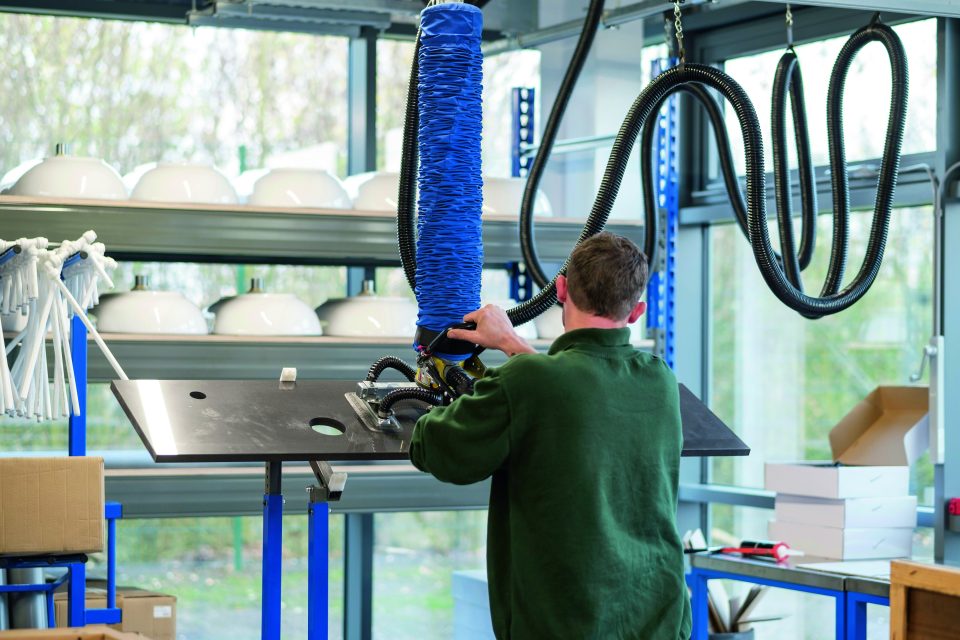
Parts for a modular home being built at Weston Group’s factory in Braintree
Modular construction – homes being built in factories, in other words – is being touted by some as a high-tech solution to the UK’s housing crisis. For others, these homes are no different to the low-quality, temporary prefab housing that went up across London in the 1950s to replace homes lost in the Blitz. So can a home built on a production line ever be a desirable place to live?
This might seem like cutting-edge new technology to us, but – somewhat predictably – countries including Germany and Japan have been doing it for decades. The latter’s largest housebuilder, Sekisui House, has produced more than 2.4m modular homes since 1960, and has now signed a deal with the UK government and developer Urban Splash to set up a factory and build 2,000 homes a year here over the next decade. Although it’s a huge corporation, Sekisui brands itself as a friendly homebuilder with a social conscience.
Meeting housing requirements in the UK, according to government estimates, means building 300,000 additional homes a year – a target that was missed by around 82,000 in both 2017 and 2018. Ilke’s homes cost between £65,000 and £79,000 to buy, although you also need to have a plot of land to put it on.
Zedpods modular homes in Bristol
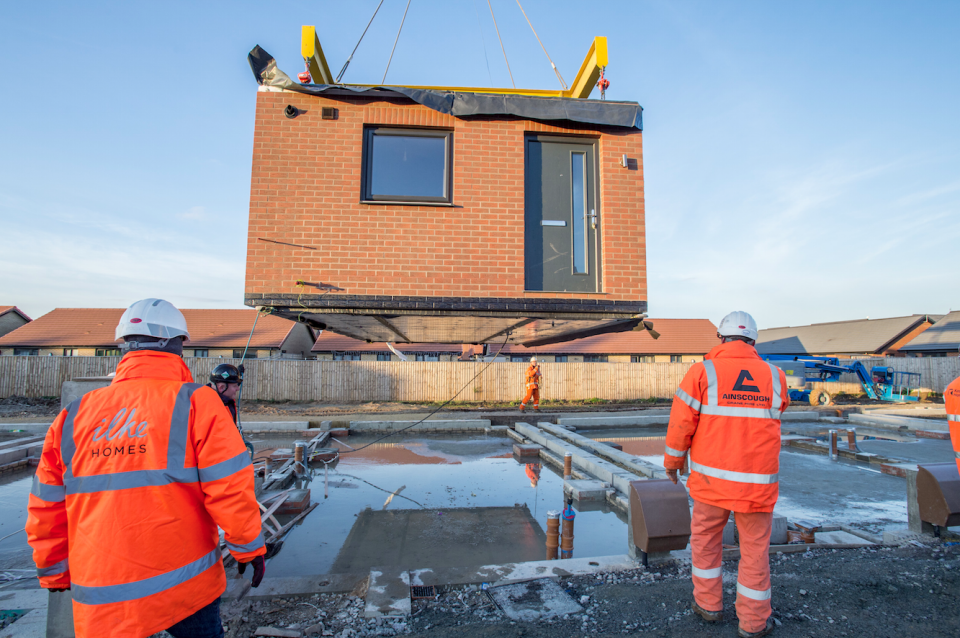
The real selling point is speed. Houses and apartments are built as a series of identical blocks or ‘modules,’ often with bathrooms and kitchens already fitted. Because walls and floors are precisely engineered and there are no real-world variables like bad weather, a home can be made in a couple of weeks. The modules are then transported to the site and craned in on top of each other to make a house, or stacked around a concrete core to create an apartment block. Projects vary, but using modular elements usually cuts construction time by at least half.
These are not piled-up, boxy apartments, but large, light, airy family homes. “They have a love of humanity, they understand how people want to live and what makes homes better and more attractive,” says Urban Splash founder Tom Bloxham. For example, Sekisui plants five indigenous trees around each of its homes – ‘three for birds and two for butterflies’. Its utopian vision of the world extends to humans, too. In Japan, homes are generally considered worthless and demolished after 30 years – so Sekisui buys them back and retrofits them before re-selling them to cash-strapped youngsters at a low cost.
I can’t see how you can create great architecture with modular
Peter Leiper, architect at CZWG
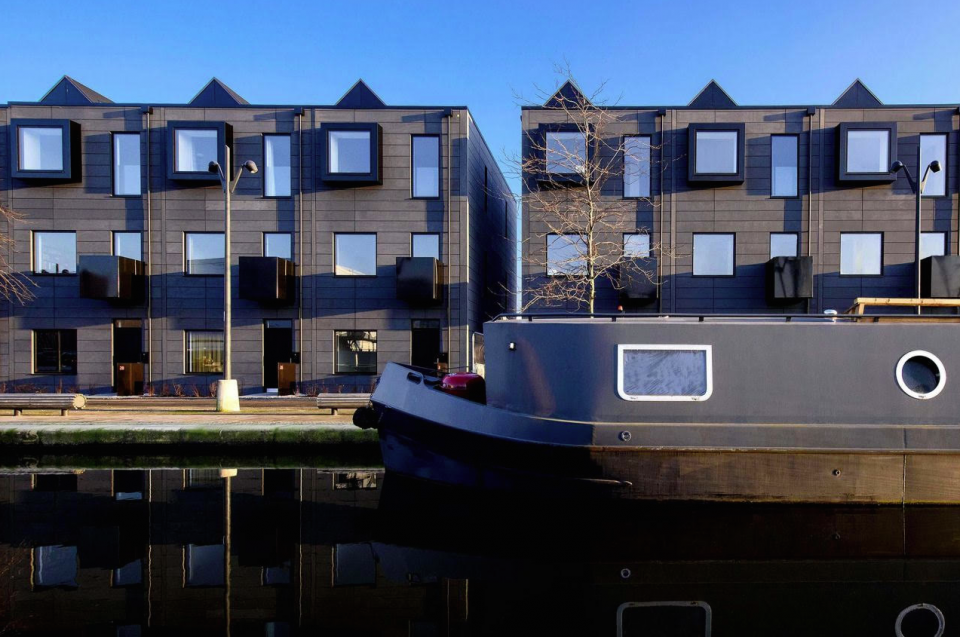
Urban Splash has already been building its own modular homes under its HoUSe brand. They are a modern incarnation of perennially popular Victorian and Georgian properties – high ceilings, three storeys, big windows – but wrapped up in a contemporary exterior. “If all you want is a house that looks like it’s built out of brick, build it out of brick,” says Bloxham. “For us, it’s more about how they perform.”
On the other end of the scale are the vast apartment blocks that have predominated in London so far. Tide Construction and Vision Modular Systems’ 101 George Street in Croydon, which is currently being built, would have been the world’s tallest modular tower at 135 metres and 44 storeys, but a block planned for Singapore will surpass it by five metres. “If you’re going to build a 44-storey building, it has to look great,” says Simon Bayliss, from project architect HTA Design.
Urban Splash’s modular ‘HoUSe’ homes
101 George Street will be covered in iridescent, dark green triangulated panels (pictured, top) that reflect the area’s art deco architecture, and there are certainly worse-looking towers in London. But some believe modular construction is at odds with attractive design. “I can’t see how you can create great architecture with modular,” says Peter Leiper, architect at CZWG. “You have to create [buildings] that are quite linear, where everything stacks up one above the other.”ADVERTISING
On completion, 101 George Street will be one of the growing number of build-to-rent blocks in London, owned by a corporate landlord with the 546 flats rented out to young professionals.
Some argue this is the only model – that modular only works with homes that aren’t for sale. This is because, no matter how quickly you build them, houses take time to sell – and housebuilders don’t want to end up with stock they can’t shift. “It’s being hailed as the great saviour of housing in Britain, but speed is the last thing housebuilders want,” says Leiper.
One area where this isn’t an issue is affordable housing. Demand is bottomless, and factory-built homes are hard-wearing and cheap to heat. Boklok, the modular company owned by Ikea, has already struck a deal with Worthing Council in West Sussex to build 162 flats, of which a third will be handed over to the council at cost for affordable housing. It also allows homes to be built in places where “conventional construction won’t work”, according to Dr Rehan Khodabuccus, operations director at Zedpods. His firm has installed homes on stilts above car parks, for example.
The sticking point is that it’s not cheaper than building a bricks-and-mortar home, because so much has been invested in developing the technology. “It will get cheaper, in the same way that cars and TVs eventually get cheaper,” says Bloxham.
An Ilke Homes house is craned in on a site in Hull
Modular homes are also eco-friendly, which is significant given that the construction industry accounts for 38 per cent of the world’s energy-related carbon emmissions. Bayliss thinks it’s “the only way” the UK can achieve its target to reach net zero emmissions by 2050, and this could be a selling point for eco-conscious home buyers. But the average person still doesn’t know what a modular home actually is. “It’s not penetrated the mainstream yet,” says Rory O’Hagan, architect at Assael. “But if you’re delivering really great homes, why should the technology be the first consideration for the purchaser?”
The idea that these are small, identikit, prefab homes will be a challenge to surmount, and the people building them know it. “We owe it to the British public to build only high-specification, quality, permanent housing that will create popular, aspirational dwellings,” says Khodabuccus. But given the need for new housing isn’t going away, the production lines look set to keep rolling.











 Helen Crane