Coronavirus: What to do if your house is on the market, and how prices might be affected

Read on City A.M. here

The spread of Coronavirus has taken us all by surprise, with the unprecedented UK-wide lockdown posing a whole host of questions about how life’s milestones should be handled.

Today, the government published guidance stating that people should avoid conducting viewings and delay moving house, even if the contracts have been exchanged. But what can you do in the meantime if your house is up for sale, and what kind of housing market we can expect to return to? Here’s what we know so far.

First of all, agents are advising against taking your property off the market, even though viewings are no longer possible.

“Towards the end of last week, we got as many of our properties videoed as we could,” says James Clarke of Knight Frank. “Our view is that, with so many people at home, it would be almost foolish to remove a property from the market as it’s going to have maximum exposure online.”

Paul Clarke, founder of agent Mr & Mrs Clarke backs this up, saying his firm has seen a “spike in traffic across all [its] digital advertising spaces – website, Rightmove, Zoopla and social media.”

Will house prices fall?

It’s too early to get a clear picture of what will happen to house prices post-lockdown. Pre-Coronavirus, things were in reasonable shape: the latest government house price index, which recorded sales in January, showed a 1.3 per cent year-on-year increase in the average house price, but a 1.1 per cent fall compared to December.

These were recorded after the Conservatives won a majority on 12 December, which led to anecdotal evidence of a ‘Boris bounce’ in house prices, as pent-up housing demand began to be released because buyers felt more secure.

But the figures precede the UK’s exit from the EU on 31 January, which was some said might lead to a further value spike. The February figures, released in a month’s time, are tipped to be the peak after which prices will drop, recording the period before Coronavirus hit the UK. It’s impossible to accurately predict how far they will fall at this stage.

“You’d be forgiven for anticipating the worst with property values already dropping in January, particularly given the fact we know what is to come as a result of the spread of Coronavirus,” says Marc von Grundherr of Benham and Reeves.

“The positive news is that unlike Brexit or the previous financial crisis, buyer and seller sentiment remains, they are just unable to transact as normal. With both demand and supply reducing instead of just demand, prices aren’t going to take the same sort of hit,” he says.

What’s easier to predict is a fall in transactions. Zoopla noted a 40 per cent drop in buyer demand and a 60 per cent increase in fall-throughs over the seven days to 22 March compared to the previous week, although new sales agreed still outnumbered fall-throughs by four to one.

The positive news is that unlike Brexit or the previous financial crisis, buyer and seller sentiment remains, they are just unable to transact as normal.

Marc von Grundherr, Benham and Reeves

These figures will both fall further now we are in full lockdown, and Zoopla suggests a 60 per cent fall in transaction volumes in the second quarter of 2020.

Its director of research and insight Richard Donnell says he “[Does] not expect any immediate impact on prices,” but that the longer term outlook depends on “how the government’s major package of support for business and households reduces the scale of the economic impact.”

In other words, we have to wait and see how many people are financially impacted by Coronavirus to the extent that they change their plans to move.

Marc Schneiderman of Arlington Residential says a small number of transactions could still go ahead in the coming weeks, mostly “off plan sales, and isolated sales to buyers who may have viewed houses in the past and are now willing to commit to agreeing terms, most likely at reduced prices to those they might have paid a few weeks ago.”

What can sellers do during lockdown?

If you already have a buyer, use the downtime to “move forward with the necessary documentation and legal work, which is very much continuing as normal,” says Jo Eccles, founder of agent SP Property.

If you have reached the point of exchange, the government guidance suggests a mutual agreement between both parties to stay put for now in the interests of safety.

For those still in the marketing stages, Paul Clarke suggests “being proactive and asking your agent to advertise your home across social media, email and offer virtual viewings.” And if you’re just contemplating a sale, it’s time to get your house in order – literally, as hardware stores are among the few that are still open.

You can also start conversations with agents about putting your home on the market once the lockdown is over. They will be having similar discussions with would-be buyers, and can progress when the time comes.

Finally, Eccles suggests trying to stay upbeat, viewing moving plans as “Something exciting and positive to look forward to when the current situation eases.”

Main image by Brett Jordan on Unsplash
LOCKDOWN MAKING YOU HATE YOUR HOME? TRY THESE EIGHT TRENDS FROM LONDON DESIGN WEEK

Read on City A.M. here

Most of us are spending a lot more time at home thanks to the Coronavirus pandemic, throwing our bad decor decisions of the past into sharp relief.

If you’re thinking of giving your home an overhaul, here are eight of the key trends from London Design Week 2020, held earlier this month at Design Centre Chelsea Harbour.

Exotic prints

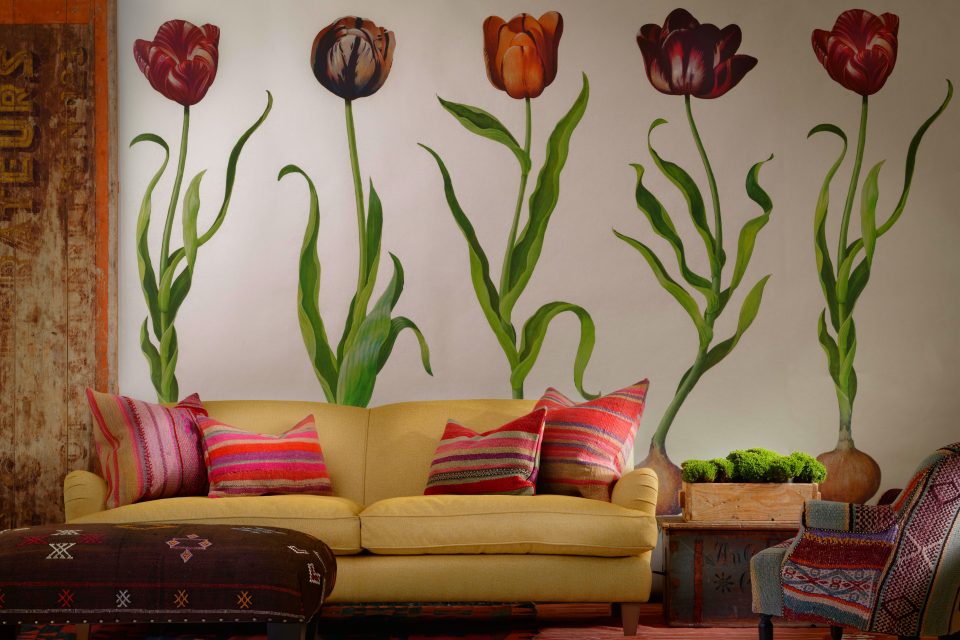
Florals are no longer safe and sedate – when it comes to motifs from the great outdoors, this season’s mantra is go hard, or go home. From Pierre Frey’s flamingo-print fabric to Andrew Martin’s bold bulb prints and giant graffiti-ed apples, the vibe is less English country garden and more tropical island paradise.

“This season, there is a preference for the exotic and the idea of gardens as paradise on earth, with botanical motifs such as fragrant jasmine and orange trees making an appearance,” says Design Centre Chelsea Harbour’s Becky Metcalfe. If far-flung holidays are off the table this summer, maybe this is the next best thing.

Turning Japanese

Before everything got cancelled, Japan was having a bit of a cultural moment. Excitement was building ahead of the Tokyo olympics, and there was an entire exhibition dedicated to kimonos at the V&A. Keep the spirit alive with delicate, neutral pieces, natural materials and clever, functional design.

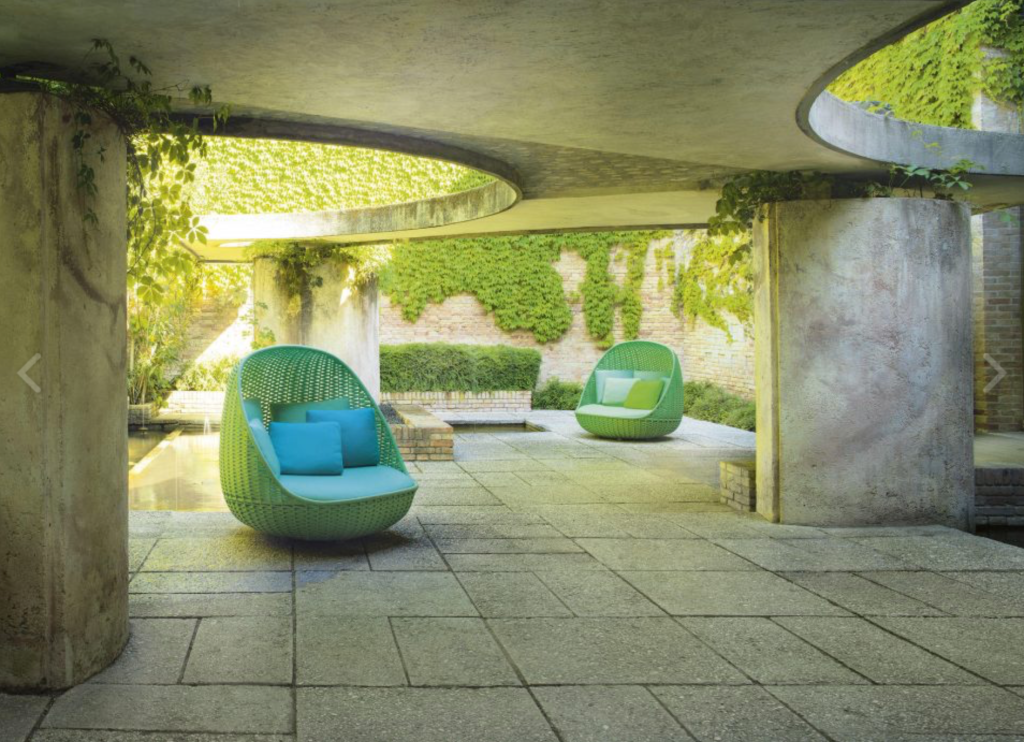
Paola Lenti Orbitry chairs

Get touchy-feely

Our homes are now our castles whether we like it or not, so up the luxury ante by filling yours with tactile materials in a range of different textures. At Design Week we saw brocades, jacquards, textured wallcoverings and thick, bouclé carpets.

Pierre Frey’s lustrous, paisley-patterned fabric in shades of deep pink and green would bring a touch of retro-inspired decadence to any lockdown lounge, while Italian designer Paola Lenti’s outdoor chairs use a combination of natural and industral materials to create bold, woven textures, and are also recyclable.

Ahead of the curve

With our sofas now basically the centre of the universe, it’s more important than ever to have a good one. Voluptuous, curvy shapes are where it’s at, elevating the humble settee into a work of sculpture.

“Furniture is simpler, with the padded silhouette an outward expression of reassuring comfort,” says Metcalfe. – and as well as being everywhere during Design Week, shapely sofas have been used in the new release of apartments at Clarges in Mayfair, which have just been completed by design studio Elicyon.

Paint the town red

Like the weather outside that none of us can enjoy, the colour palette is warming up. Last year’s fun and carefree millennial pinks have given way to deeper, darker shades of rose, etruscan red and watermelon, while neutrals are also stepping up a gear.

Elicyon’s Charu Gandhi says the ubiquitous dove grey is being replaced by “new, warm neutrals such as umber, burnt sienna and ochre.”

Back to nature

Another big trend at Design Week was natural materials. Everything from banana fibre to marble turned up at the show, tying in with the vogue for products that display expert craftsmanship.

“Humble finishes like terracotta, sisal and cork are being employed by designers as if they are haute materials,” says Metcalfe. “Whether it is a wallcovering made of shells or a handstitched leather lamp, these surfaces take immense skill and craftsmanship to perfect.” If you were looking for a lockdown craft project, this might be the time to start.

Andrew Martin’s tulip wallpaper

Bold walls

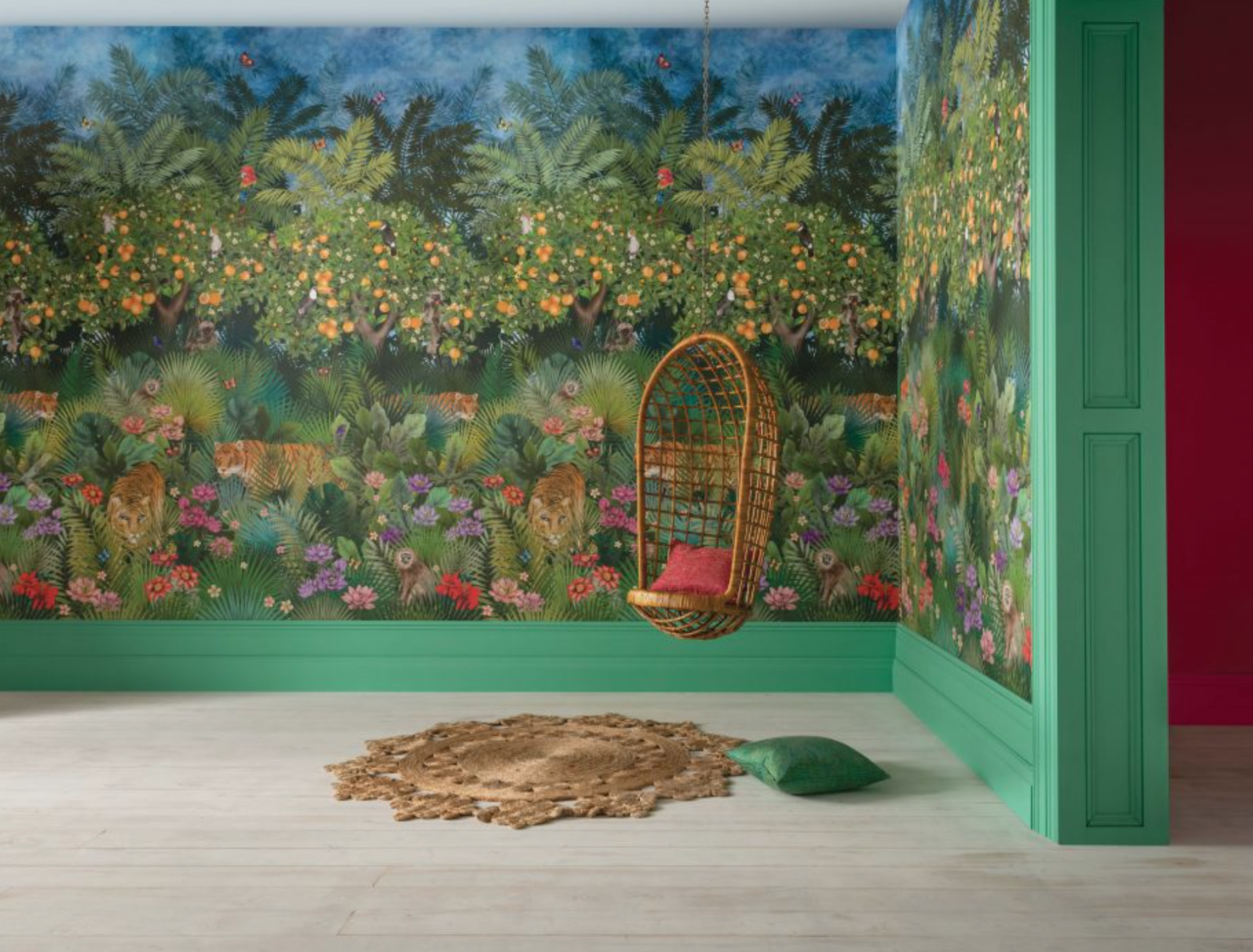
Fashion designer Matthew Williamson launched a new collection of digitally-printed wallpapers at Design Week, in partnership with Osborne & Little – yes, that’s the family firm of former chancellor George.

Inspired by childhood daydreams, patterns on offer include a jungle filled with roaming tigers; an inky night sky full of stars; and wildflower meadow dotted with butterflies. A glorious antithesis to everything minimal and understated.

Graphic content

For those who like to keep lines a bit cleaner, there were also plenty of architectural prints and angular objects. “An effective way to elevate any scheme can be through adding bold graphic print to the design,” says Gandhi. “Complementing a neutral material palette with an unexpected dark abstract pattern makes it more dynamic and compelling.”

The showrooms at Design Centre Chelsea Harbour are closed due to the lockdown, but you can find updates and information about the designers based there on its website: dcch.co.uk.

working from home? here’s four tips to make it a bit more bearable

Read on City A.M. online here

Unless you’re a nurse, a checkout assistant or a delivery driver, chances are you’re going to be working from home for a while.

For those who don’t have a home office set up already, this brave new world of endless conference calls in your living room is going to take some getting used to – and doing an IKEA run to pick up a new desk or chair isn’t really an option.

So how can you create a productive, healthy work environment using the things you already have?

Let there be light

It’s a simple idea, but Helen Westlake, creative director at interior design firm Millier suggests moving the table you work at as close as possible to a window. This, she says, will “keep you alert and your mood lifted.”

Many Londoners don’t have the luxury of a pleasant view, though, so if staring at some bins for eight hours a day is too depressing, injecting a bit of colour into your workspace can have a similarly uplifting effect.

Ensure there is sufficient storage so you can hide away your work life when the evening hits

Helen Westlake, Millier

“Place a piece of art in your visual field and utilise the power of colour psychology,” says Liz Linforth of wellbeing-focused interiors company, Conscious Cribs.

She adds that yellow is a good colour to incorporate into your working space as it “stimulates our intellect, giving us a rational, clear and focused outlook,” which sounds like exactly what we all need in these strange and unprecedented times.

Divide and conquer

Another key to working from home is to divide areas for work and relaxation. “Consider the arrangement of your furniture,” says Westlake. “Ensure there is sufficient storage so you can hide away your work life when the evening hits.”

You can also split up your space using scents, so candles and diffusers are your friends. “Citrus is a stimulant so works well in office environments, whereas jasmine and lavender are more calming,” she adds.

Air it out

Good air quality is really important when you’re stuck indoors for long stretches at a time – and could even help to keep the dreaded virus at bay.

“Good ventilation is always associated with low microbes inside your home,” says Olga Baker Turner, chief executive of newly-launched indoor air quality testing company AirRated. “The best way to avoid viruses is to fit a really good, mechanical ventilation system with a filter.”

If that’s not possible, Westlake says plants are are “vital for clean, filtered air,” and having lots of them around has been proven to reduce stress levels and blood pressure. So next time you make a dash to the supermarket on a doomed mission to score some pasta, thinking about picking up a commiseration houseplant.

They can even help absorb the toxins emitted by office equipment. “Plants like English Ivy are great positioned near computers,” Linforth says. “They assist in purifying the air by absorbing toxins like ammonia, formaldehyde and benzene.”

Sit up straight

Attitude is everything when it comes to working from home, and just because you don’t have a fancy office chair doesn’t mean you can get away with slouching.

“We can easily make any chair more comfortable and ergonomic by sitting on the edge of the seat with a folded jumper or foam wedge underneath,” says Linforth. “This encourages our legs to sit at 120 degrees, achieving what NASA calls neutral body position, the ideal position for sitting for long lengths of time.”

Good luck, and we’ll see you on the other side.

Photo by Norbert Levajsics on Unsplash

Love, Love, Love at Lyric Hammersmith review: A witty, acerbic rumination on the generation gap

Published in City A.M., March ’20

Read on City A.M. online here

There’s a theory that, no matter how leftie and woke we might be in our youth, we all become Tories in the end. But how do we get there?

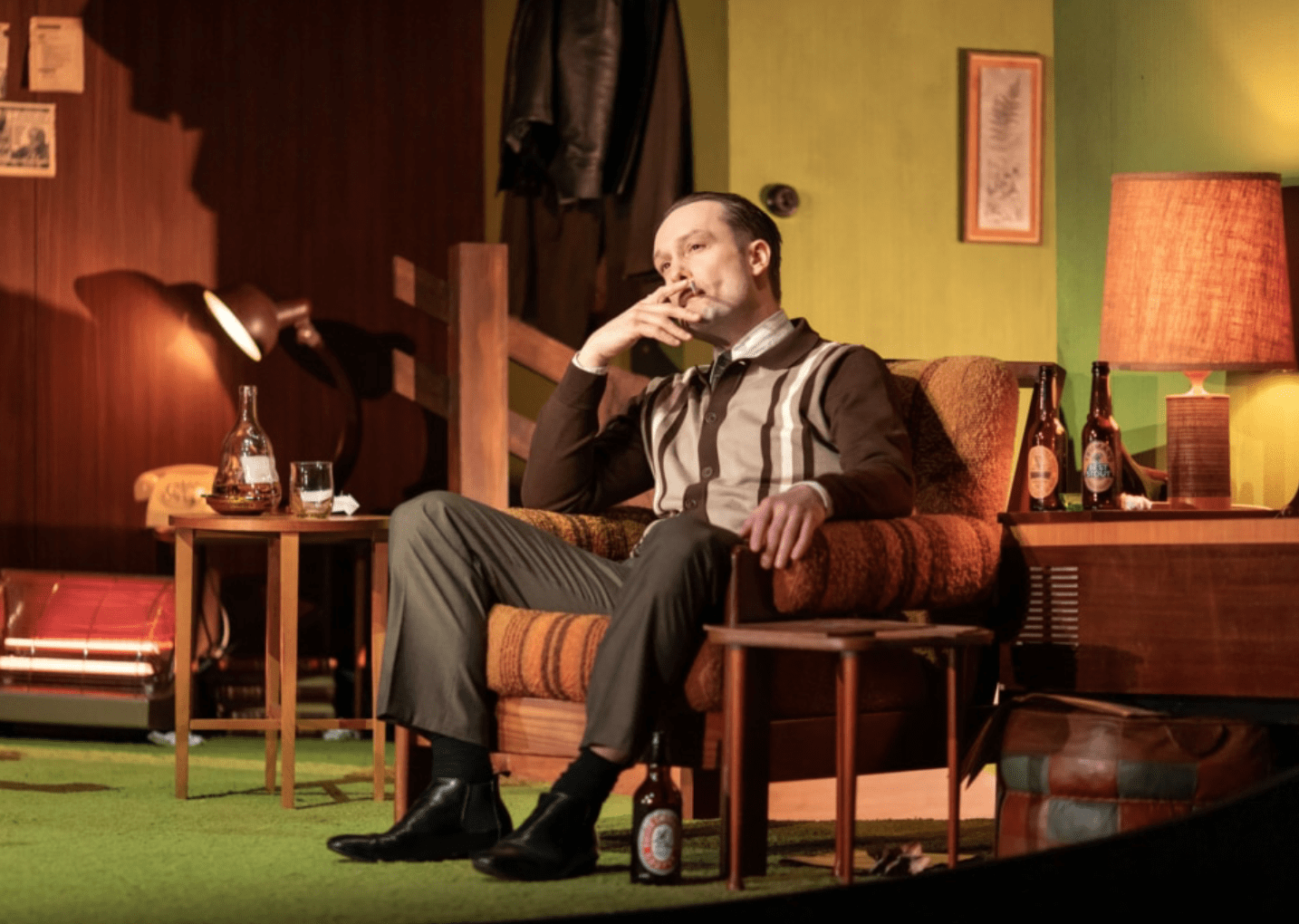
That’s the journey we’re taken on in Love, Love, Love, Mike Bartlett’s three-act drama which picks up with a couple, Kenneth and Sandra, in 1967, 1990 and 2011.

They start off as a pair of pot-smoking students in swinging London, divert via a rather nice house in Reading to bring up their children, and end up as divorced Daily Mail readers, guarding their pension pots like animals guard their young.

Its observations are both witty and painfully realistic – Rachael Stirling’s hypocritical, wine-soaked Sandra hits all the right notes, and the glee among the millennials in the room is palpable in the final act when the couple’s daughter, Rose, screams at her parents to buy her a house.

Essential viewing for those on both sides of the generation gap.

WE TRIED OUT THE HÄSTENS BED BEYONCÉ IS SAID TO SLEEP ON

Read on City A.M. here

Imagine if you could have the best sleep of your life, every night.

To climb into a bed that is tailored to your every need; so comfortable it feels as if you are floating in mid-air the moment you sink in. No lumpy mattress; no squeaking springs. If your sleeping partner is tossing and turning, you won’t even feel it.

How much would that be worth to you?

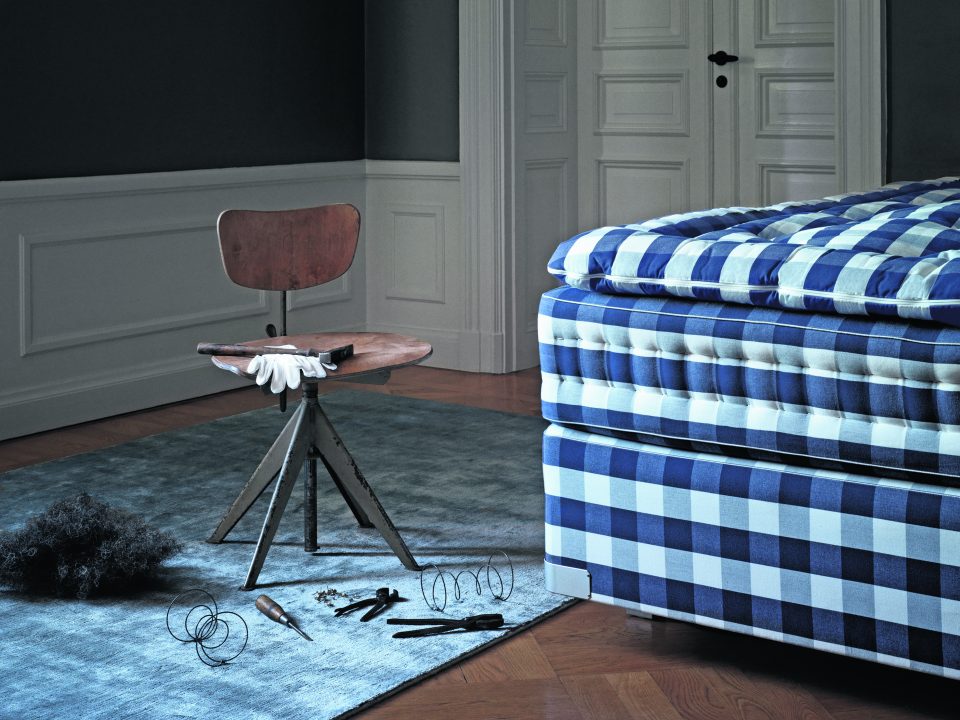
Some would say it is priceless – and it’s for those people that Hästens exists. Its signature navy-and-white gingham beds are the stuff of legend, having been painstakingly hand-crafted in a workshop in Köping, Sweden since 1852. Rumour has it that 49 of the top 50 Hollywood actors sleep on one.

Its chief executive Jan Ryde believes that sleep can change the world – and won’t rest until everyone has the mattress of their dreams (metaphorically, that is: we’re sure he sleeps very well indeed).

“We believe that our planet could be a kinder place – if more people had the energy to be kind every day,” its latest brochure reads. “Oh, how much we would like to invite all presidents, prime ministers and dictators to sleep for one night on a Hästens bed.”

Sleep – Londoners are doing it wrong

Just in time for National Sleep Awareness Week (March 8 – 14) I headed to the Hästens showroom in Chelsea to learn what Londoners are doing wrong when it comes to sleep, and hopefully experience a night of blissful slumber.

Store manager Caroline Webster was there to give me an induction into the Hästens way of life. First things first, she says, I need to get away from the idea that a very firm bed is a good thing. “Lots of our customers think they need a firm mattress, because they’ve been told that lying on a hard surface cures back problems – it’s a very British thing,” she says, explaining that Hästens produces mattresses in soft, medium and firm. “But a soft or medium mattress could be better for your body.”

The most important thing, she explains, is for your spine to remain straight – if the surface is too firm, all of your weight will be held in your hips and shoulders.

I get to work trying out the different beds that are dotted around the store. A bed and mattress will range in price from around £4,000 to £200,000 – but Hästens says these are not super-luxe products: they just work really, really well.

100 per cent natural

What you are paying for is time, and skill. Its flagship bed, the Vividus, weighs 300kg and takes a team of nine master craftsmen 350 hours to build.

“All the little details have been considered. The feet of the beds are set inwards so you don’t stub your toe on them, and the bases don’t have any screws in them so they don’t creak,” Caroline explains.

They are also made from completely natural materials: the bases from sustainably-sourced pine grown in the north of Sweden, and the mattresses from up to 34 layers of horse hair, wool, flax and cotton, as well as three different sizes of steel springs. Mind-blowingly, a team of four people are employed at the factory solely to ruffle horse hair.

Hästens doesn’t do this just to tap into the eco-friendly zeitgeist – the absence of solvents or synthetic memory foam means the beds wick away moisture so your body can regulate its temperature.

Having tried out all the beds the showroom has to offer, I plump for the Vividus, apparently also the choice of Beyoncé – although Caroline is keen to point out that the most expensive bed is not the best choice for everyone. Some of its most high-profile customers have opted for the 2000T (coming in at £20,000 – £40,000).

Changing our night-time habits

Before I settle in for the night, Caroline says she thinks I’ll wake up on my back – this is the most natural way to sleep for most people, she explains, but they end up sleeping on their side most of the time because their mattress isn’t comfortable enough. I don’t think I’ve ever slept on my back in my life, so we agree to disagree.

My bed has a soft mattress on one side, and medium on the other (a service they provide for couples), but I prefer the medium – you don’t fully sink into it, but it’s still cosy. Reclining atop the umpteen bouncy layers, you do feel weightless.

There’s a heavy quilt on the bed, but I’m neither hot nor cold, and I realise how unusual a sensation this is. I’m not twisting or turning or kicking the duvet off. I’m just instantly comfortable, and predictably I’m asleep within minutes.

I’d been worried about my ability to get up in the morning after a night in the world’s best bed, but it’s actually surprisingly easy when you’ve had such a decent night’s kip. I wake up feeling light, rested, and ready to face the day. And despite my scepticism, Caroline is right – I’m also on my back.

If a Hästens bed can change the sleep habit of a lifetime, I’m sold.

Hästens’ Chelsea store is at 115 Fulham Road, SW3 6RL. Call 020 7225 0974

Aubrey Beardsley at Tate Britain review: Delight in these bawdy drawings that railed against Victorian prudishness

“I am nothing if I am not grotesque,” Victorian illustrator Aubrey Beardsley once said when asked to explain his art.

It’s a fitting summary for the new exhibition of his work at Tate Britain, which takes the viewer on a tour of life’s darker and more sinister corners.

Wandering its 15 rooms, you are shunted continually between the gruesome and the bawdy, the ugly and the erotic. One minute you’re looking at an image of Salomé kissing the severed head of John the Baptist, the next a caricature of a man with a comically giant erection.

Given the amount of material on show, it’s a surprise to learn that Beardsley died in 1898 at the age of just 25. By that time he had produced well over a thousand illustrations, working feverishly because he knew the tuberculosis he contracted aged seven would make his life a brief one.

During that quarter of a century, he did all he could to push the boundaries of Victorian propriety. Beardsley was known as a decadent dandy, probably dabbled in transvestism, and counted Oscar Wilde as one of his closest friends, something for which he once lost a job on a society magazine. He refused to shy away from sexuality in his work, and there are drafts in the exhibition where penises have been scribbled out by nervous editors.

You can put your phone away, because this is not a blockbuster spectacle of an exhibition. In fact there’s barely even any colour, the whole thing having a brooding, gothic sensibility befitting of the artist.

The real joy of Beardsley’s work is getting drawn in to the details. The cast of recurring characters who linger suspiciously in the background of his works include gnarled foetuses, little demons, mermaids, and horned, goat-like deities.

His illustrations may have been made in the dying days of the Victorian era, but their bold style, sense of humour and rebellious spirit means they remain as pertinent as ever.

Military Wives review: The Full Monty meets Keep Calm and Carry On in predictable Britcom

Published in City A.M., March ’20

If someone decided to make a film adaptation of the Keep Calm and Carry On poster, it would probably turn out a bit like Military Wives.

Directed by The Full Monty’s Peter Cattaneo, it’s a similar tale of good old-fashioned British grit triumphing against the odds – except instead of steelworkers it’s about soldiers’ wives, and instead of psyching themselves up to expose their genitals, they’re psyching themselves up to perform at the Royal Albert Hall.

The misfit gang of women form a choir on their military base to distract themselves when their partners are posted to Afghanistan, and are picked to sing in the televised Festival of Remembrance (it’s roughly based on Gareth Malone’s reality TV series The Choir: Military Wives, except they’ve sacked off poor Gareth). Cue nerves, drama and bickering – the chief proponents being the odd couple tasked with running the choir.

Horgan’s Lisa is a trendy, next-gen army wife – we know this because she wears converse, drinks beer and can’t knit. She doesn’t want anything to do with the choir, but she’s obligated because of her husband’s recent promotion. Scott Thomas plays Kate, the colonel’s wife and a stuck-up, stiff-upper-lip stick-in-the-mud who offers Lisa her unwanted ‘help’ to distract herself from the loss of her son.

She turns her nose up at everything from the 80s pop songs the women want to sing to their life choices, all the while looking like she’s about to muck out a stable.

Watching the pair’s hatred for each other straining against the veneer of their middle-class politeness is enjoyable enough, but the serious strand of the plot pushes all the standard emotional buttons so lazily that you begrudge any tears that may come to your eye. You can see the crushingly predictable dramatic climax coming a mile off, and it cheapens the whole endeavour.

Like a cup of sweet tea, Military Wives goes down easy and is vaguely comforting. If you’re after anything more than that, keep calm and carry on.

I Think We Are Alone at Theatre Royal Stratford East review: Kathy Burke’s influence looms large on heartfelt black comedy

“Be kind, for everyone you meet is fighting a hard battle.” It’s a quotation from Scots poet Ian McLaren, now being misattributed to Plato on Instagram feeds everywhere.

It’s also the message I Think We Are Alone, the black comedy being toured by physical theatre troupe Frantic Assembly to mark its 25th anniversary, wants to get across.

The play, directed by comedian Kathy Burke and Scott Graham, begins with a series of monologues, which we soon realise are threaded together by the theme of loneliness.

The cast includes a despondent cabbie; a cancer patient; a hospice nurse, and a depressed office worker. Chizzy Akudolu deftly toes the line between dark and light as a garage receptionist coming to terms with the death of her dog and her father (in that order of priority), as well as a teenage son who wants to leave Cambridge because he doesn’t fit in with the Hooray Henrys.

At first we wonder if these isolated tales are building towards anything. But as the evening progresses, surprising relationships between the characters are revealed as they help each other find the community they crave.

A handful of moments are wickedly funny in that earthy, sweary, vulgar Burkian way, and had the audience howling – only to be dumped back down to earth the next minute by a searing display of emotion that invites us to recall our own darkest moments.

Given that it’s performed by one of the country’s best-known physical theatre companies, it’s disappointing that there’s nothing ground-breaking about the movement or staging, and its attempts at social commentary can feel a bit laboured.

But you have to hand it to the cast for portraying family relationships as they actually are, in all their inhibited, uncomfortable – but at their best, ultimately forgiving – glory.

Although I Think We Are Alone crawls into some of the bleakest corners of life, you can’t help but walk out the door feeling a little more hopeful.

property of the week: camden gothic mansion with ties to surrealist artist and ally pally

Published in City A.M., March ’20

Slip behind Mornington Crescent station in Camden, take the second left, and you’ll find yourself on Oakley Square.

Walking alongside the manicured gardens, you’ll pass a row of stucco-fronted Georgian townhouses, identical save for the odd red door.

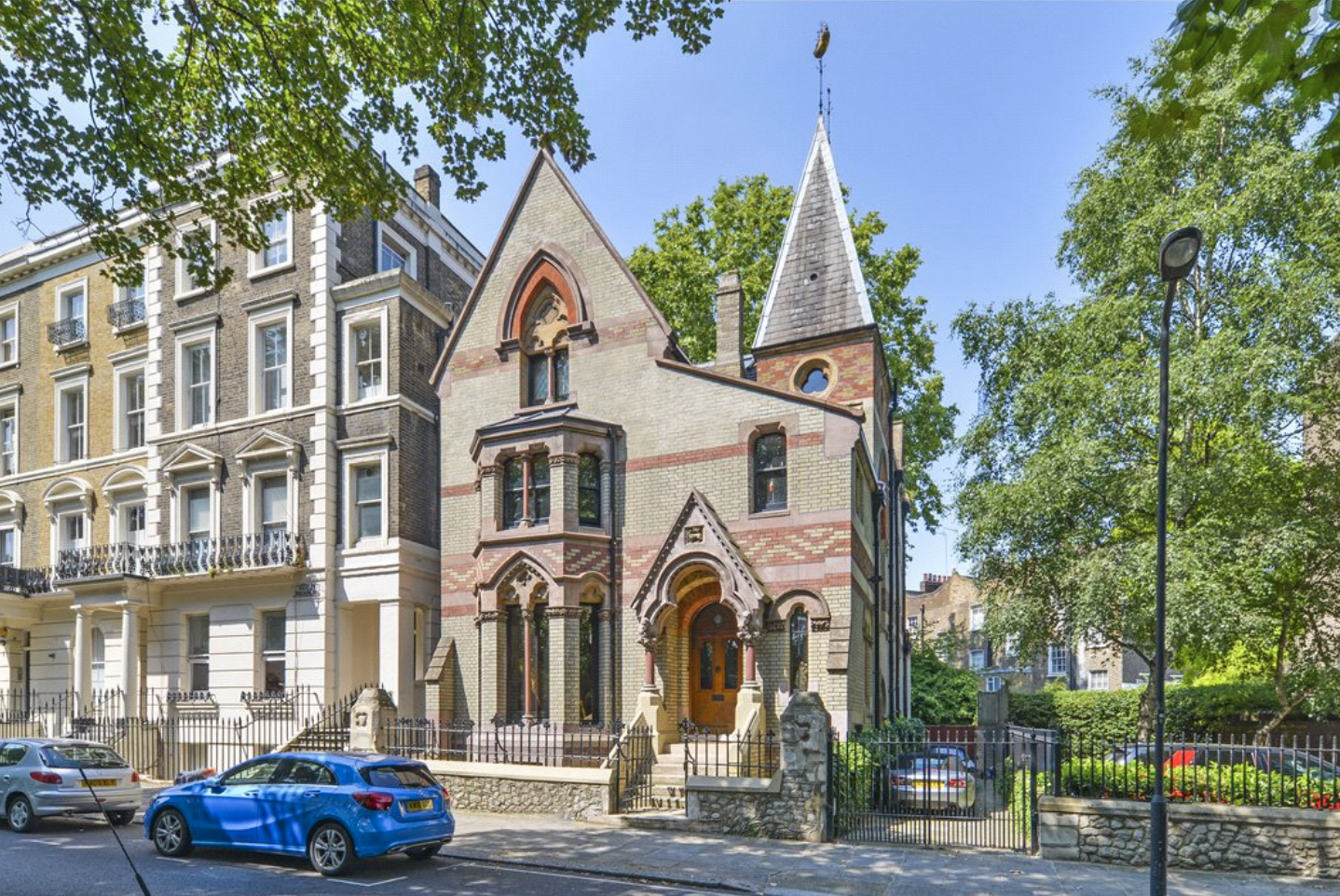
When you get to the end of the block though, there’s a bit of a surprise. With its towering turret, lancet windows and heavy oak door, it looks one part Victorian church, and one part something from the set of American Horror Story. And is that a sculpture of a donkey in the window?

The six-bed gothic revival masterpiece, which has just been put on the market, was previously the home and studio of American artist Nancy Fouts, who sadly passed away last year.

Fouts is best known for her distinctive sculptural works in a ‘modern-day surrealist’ style. She would create fantastical objects by combining everyday items, for example using the needle of a sewing machine to make it a record player, or putting false teeth inside a coin purse. Fouts also ran the Fouts and Fowler art gallery in Fitzrovia in the late 1980s, with her then-husband Malcolm Fowler.

She lived in the Oakley Square home for more than 40 years. It is grade II-listed, having been designed in the 1850s by John Johnson, who was also responsible for Alexandra Palace. It started life as the vicarage of St Matthew’s Church, and survived the church’s later demolition.

The five-storey property spans more than 5,000 sq ft and boasts large, Gothic-style windows, a wine cellar, garden, and private, gated driveway.

The artworks probably won’t be staying in the property once it is sold, but the buyer will still be able to enjoy the unique fixtures and fittings Fouts added to the home over the years.

It is being marketed by Knight Frank with an asking price of £4.25m.

“What I love about the property is the details: the shutters, the wood panelling, the flooring – it’s been beautifully maintained, and every time you turn a corner you find something interesting and unique,” says Keir Waddell from Knight Frank.

The Oakley Square home is almost twice as large as the average family home in the area, which totals around 2,000 sq ft.

Waddell adds that a diverse range of people have shown interest in the home already, from UK buyers to those from Europe and Asia. What they all have in common, he says, is that they’re looking for something out of the ordinary.

“You won’t see anything else like this anywhere in the area,” Waddell continues. “It has the gothic architecture, and also the connection to the former owner who used it almost like you would a gallery.

“Usually we do viewings in about half an hour, but here we can spend hours with a potential buyer.”

The faint-hearted will stick to the Georgian stucco – but for a buyer who likes to do things a little differently, this is a rare opportunity to own a piece of art and architecture history.

Focus on Isle of Dogs: Dog days are over for once-neglected peninsula as new development abounds

Published in City A.M., Feb ’20

There are two questions that residents of the Isle of Dogs are often asked. First, why is it called the Isle of Dogs?

The boring explanation is that it’s a corruption of a more sensible water-related name like the Isle of Ducks. The grim one is that it was so called because of the sheer volume of dead dogs that once washed up there. Probably the most plausible is that Edward III, who hunted in Greenwich Park across the river, kept his greyhounds there.

The second question: is it actually an island? No – it’s a peninsula, bounded on three sides by the deepest bend in the Thames, but attached to Canary Wharf and Poplar to the North.

The former heart of London’s Docklands was historically a bit isolated – before the arrival of the Jubilee Line in 1999 it was only accessible by DLR, and pre-1987 only by bus – but that’s slowly starting to change as more housing and amenities spring up.

“The Isle of Dogs is having a renaissance,” says James Hyman, head of residential at Cluttons. “People are waking up to it representing value for money in a housing market which is mainly being driven by affordability.”

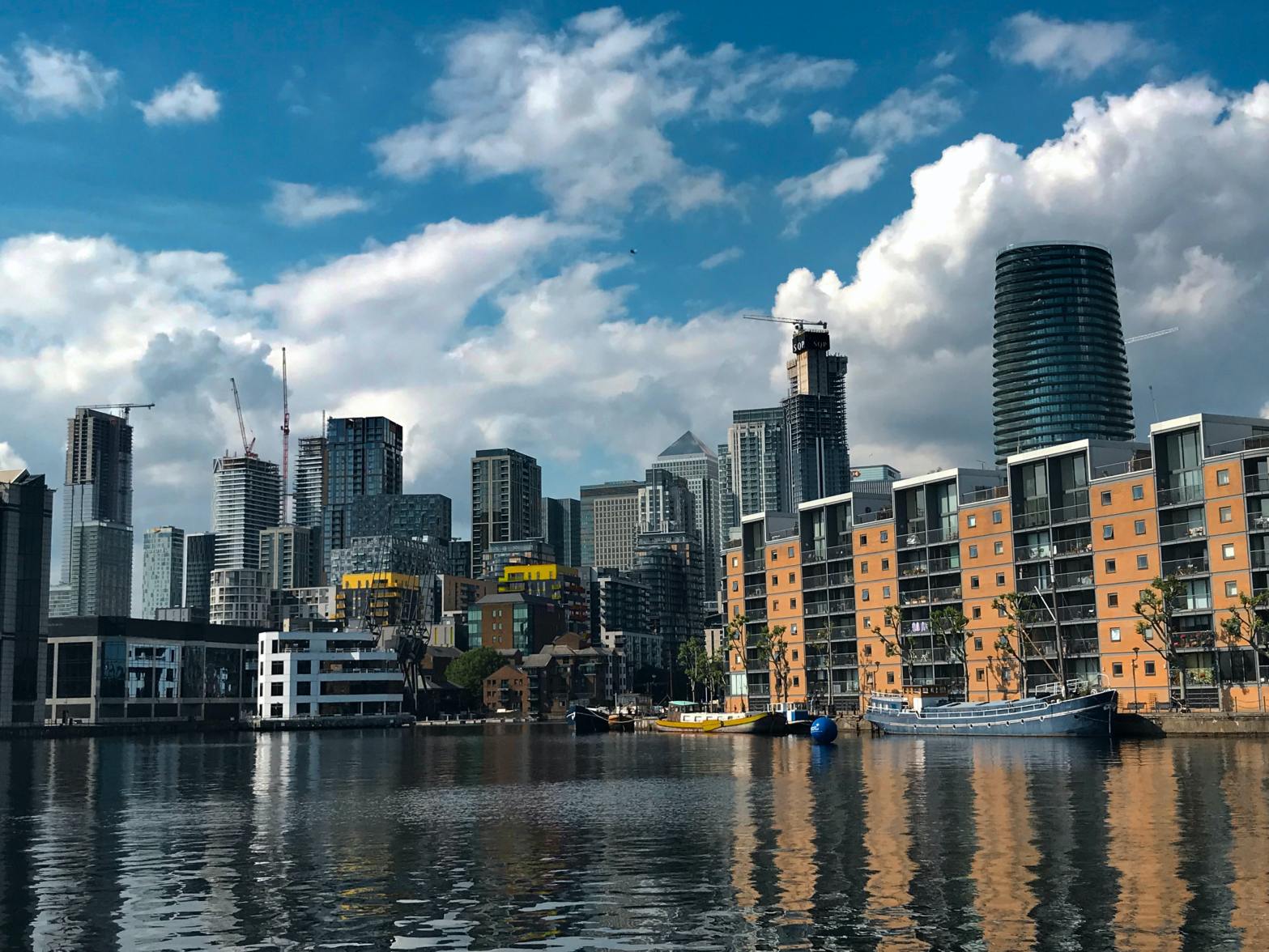
It now finds itself slap bang in the middle of three regeneration hotspots: London City Island to the East, Wood Wharf to the North and Greenwich Peninsula to the South. Ambassadors for ‘The Island’ (as it’s known by locals) are set to grow in number too, thanks to a slew of big new developments which will bring thousands of new residents there.

The controversial £1bn Westferry Printworks, a former printing press owned by newspaper tycoon Richard Desmond, is about to be turned into 1,524 flats, having been given the green light in January after years of planning back-and-forth. And another scheme, Landmark Pinnacle, will be Europe’s tallest residential tower at a whopping 230 metres when it completes later this year. Apartments are still available there, with studios starting at £597,000.

Condense your commute

The average house price on the Isle of Dogs falls somewhere in between these shiny new-builds and the late 20th century housing stock that dominates the rest of the island, most of which was built after the docks were closed down in the early 1980s. 
It currently sits at £481,830 according to Hamptons International: a 5.6 per cent drop year on year, and a modest 10 per cent increase in the last five. Prices are just above the London average, but could prove good value for City commuters.

“The Isle of Dogs is 33 per cent cheaper than Canary Wharf itself, but it’s within walking distance,” Hyman adds. It is also less than 20 minutes into Bank on the DLR, and Canary Wharf tube will also get you to Bond Street in 17 minutes.

Although its social scene leaves a little to be desired, the Isle of Dogs could be a savvy first step on the ladder for a young City professional, and according to Hamptons International one third of buyers in 2019 were first-timers. But it also suits City couples looking for their first family home. The average house will set you back £673,000 according to Hamptons International.

“Demand has shifted towards houses recently,” says Lee O’Neill, partner and head of Knight Frank’s Canary Wharf office. “While these buyers still need to live close to work, they are thinking longer-term and prioritising things like outdoor space.”

Period properties were mostly knocked down as part of the dock clearance, but the great thing about living on a peninsula is there is no shortage of river frontage. 
“The river-fronted townhouses of Mariners Mews and Quadrant Walk achieve top prices, with buyers prepared to pay a premium for the waterside position,” says Frances Clacy, research analyst at Savills.

Its name and location might still bemuse the average Londoner – but the end of the The Island’s dog days seems to be in sight.

Area highlights

The Isle of Dogs acts as the back garden to the temple of steel and glass that is Canary Wharf, and has plenty to offer outdoorsy types. Walk along the river for views of maritime Greenwich, or pop under it and out the other side using the Greenwich Foot Tunnel. If you want to actually get in the water, Docklands Sailing and Watersports Centre has got you covered with courses in sailing, powerboating, canoeing and windsurfing. Sheep, llamas and turkeys are among the residents at Mudchute Park and Farm, which is one of the largest city farms in Europe and free to enter. Once you’ve had your fill of fresh air, catch some fringe theatre at converted church The Space – you might even run into Sir Ian McKellen, who is the venue’s principal patron. Above the theatre is Hubbub, the cafe-bar where you’ll find the best brunch on the island proper. For drinks, try The Ship which does a cracking stonebaked pizza, or Mthr, the newly-opened 20th floor restaurant and cocktail lounge with views across London.

Photo by Laura Lugaresi on Unsplash