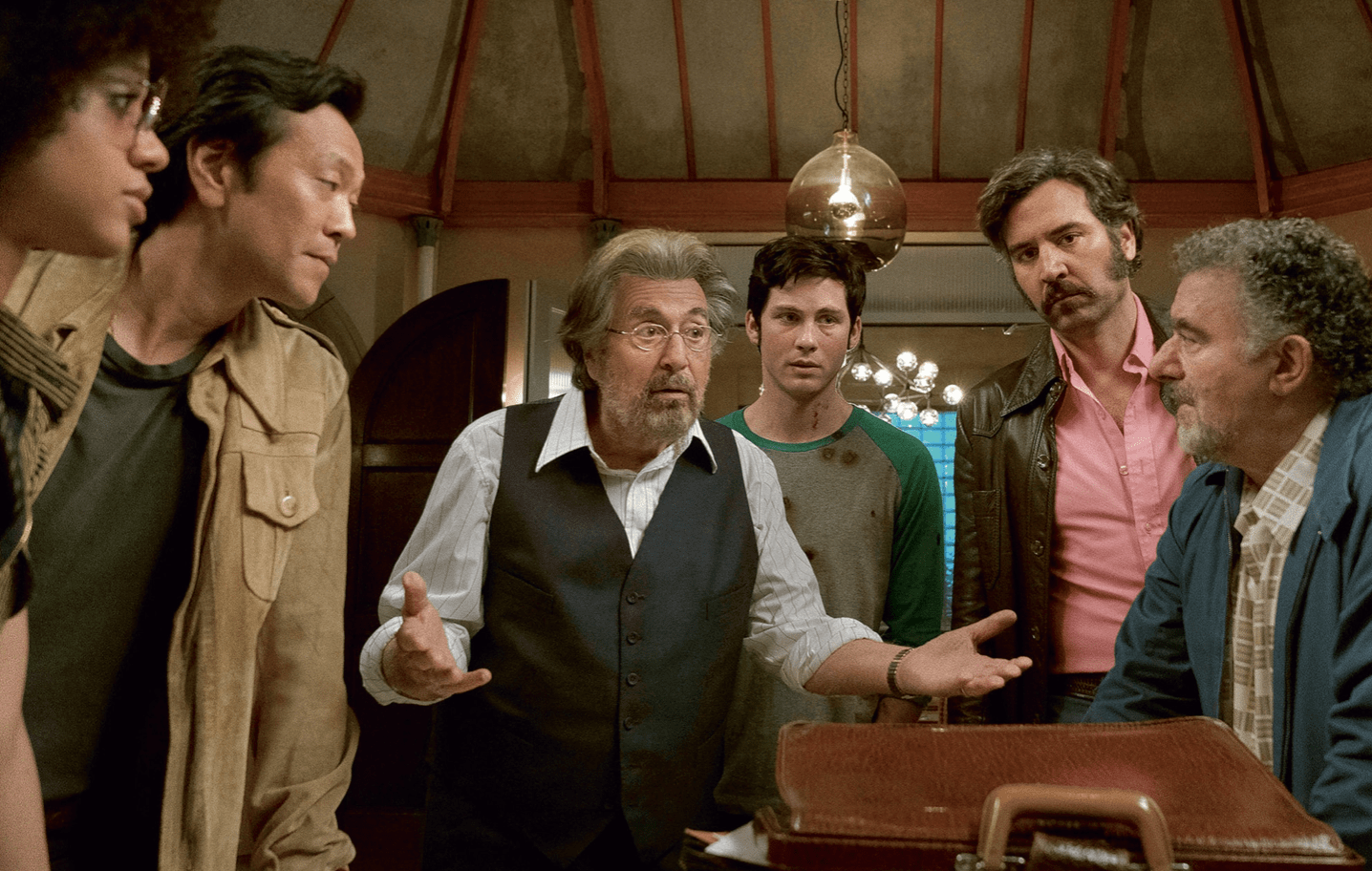
If you’re looking for a nice, cuddly box set that you can watch half-comatose under your anxiety blanket as the world unravels around you, Amazon Prime’s latest big-budget series Hunters probably isn’t for you.
It’s about Nazis, for one thing, and someone gets shot in the head approximately once every three minutes. Set predominantly in 1977 New York, it follows a group of vigilantes who are on the hunt for Nazis who escaped justice after World War Two, and are hiding in plain sight as they plot to bring about the Fourth Reich.
As the group pick off their individual targets, a wider plot is revealed which puts the whole city in danger.
Al Pacino puts in an unexpected turn as the deceptively kindly Jewish patriarch at the head of the Nazi-hunting operation, but he doesn’t outshine the relative unknowns taking on the other leading roles.
This is a true ensemble cast, and part of the fun is unravelling the backstories and motivations of each member of the rag-tag crew – not all of whom are Jewish – as the series moves along.
Flashbacks to Auschwitz and Buchenwald provide the stark emotional backdrop to the action scenes, reminding us that this might be bad-ass arse-kicking, but it’s bad-ass arse-kicking for the good of humanity.
Hunters is also peppered with surreal, comedy vignettes where the characters re-enact a retro commercial or dance to a disco track for a couple of minutes, some of which are a little awkward, but you have to fill the time between people getting shot in the head somehow.
It’s not exactly one for the ages, but you’ll be gripped by the end of the first episode and the ten hour-long instalments will keep you occupied for many a lonely lockdown eve. Well, at least two.
If someone decided to make a film adaptation of the Keep Calm and Carry On poster, it would probably turn out a bit like Military Wives.
Directed by The Full Monty’s Peter Cattaneo, it’s a similar tale of good old-fashioned British grit triumphing against the odds – except instead of steelworkers it’s about soldiers’ wives, and instead of psyching themselves up to expose their genitals, they’re psyching themselves up to perform at the Royal Albert Hall.
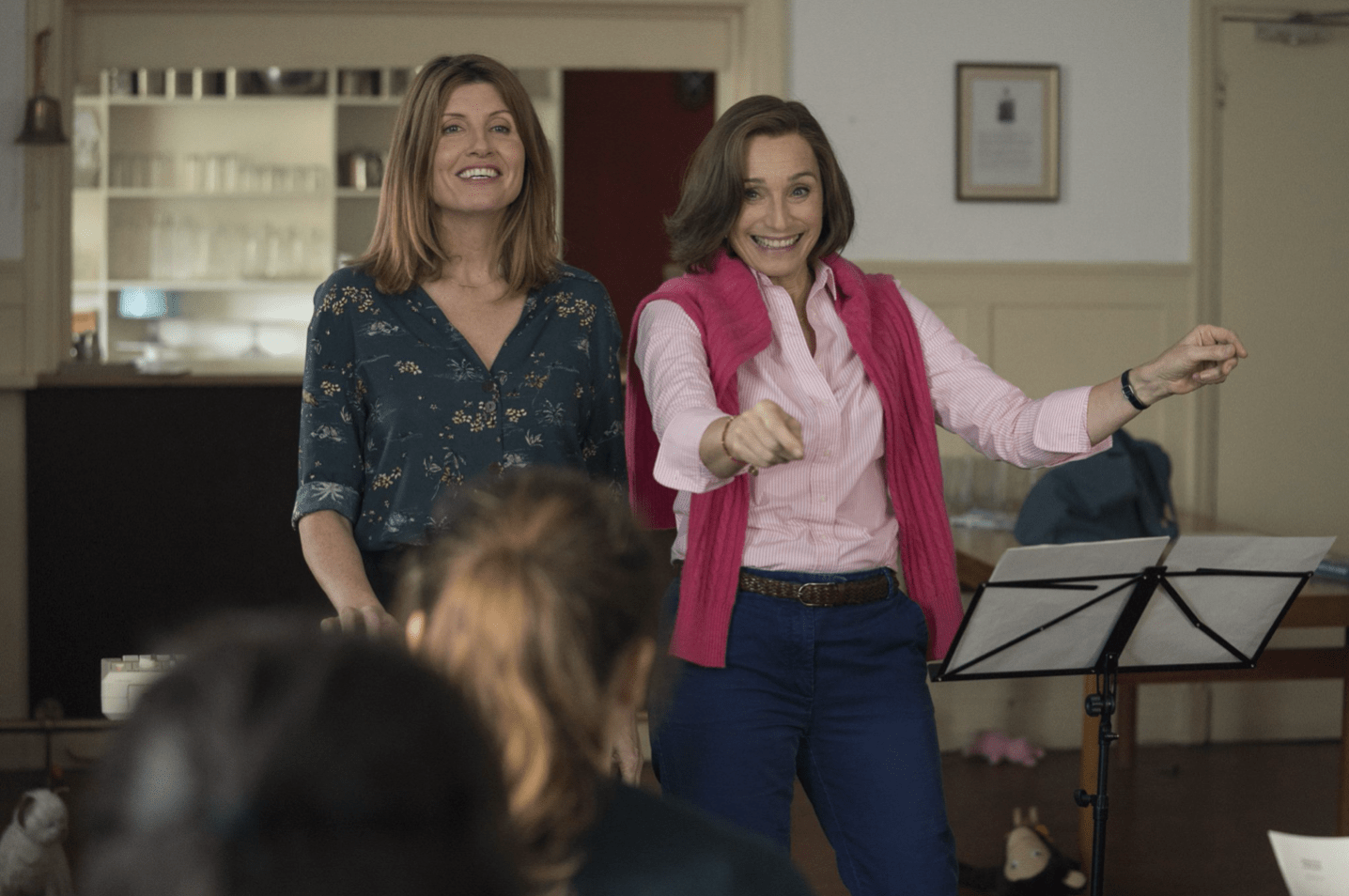
The misfit gang of women form a choir on their military base to distract themselves when their partners are posted to Afghanistan, and are picked to sing in the televised Festival of Remembrance (it’s roughly based on Gareth Malone’s reality TV series The Choir: Military Wives, except they’ve sacked off poor Gareth). Cue nerves, drama and bickering – the chief proponents being the odd couple tasked with running the choir.
Horgan’s Lisa is a trendy, next-gen army wife – we know this because she wears converse, drinks beer and can’t knit. She doesn’t want anything to do with the choir, but she’s obligated because of her husband’s recent promotion. Scott Thomas plays Kate, the colonel’s wife and a stuck-up, stiff-upper-lip stick-in-the-mud who offers Lisa her unwanted ‘help’ to distract herself from the loss of her son.
She turns her nose up at everything from the 80s pop songs the women want to sing to their life choices, all the while looking like she’s about to muck out a stable.
Watching the pair’s hatred for each other straining against the veneer of their middle-class politeness is enjoyable enough, but the serious strand of the plot pushes all the standard emotional buttons so lazily that you begrudge any tears that may come to your eye. You can see the crushingly predictable dramatic climax coming a mile off, and it cheapens the whole endeavour.
Like a cup of sweet tea, Military Wives goes down easy and is vaguely comforting. If you’re after anything more than that, keep calm and carry on.
There’s something strange about Portrait of a Lady on Fire, the enlightenment era French-language romance set on an island off the coast of Brittany, and it took me a while to work out what it was.
It’s about three young women: Héloïse, a lonely debutante; Marianne, the bohemian artist hired by Héloïse’s mother to paint her portrait; and Sophie, the teenage housemaid who has found herself with an unwanted pregnancy.
Héloïse’s mother leaves, and for a few days, the trio get to live free of social expectations. Héloïse and Marianne start to navigate their sexual attraction to one another, as well as helping Sophie through several progressively grim attempts at a termination.
The thing that struck me, it turns out, is that there aren’t any men. This is a two-hour film in which there are no named male characters, and no man has more than a couple of minutes’ screen time.
There are only the ghosts of off-screen men – Héloïse’s prospective husband who will be sent her portrait to make sure he likes the look of her; the unknown man who got Sophie into her predicament; the all-male Parisian art establishment in which Marianne has to exhibit her work under her father’s name, or not exhibit it at all.
It’s this female focus that stops it feeling like a fusty, bosom-heaving period piece (although some bosoms are heaved). Instead, it feels revolutionary.
Sure, the central romance in Portrait of a Lady on Fire is between two women, but this isn’t just a lesbian love story. It’s an exploration of relationships between women in all their forms, something that’s become director Céline Sciamma’s trademark, most notably in 2014’s Girlhood, in which she charts the coming-of-age of modern-day French-African teenagers in a down-at-heel Parisian neighbourhood.
It’s sexy, but not gratuitous – and apparently not sexy enough for the French (Sciamma said in an interview that, unlike everyone else, her native audience ‘don’t find the film hot’).
This is a period piece for the modern day, and it’s brilliant.
If you’ve never felt the slightest bit icky when buying a £4 cup of coffee in a formerly working-class neighbourhood, you’re probably not going to like Swedish filmmaker Frederik Gertten’s new documentary, Push.
It’s all about gentrification, and whether we have the right to live affordably in a major city – an issue that’s painfully relevant for Londoners.
It follows Leilani Farha, the UN’s special rapporteur on housing, as she sets off on a trip around the world to hear the human stories behind the global housing crisis.
“Who are cities for?” she asks at the outset – and this is the narrative thread which runs through the whole hour and a half as she grills politicians about the housing issues happening on their patches.
Closest to home is a powerful interview with a man who escaped from his flat in Grenfell Tower. Thanks to house price inflation, he will have to move out of London if he ever wants to own a home again.
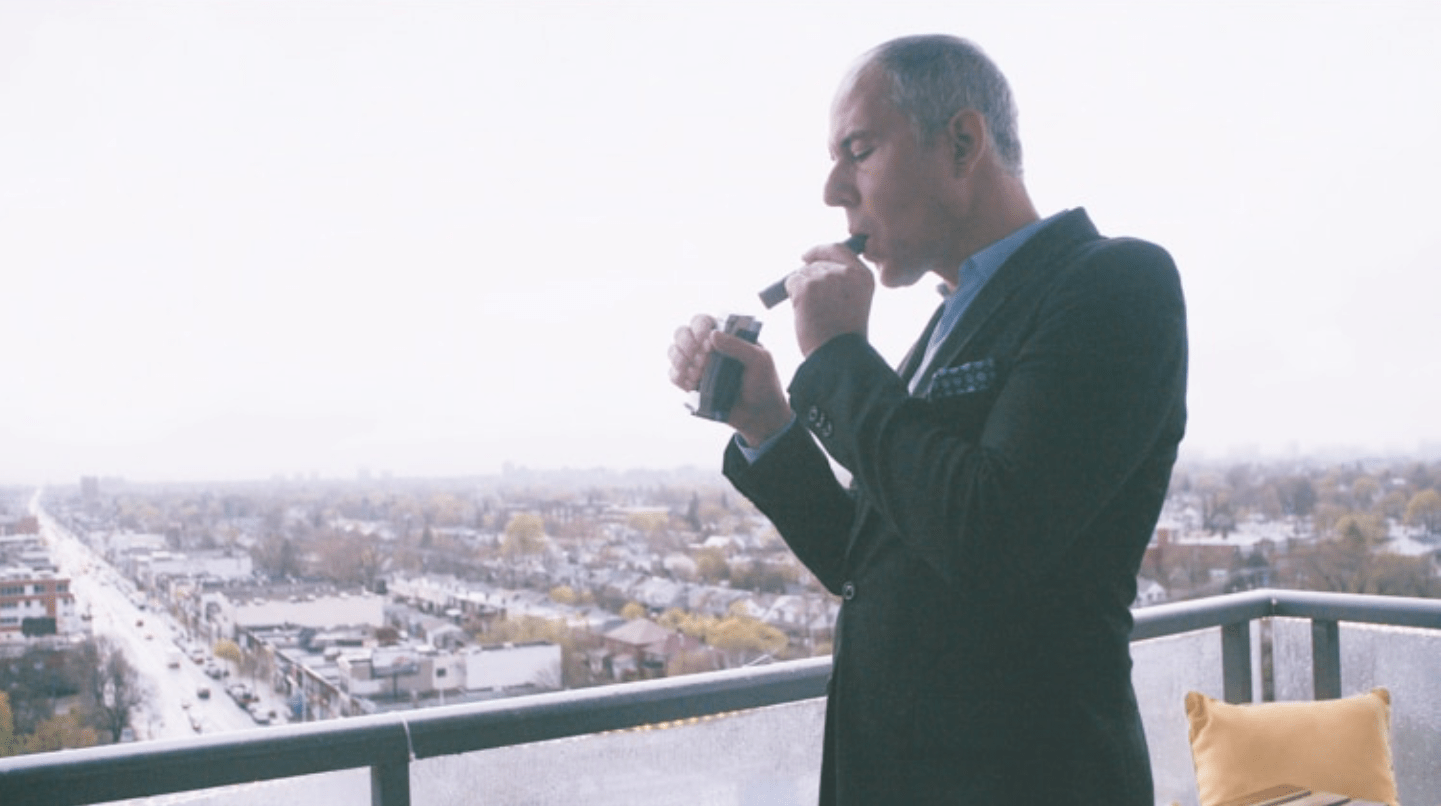
She also visits Seoul, where homeowners on one estate were violently kicked out of their homes to make way for an apartment scheme that never happened; Toronto, where some people are spending 90 per cent of their income on rent; and Berlin’s Kreuzberg, where locals are trying to buy up treasured buildings to protect them from demolition.
Although moving, these are really just different versions of a story we’ve all heard before, and it would be impossible to explore this subject without coming off a bit heavy-handed and worthy.
But it’s not all hand-wringing – some of the most interesting parts of Push are when it exposes the lesser-known pieces of the housing market puzzle.
In particular, it shines a light on the huge role played by private equity firms and pension funds. We might be a nation obsessed with house prices, but this is the side of the coin that doesn’t get discussed.
Push is not a particularly fun night out at the cinema. And like many good documentaries, you’ll probably get more out of it if you don’t already agree with its politics than if you do.
Actually, scrap what I said earlier – property developers, go and watch this film. I dare you.
Not unlike a cabinet reshuffle, Jane Austen’s 1815 novel Emma follows a group of largely unlikeable people being shunted around in different permutations, at the whim of an aristocratic blonde who’s used to getting their own way.
In this case it’s in the pursuit of matchmaking, something in which the titular character, 21-year-old provincial heiress Emma Woodhouse, considers herself an expert.
She spends her days engineering romances between her acquaintances to pass the time, until – and this shouldn’t be a spoiler, it’s Austen – she gets into some romantic shenanigans of her own. Swooning ensues.
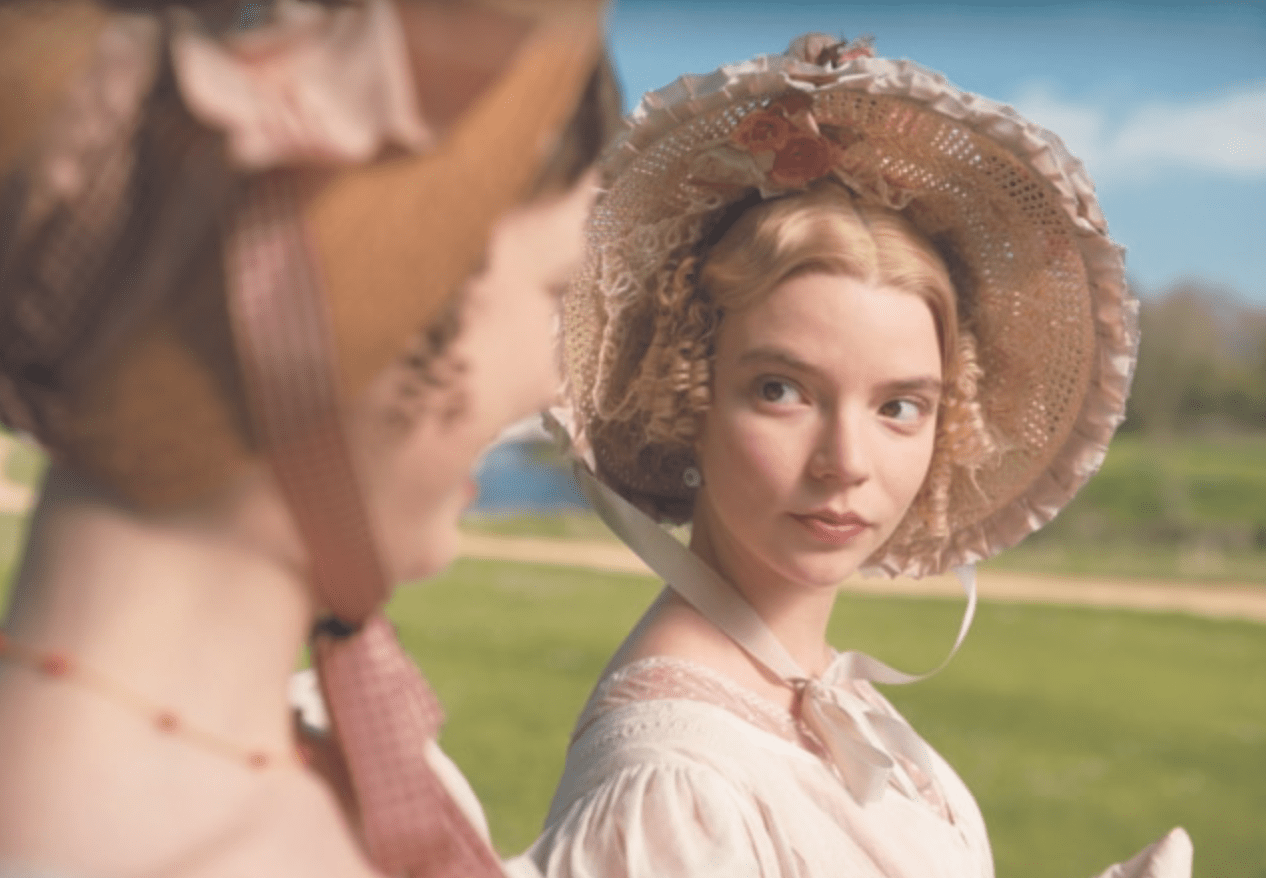
The latest adaptation is music and fashion photographer Autumn de Wilde’s first project as a director, and it looks every bit the part. Everything is relentlessly pastel-hued and sugary, from the fabulously fussy lace-covered dresses, to the lavish gilded drawing rooms, to the piles of intricate jellies, cakes and macarons that seem to appear every time anyone sits down for a chat.
Unfortunately, though, this spectacular style isn’t backed up by a lot of substance.
Austen wrote Emma as a comedy, but unless you’re moved to fits of hilarity by Miranda Hart and Bill Nighy doing their usual shticks, only in ruffs and petticoats, it’s not especially funny. The film is never quite sure whether it is revelling in the pomp and frippery of Austen’s world, or sending it up.
Anya Taylor-Joy’s Emma is suitably wide-eyed and coquettish, but at times she’s too removed from the action, guiding the viewer through her world of gossip and romantic intrigue like a narrator.
This means the pivotal moment when she’s supposed to see the error of her scheming society ways and have an emotional epiphany comes off as disingenuous, and we’re left wondering why anyone would really want to sweep her off her feet.
As a die-hard defender of the 1994 original, and a some-time apologist for its 2017 remake, I was willing to forgive a lot of Jumanji: The Next Level. It is, once again, a body-swap comedy in which a group of teenagers become characters in a 1990s video game.
And while you don’t ask much of a film like this in terms of plot, it fails to deliver even on even the lowest of standards.
Like an old house that’s been stampeded through by an assortment of jungle animals, its foundations are shaky. At the beginning the main character decides to jump back into the game where he and his friends all nearly died in the previous film. Why? Because he just dumped his girlfriend for having too much fun at college and he wants to make himself feel better by running around in The Rock’s body for a bit. When his friends have to go in and save him, no one is angry, and we’re supposed to root for them getting back together.
At another point a character is re-introduced from the first remake, without any clue as to who he is or why anyone knows him. It’s not safe to assume that everyone is as familiar with the Jumanji canon as I am.
There are precisely two good things about this film: Jack Black and Danny DeVito. In a repeat of the best gag from the first remake, Black spends some time in character as a vacuous teenage girl, snaffling up most of the laughs. DeVito is typecast as an angry little granddad who is delighted to get an upgrade from his decrepit body; also moderately funny.
The art director also deserves a pat on the back for recreating classic 1990s video game environments, with an abundance of swimming pools and vaguely Aztec-themed stuff.
The Next Level isn’t bad enough to shake my love of this franchise, but my patience has been sorely tested.
First published in City A.M. Magazine, October 2019. Image by Joseph Sinclair.
Stage actress, Eastenders mega-bitch, social media warrior. With her voluminous blonde mane, practiced side-eye and reputation for being fearlessly outspoken, Tracy-Ann Oberman cuts an intimidating figure. We meet at a bijou cafe just off Hampstead Heath, the kind that sells £400 vintage chairs and is filled with brunching mums and toddlers. She breezes in, fashionably late, wearing a long floral dress and dazzling white sneakers, her hair wavy rather than in her trademark corkscrew curls.
“I’m on a little WhatsApp group with a load of fantastic women,” she tells me, sipping a glass of bright green juice. “We’re talking about some of the sexiest women on British television, and they’re getting their first grandma roles, even though their own children are under the age of 10. Women are having children later, their careers are longer, they’re sexy longer, they’re sexually active longer. But where are these women on television?”
You could make a decent case for Oberman, 53, being one of them. Her TV roles have included a stint as an anti-villain in Doctor Who, supporting roles in hit comedies Friday Night Dinner and After Life, and playing Chrissie Watts in Eastenders. She’s also run the gamut on stage, from being part of the Royal Shakespeare Company to appearing alongside Celia Imrie in the recent Pinter at the Pinter season, to taking on the lead in Fiddler on the Roof. She’s also found the time to star in more than 600 radio plays, and has now penned several of her own on the subject of golden-era Hollywood.
The term ‘strong female lead’ is bandied around a lot these days but Oberman defines a good role a bit differently. “I don’t mind whether a character is ‘strong’ or not,” she says. “I just want them to be well-written and rounded and interesting, not tacked on to the story of a male protagonist.”
So what roles is she itching to play? On TV, a period drama – “I’ve got the hair for it” – and on stage, a Chekhov. One arena that consistently offers up great female characters is soaps. Although she was only in Eastenders for a year and a half, Oberman had the honour of bumping off one of Albert Square’s most iconic characters, ‘Dirty’ Den Watts, in her role as black widow Chrissie. “When you murder one of soap’s hugest icons and bury him under the Queen Vic, the moniker follows you around – you’re always going to be ‘Eastenders actress,” she says. “It’s a badge of honour.”
Bravery is very important to me – not just sitting back and going with the flow
She makes the unlikely connection between Britain’s best-loved soap and the golden age of Hollywood cinema, of which she’s a huge fan (she says Now Voyager, Mildred Pierce and “anything with Bette Davis” are her favourites). “Those golden age of Hollywood films have always had fantastic female stories, and soap is kind of like that – you’re darting around a set a bit like you would on the Warners lot in a little buggy,” she says. This is the subject of many of the plays she writes for Radio 4, which tell the stories of icons like Davis, Joan Crawford and Doris Day.
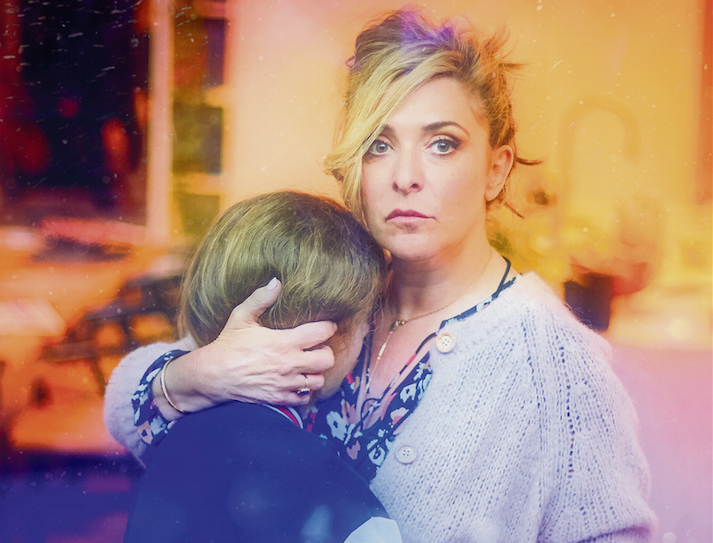
Her latest project is new play Mother of Him, at the Park Theatre in London. Written by Evan Placey, it is the real-life story of a teenage boy under house arrest after committing a terrible crime, told from the perspective of his mother. “It’s about how single mothers are viewed, and their responsibility for their children,” she says. “As a mother, are you meant to love your child no matter what they do?”
One of the most striking things about Oberman is her confidence: you don’t get the impression that she has ever been intimidated by anyone, or anything. Has she always been this way?
She pauses for a long time. “I think I’ve always been like that,” she says eventually. “Bravery is very important to me, not just sitting back and going with the flow. It’s about sticking your head above the parapet, and I think I’ve always been brave enough to do that, but age has made it easier.”
Oberman in Mother of Him at the Park Theatre
A case in point is when Oberman spoke out about her past experience of working with high-profile theatre director Max Stafford-Clark, who was accused of making inappropriate sexual comments to two young actresses in 2017 – around the time the #MeToo movement was taking off in the US.
“I remember getting a message saying the narrative was going to be [that these were] silly snowflake girls who couldn’t let a 70-year-old-man have a laugh,” she says. “It really bothered me because this man had a reputation. I personally experienced it, I knew other people who had experienced it and I really didn’t want those young women to be thrown to the wall.”
This drive to stand up for what she believes runs through many of the things she’s involved in outside of acting. This stems in part, she says, from her family history, which includes Jewish relatives who died in the Warsaw Ghetto. “I was always very aware of family who didn’t make it out of Poland and Germany and it’s something we always discussed a lot in our family. It made me feel that I had to speak out, that nobody else was going to do it.”
A project she hopes to get off the ground soon is a version of the Merchant of Venice, set against the Oswald Mosley fascism of the 1930s East End and the Battle of Cable Street, in which Oberman would play a female Shylock.
“We’re working based on my family history, and my grandmother being an East End Jewish matriarch,” she says, folding her hands and smiling pointedly to signal that that’s all she wants to say on the matter.
Her grandparents were members of the Jewish Labour movement in East End, and this heritage played a part in her deciding to speak out against the Labour Party – of which she used to be a member – on Twitter, with regard to the ongoing and well-publicised allegations of anti-Semitism. “I kept thinking ‘is anyone going to come in from the Labour Party and speak out on it’, and nobody did, so I found myself saying my political thing.”
She was encouraged to join Twitter in the late noughties by her early-adopter friends David Baddiel, David Schneider and Omid Djalili. At first, she loved it. “It was like being at the wittiest cocktail party, you could talk to anybody, follow anybody. I never had a negative tweet sent my way.” She pauses. “Well, the odd dick pic,” she says, leaning towards me knowingly, “but you just block them and move on.”
But after speaking out online about the anti-Semitism crisis in the Labour Party, things took a turn, and she began to receive abusive messages. “Thousands of people jumped at me and it was intimidating and scary, but I thought ‘They want to drive me off and I won’t let them’.”
It was this experience that inspired her to start her podcast, Trolled, where celebrities and other public figures discuss their experiences of social media and being online. So far, the guests have included Gary Lineker, Luciana Berger and Al Murray.
She still thinks social media can be a force for good, though, and this is reflected in her new play, which is set before the social media era in 1998. The mother, Brenda, is portrayed negatively in the press due to her son’s actions and finds she has little control over her own image. “In 1998, when the papers wanted to write that you were a dreadful human being and you’d been doing x, y and z, they could get away with it because there was no other redress. Today Brenda could control her own story, she could have her own Twitter account.”
Thankfully Oberman has no such problem. Few public figures tackle the issues that count with such relish. Long may it continue.



 Helen Crane